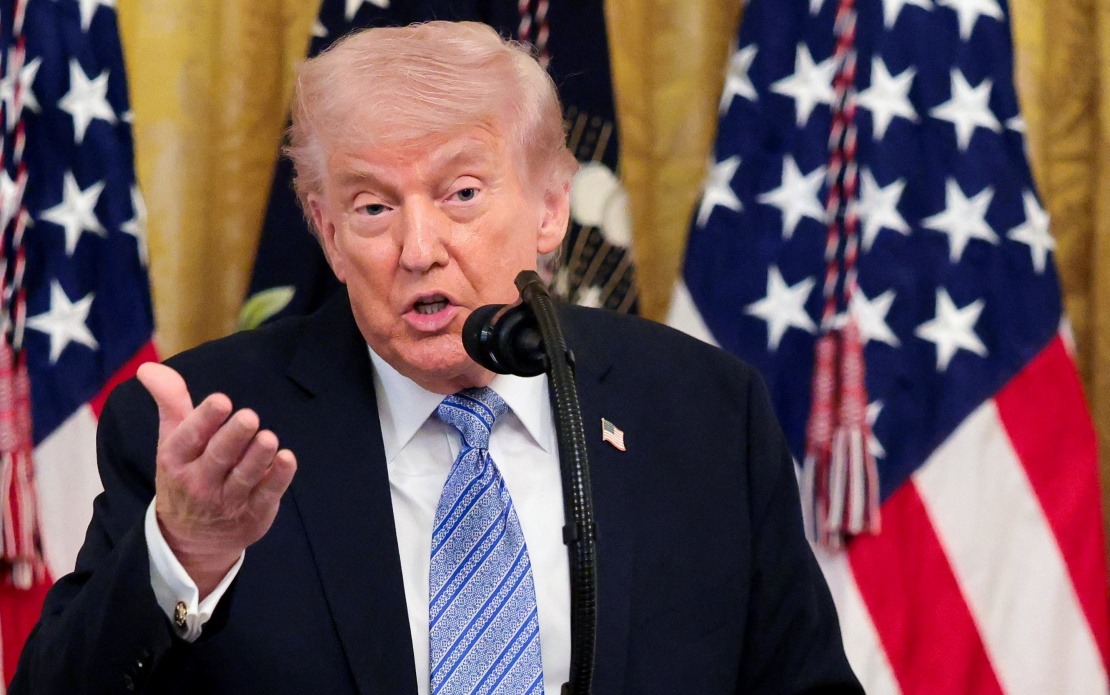
US President Donald Trump is reportedly backing FIFA President Gianni Infantino as his preferred candidate for the next United Nations secretary-general, marking an unusual intersection of international sports governance and diplomatic leadership. The New York Post, citing sources close to Trump, reported the proposal on Tuesday, revealing that the American leader views the 56-year-old Swiss football executive as uniquely positioned to navigate the geopolitical complexities of the UN's top office. Trump has characterised Infantino as someone "respected by everyone around the world" and credited him with possessing an exceptional capacity to facilitate dialogue among disparate international stakeholders—a quality the US administration increasingly values as global tensions persist.
The relationship between Trump and Infantino has deepened considerably over the past year, crystallising during football's most prestigious tournament. Throughout this year's World Cup, the FIFA president cultivated ties with the returning American leader through multiple engagements, culminating in a symbolic gesture last December when Infantino presented Trump with FIFA's inaugural Peace Prize. The award itself carries particular significance in Trump's political narrative, reinforcing his preferred self-image as a peacemaker while simultaneously elevating Infantino's profile on the world stage as a figure capable of recognising and honouring diplomatic initiatives. This presentation effectively positioned Infantino within Trump's inner circle of international personalities and likely influenced the president's willingness to champion his candidacy for the UN's highest administrative position.
The timing of any succession process remains strategically important, with the current UN Secretary-General António Guterres approaching the conclusion of his tenure. His replacement will assume office on January 1, 2027, inheriting an institution already strained by contemporary geopolitical fractures and questions about its relevance in addressing major international conflicts. The appointment process itself follows established protocols outlined in Article 97 of the UN Charter, which vests authority with the General Assembly acting upon the recommendation of the Security Council. This procedural framework creates substantial barriers to unconventional candidacies, as the process demands consensus among powerful international actors who may harbour competing interests and strategic objectives.
Infantino's path to the UN's top job would prove considerably more complex than a simple endorsement from Washington. Securing the position requires first navigating the 15-member Security Council, where consensus proves elusive and where any of the five permanent members—the United States, China, Russia, France, and the United Kingdom—can exercise absolute veto power. Even with Trump's backing, the Swiss FIFA president would face considerable scepticism from Russia and potentially China, given the current geopolitical climate. Beyond the Security Council's gatekeeping function, final approval from the broader General Assembly would remain essential, introducing an additional layer of diplomatic complexity where smaller nations and non-aligned countries could influence the outcome based on their own strategic calculations and historical voting patterns.
Trump's vision for international governance has consistently emphasised muscular unilateralism and skepticism toward multilateral institutions as traditionally structured. Throughout his presidency, he has articulated fundamental critiques of the UN's capacity to meaningfully intervene in or resolve major global conflicts, positioning the organisation as bureaucratically bloated and strategically ineffective. This philosophical stance informed his establishment of a US-led Board of Peace, an initiative that sparked considerable international speculation about whether the Trump administration intended to construct parallel institutional structures that would circumvent traditional UN mechanisms. The president subsequently denied such suggestions, though the pattern of his actions suggested deeper ambitions to reshape international diplomatic architecture according to American preferences and strategic interests.
Since returning to the White House last year, Trump has substantively reordered America's relationship with the UN system through multiple policy decisions. Beyond rhetorical criticism, his administration has implemented concrete measures including substantial reductions in financial contributions to UN operations and the withdrawal of American participation from several UN-affiliated organisations. Most prominently, the United States exited the World Health Organization, a decision that reverberated through global public health governance and demonstrated Trump's willingness to abandon institutional arrangements regardless of international consequences. These actions collectively signal the administration's fundamental scepticism toward multilateral structures and suggest that nominating Infantino might represent less a commitment to strengthening the UN than a strategic manoeuvre to install a leader amenable to American priorities and capable of adapting the organisation to accommodate Washington's redefined international role.
Infantino's background as FIFA president offers both advantages and substantial liabilities as a potential UN leader. His experience managing a global sporting organisation with 211 member federations demonstrates capacity for international coordination and stakeholder engagement across cultural and geopolitical divides. Football's universal appeal transcends the nationalised tensions that paralyse other international forums, potentially positioning Infantino as someone with genuinely international credibility rather than representing narrow national interests. However, FIFA's governance history includes numerous controversies regarding transparency, corruption allegations, and questions about democratic accountability—baggage that critics could weaponise during any UN leadership campaign. The organisation's controversial Qatar World Cup decision and ongoing scrutiny of FIFA's financial practices create vulnerabilities that rival candidates or hostile Security Council members might exploit.
From a Southeast Asian perspective, Infantino's potential appointment carries specific implications for regional influence within UN structures. A secretary-general closely aligned with Trump's unilateralist approach might accelerate the marginalisation of consensus-based decision-making and the empowerment of powerful nations within UN processes. For countries like Malaysia, Thailand, and Vietnam that have traditionally leveraged UN platforms to amplify regional voices and constrain hegemonic power, such institutional change could diminish diplomatic opportunities. Furthermore, if Infantino prioritises Trump's particular foreign policy objectives—including potential revisions to international approaches toward the Middle East conflict or climate governance—the consequences for Southeast Asia's development priorities and security interests require careful consideration from regional governments.
The proposal ultimately reflects broader questions about the UN's institutional future and whether traditional great-power consensus can sustain multilateral governance in an era of renewed strategic competition. Whether Infantino possesses the temperament, diplomatic acumen, and independence to lead the organisation effectively remains contested, particularly given his existing relationship with Trump. His potential candidacy forces a reckoning with fundamental questions about whether the UN can maintain institutional legitimacy when its leadership becomes perceived as advancing particular national interests rather than representing genuinely universal principles. For the international community, and particularly for smaller nations dependent on multilateral frameworks for protection and influence, the stakes of this succession process extend far beyond determining which individual occupies the secretary-general's office.

