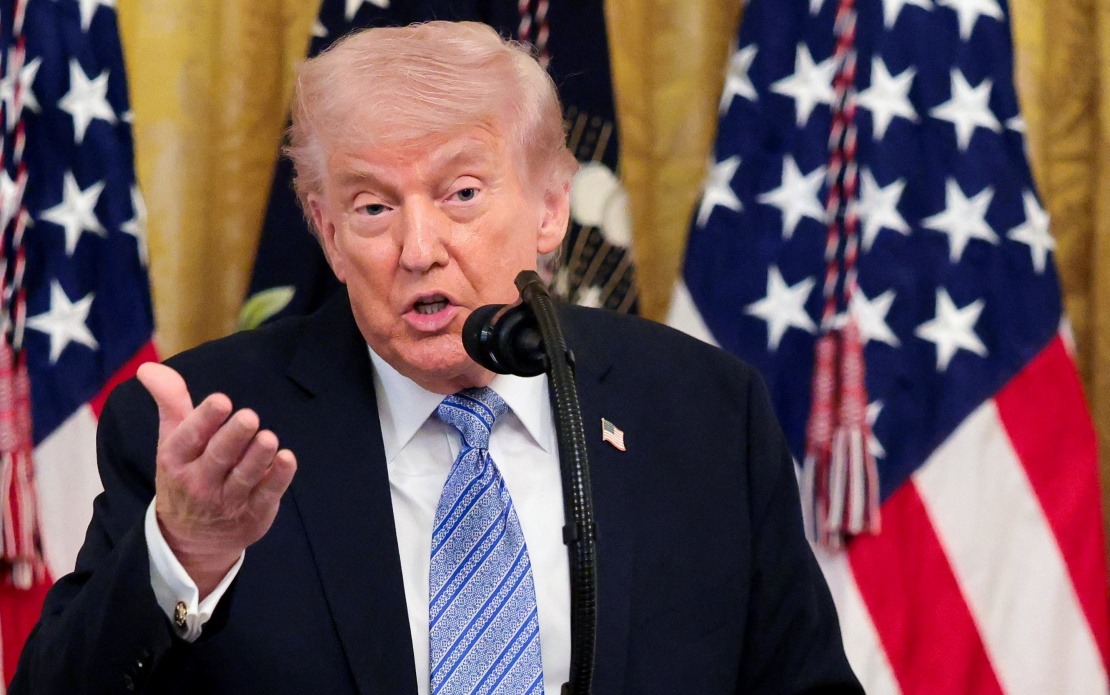
US President Donald Trump announced on Monday that he had conducted a constructive telephone conversation with Andy Burnham, who recently assumed office as British Prime Minister. The exchange represented an early diplomatic engagement between the two leaders, with Trump emphasising the positive tone and substantive nature of their discussion. Speaking through his Truth Social platform, the American president characterised the call as productive and signalled his intention to deepen bilateral engagement with the United Kingdom in the coming months.
The discussion between Trump and Burnham touched on a notably broad spectrum of issues reflecting the depth of contemporary US-British relations and their shared strategic concerns. Among the principal topics were the enduring military alliance binding the two nations, a cornerstone of Western security architecture that has shaped global geopolitics for decades. The leaders also explored commercial arrangements, recognising that trade relationships remain vital to both economies as they navigate complex global market dynamics and competition from other powers.
Energy security featured prominently in their exchange, with the conversation specifically addressing North Sea oil resources. This focus underscores the mutual interest both nations maintain in ensuring stable energy supplies and maintaining economic advantage in hydrocarbon-dependent sectors. For the UK, North Sea oil remains strategically significant despite the nation's transition towards renewable energy sources, while American energy interests often intersect with broader geopolitical considerations regarding resource access and supply chain resilience.
Another noteworthy component of their discussion involved the demining operations in the Hormuz Strait, one of the world's most critical maritime chokepoints through which substantial global oil shipments pass. This shared concern reflects mutual recognition that freedom of navigation and safe passage through strategic waterways represent essential foundations for international commerce and regional stability. The strait's importance has amplified in recent years amid regional tensions, making collaborative approaches increasingly valuable for both Western powers.
Trump's account emphasised the compatibility of British and American strategic outlooks, suggesting alignment on multiple fronts despite the domestic political transitions both nations have experienced. His reference to the "outstanding relationship" between the countries acknowledges the historical ties and institutional cooperation frameworks that have evolved between London and Washington across military, intelligence, and diplomatic channels. The phrase carries particular weight given that bilateral relationships occasionally experience strain during leadership transitions when new administrations may reassess inherited policies or priorities.
The conversation also extended beyond the specifically enumerated topics, with Trump noting that "many other subjects" featured in their exchange without detailing them publicly. This suggests the leaders covered ground across the full spectrum of contemporary international affairs, potentially including perspectives on European security, Middle Eastern developments, Asia-Pacific dynamics, or other regions where British and American interests intersect or occasionally diverge. Such comprehensive discussions characterise high-level diplomatic engagement between major allied powers.
The timing of this exchange carries significance for regional observers, particularly those in Southeast Asia and the broader Indo-Pacific region. The UK has substantially increased its diplomatic and military presence in Asian waters in recent years, viewing the region as crucial to twenty-first-century geopolitics and commerce. Any alignment or coordination between Washington and London regarding Indo-Pacific strategy, freedom of navigation operations, or technological competition with major powers inevitably influences the security environment affecting nations from Malaysia to Japan.
Trump's announcement that the leaders would meet "in the not too distant future" suggests imminent high-level bilateral engagement at either presidential or prime ministerial level. Such face-to-face encounters typically produce more detailed bilateral frameworks, joint statements on shared priorities, and potentially new cooperative arrangements across defence, trade, or intelligence domains. For Malaysia and other Southeast Asian nations, these meetings often result in policies or initiatives that ripple across the region, whether through expanded military deployments, trade negotiations, or strategic partnerships.
The characterisation of the conversation as "interesting" and "went very well" by Trump provides positive optics for both administrations. For Burnham's newly formed government, securing endorsement of productive engagement with the United States during early weeks in office offers domestic political benefits and demonstrates continuity in the cherished Anglo-American partnership. For Trump, the successful outreach to Britain's new leadership reinforces his administration's commitment to traditional Western alliances, a messaging element relevant to both his domestic political base and international partners assessing American reliability.
The range of topics discussed—from energy security to maritime cooperation to military alliance—reflects the multidimensional nature of contemporary US-UK relations in an era of strategic competition with other powers and evolving regional security challenges. Both nations maintain substantial interests across multiple geographic zones and policy domains, necessitating regular high-level coordination. The conversation between Trump and Burnham appears to have reinforced existing cooperation frameworks while potentially opening discussions on new initiatives responding to current geopolitical realities and emerging security challenges.

