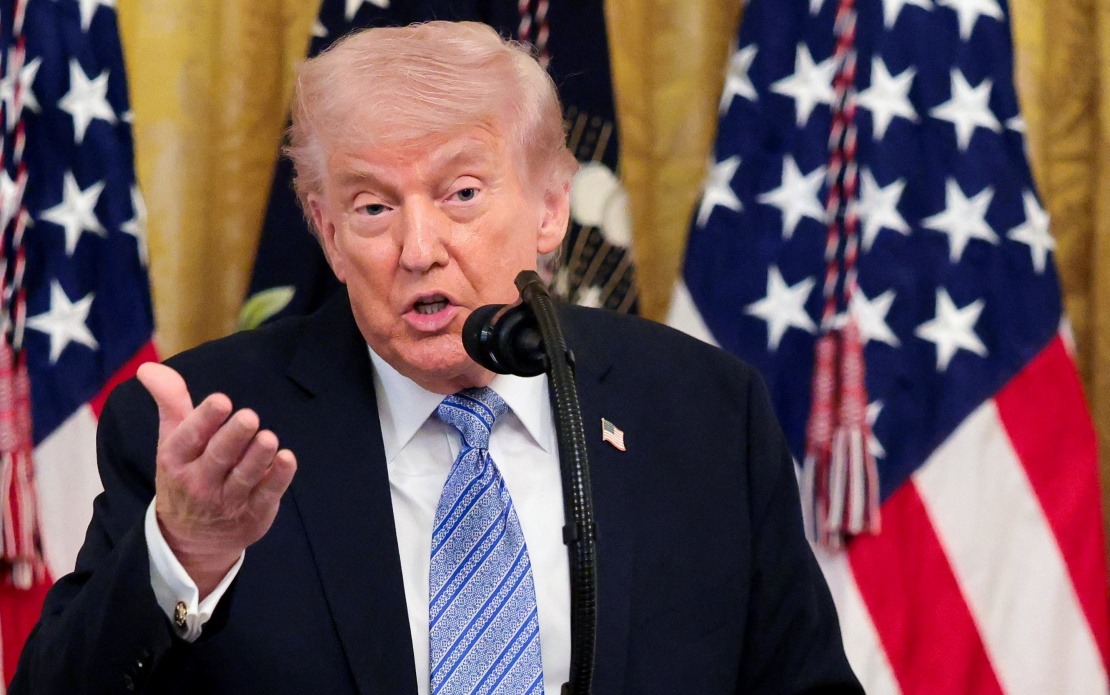
US President Donald Trump has instructed his senior diplomatic team to halt all negotiations with Iran, declaring on his Truth Social platform that no discussions are currently underway or scheduled with Tehran. The announcement, made on Tuesday, represents a sharp reversal in US-Iran engagement at a critical moment when diplomats had reportedly been exploring pathways toward renewed dialogue. Trump's directive affects Vice President JD Vance and envoys Steve Witkoff and Jared Kushner, who had been leading what insiders characterised as increasingly constructive exchanges with Iranian officials.
The abruptness of Trump's decision underscores the volatile nature of US-Iran relations and the precarious state of diplomatic efforts in the Middle East. According to US officials cited by CNN, the instruction to cease talks followed what had been characterised as "positive discussions" between American and Iranian representatives. This contradiction—initiating constructive dialogue only to terminate it suddenly—reflects deeper uncertainties within the Trump administration regarding its long-term approach to Iran policy. The move signals that decisions about Iran strategy remain highly personalised, dependent on Trump's own assessment rather than institutional continuity.
A significant shift in strategic thinking has emerged within the White House, moving away from immediate confrontation toward a protracted containment approach. White House officials have privately indicated they are transitioning from a "hammer Iran ASAP" posture to a "strangle them" strategy over an extended period. This recalibration suggests the administration recognises that rapid escalation carries unpredictable risks, particularly given regional complexities and the involvement of multiple state and non-state actors. The longer-term approach implies sustained economic pressure, military presence, and diplomatic isolation rather than kinetic warfare.
Trump's statement emphasised US military dominance in critical maritime chokepoints, asserting that the Strait of Hormuz remains open under Washington's naval blockade. He claimed that all water mines have been removed or detonated, underscoring American capacity to secure vital shipping lanes through which roughly one-third of global maritime petroleum trade flows. For Southeast Asia, whose economies depend heavily on uninterrupted access to Middle Eastern energy resources, the maintenance of freedom of navigation in the Strait carries profound implications. Any escalation affecting transit through Hormuz would ripple through regional supply chains and energy security.
Jared Kushner's recent visit to Israel on Monday, where he met Prime Minister Benjamin Netanyahu to discuss regional issues including the Gaza Strip, preceded Trump's announcement by less than 24 hours. The timing suggests the administration may have received feedback from Israeli leadership influencing its recalibration of Iran policy. Israel's security concerns regarding Iranian nuclear development and regional proxy activities remain central to American Middle East strategy, and Israeli preferences typically carry significant weight within Trump's foreign policy framework.
The trajectory of US-Iran relations has oscillated dramatically over recent months. In April, Tehran and Washington achieved a ceasefire, followed by a memorandum of understanding in June that ostensibly aimed at ending military conflict and establishing a durable peace framework. That agreement collapsed last month, however, with both nations exchanging military strikes for nearly two weeks. Trump ultimately halted the bombardment campaign, citing efforts to revive diplomatic channels, but his latest pronouncement suggests those revival attempts have been abandoned.
Just days before Trump's announcement, Kushner told Fox News that communications between the US and Iran had become "more robust" than ever, implying heightened diplomatic activity and engagement. This characterisation starkly contradicts the sudden termination of talks, raising questions about what specific developments prompted such a dramatic reversal. Whether Iran made demands deemed unacceptable, whether regional allies pressured the administration, or whether Trump simply changed his mind remains unclear. This unpredictability creates challenges for regional actors attempting to formulate coherent responses to American Middle East policy.
For Malaysia and other Southeast Asian nations, the implications extend beyond immediate Middle East concerns. Southeast Asia maintains complex relationships with both the United States and Iran, with several Malaysian entities and individuals facing American sanctions related to alleged Iranian connections. Renewed US-Iran tensions elevate risks of secondary sanctions affecting regional financial institutions, shipping companies, and trade networks. Malaysian businesses with Middle East exposure must navigate heightened geopolitical volatility while remaining compliant with American sanctions regimes.
The shift toward long-term containment rather than immediate military confrontation may paradoxically create space for limited diplomatic engagement in future months, should circumstances change. However, Trump's demonstrated willingness to reverse course unpredictably complicates forward planning for businesses and governments. The administration's internal debate between hawks favouring aggressive pressure and pragmatists recognising diplomatic necessity remains unresolved, suggesting that US-Iran policy will continue experiencing abrupt pivots.
Regional security architecture throughout Asia faces growing uncertainty as American Middle East policy becomes increasingly erratic. Countries like Malaysia, which seek stable international frameworks for commerce and security cooperation, confront a strategic environment where Washington's commitments and priorities shift rapidly based on presidential impulse. Building durable regional strategies requires predictable US engagement, yet recent patterns suggest such predictability is diminishing.
Trump's assertion that the Hormuz Strait remains open under American naval protection provides temporary reassurance for energy-dependent economies, but the underlying instability persists. The termination of diplomatic channels removes mechanisms for managing crises, potentially increasing risks of accidental escalation. Southeast Asian policymakers must prepare for scenarios where US-Iran tensions spike dramatically, disrupting energy supplies and triggering broader regional instability that extends far beyond Middle Eastern boundaries.

