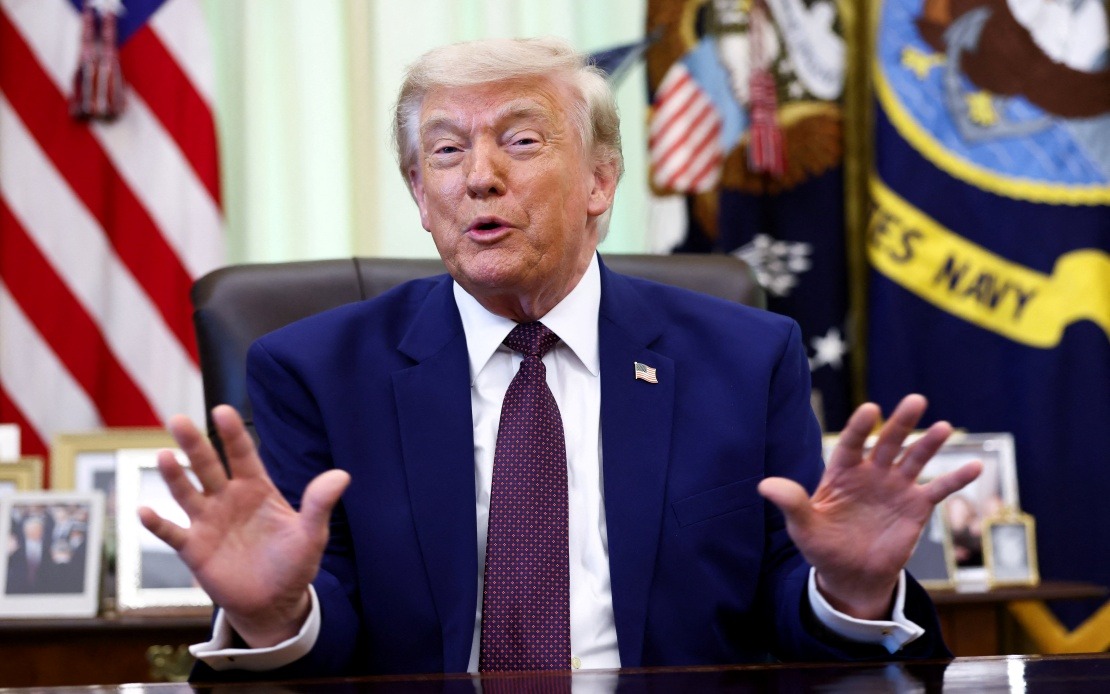
President Donald Trump has escalated his campaign to force passage of the SAVE America Act through the Republican-controlled Senate before the August congressional recess, signalling his growing impatience with legislative progress and the party establishment in Washington. The move underscores deepening tensions between Trump and Senate Majority Leader John Thune, with White House Press Secretary Karoline Leavitt publicly acknowledging that the president's patience has begun to wear thin. In a characteristically combative post on Truth Social, Trump called on all Republican senators to "terminate the Filibuster" and immediately advance the legislation alongside budget and debt ceiling votes, casting his ultimatum as urgent business that cannot wait.
The SAVE America Act, formally titled the Safeguard American Voter Eligibility Act, represents a cornerstone of Republican efforts to reshape voting access in the United States. The legislation would mandate that voters present either a passport or birth certificate when registering for federal elections, a requirement that Republicans argue is essential to prevent electoral fraud. Proponents contend that current state-level systems allow insufficient verification of citizenship status, enabling foreign nationals and undocumented immigrants to register in certain jurisdictions where documentation requirements remain lax or are not consistently enforced.
Trump's rhetorical strategy reveals his core political calculation: by framing Democratic opposition to the bill as evidence that the opposing party would dismantle the filibuster if given the chance, he justifies preemptive action by his own party. He explicitly argues that Republicans must abolish the sixty-vote threshold now to secure passage while they retain Senate control, preventing Democrats from using the same procedural tool against Republican interests should power shift. This logic, presented repeatedly by Trump and echoed by allies, positions filibuster elimination not as an unprecedented assault on Senate tradition but as defensive necessity.
The timing reflects Trump's strategic priorities as his administration enters a critical phase. By pressing for votes before the August break, he seeks to translate Republican Senate majorities into tangible legislative achievements that appeal to his political base and demonstrate executive effectiveness. The deadline creates artificial urgency designed to overcome procedural hesitations and moderate Republican concerns about dismantling the filibuster, a step that many senators historically view with constitutional and institutional anxiety. The bundling of the SAVE America Act with budget and debt ceiling negotiations suggests Trump views voting restrictions as inseparable from broader fiscal battles that Congress must resolve.
For Malaysian and Southeast Asian observers, Trump's voting legislation offers instructive parallels to debates occurring in the region regarding electoral integrity and voter verification systems. Many countries in ASEAN employ identity documentation requirements for voting, though implementation varies widely. Malaysia's own electoral system requires voters to possess valid MyKad identification, reflecting assumptions about citizenship verification that the SAVE America Act aims to standardise across American states. However, Malaysia's experience demonstrates that documentation requirements alone do not eliminate electoral disputes or guarantee public confidence in results, a point American policymakers might weigh.
The legislative battle also illuminates fundamental tensions within the Republican coalition. Senate moderates and institutionalists fear that eliminating the filibuster, even for a single bill, establishes precedent that subsequent majorities will exploit until the chamber's deliberative functions erode entirely. Trump's pressure campaign dismisses such concerns as naive, reflecting his conviction that procedural niceties matter less than electoral victory and legislative momentum. This friction between Trump's transactional approach and traditional Republican Senate culture could determine whether the SAVE America Act advances or stalls.
Democratic opposition to the legislation centers on arguments that documentation requirements disproportionately burden minority voters, elderly citizens, and economically disadvantaged populations who may lack passports or formal birth certificates. Civil rights organisations contend that no credible evidence supports claims of widespread voter fraud by non-citizens, and that restrictive voting measures primarily serve to suppress turnout among Democratic constituencies. These arguments have resonated with enough Senate Republicans to complicate passage even with the party's nominal majority.
Trump's willingness to openly criticise Thune reflects his declining patience with Republican leadership that he views as insufficiently loyal or aggressive. The Senate Majority Leader has attempted to balance competing demands from Trump and from senators concerned about institutional norms and constituent preferences. Thune's cautious approach has increasingly frustrated the president, who demands immediate action rather than extended deliberation. This dynamic suggests potential leadership instability within the Senate Republican conference should Trump conclude that Thune cannot deliver his legislative agenda.
The ultimate fate of the SAVE America Act remains uncertain, dependent on whether Trump can convert pressure into votes and whether Senate Republicans ultimately prioritise his demands over institutional and procedural concerns. The legislation exemplifies the ongoing struggle between efficiency and deliberation that characterises modern American governance, with Trump representing those demanding rapid legislative action and traditional senators defending slower, consensus-based processes. For international observers, the outcome will signal whether Trump's movement has sufficiently transformed Republican institutional behaviour to enable sweeping legislative change despite procedural obstacles.

