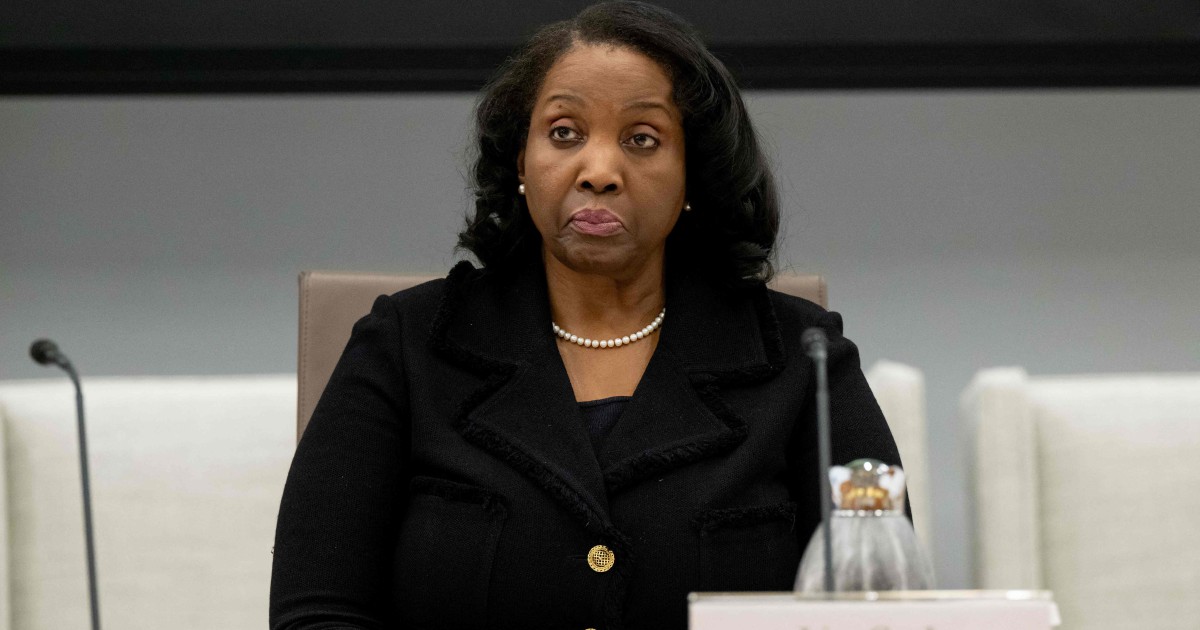
President Donald Trump is pressing ahead with a revised strategy to remove Federal Reserve Governor Lisa Cook from her position, documents revealed to AFP on Friday show, in a continuation of his efforts that were rebuffed by the Supreme Court earlier this year. The fresh initiative represents Trump's determination to wrest control over the nation's monetary policymaking apparatus, an institution traditionally insulated from presidential removal power through statutory protections that have defined central banking independence for decades.
The mortgage fraud allegations against Cook form the stated basis for Trump's renewed action, though the matter has become entangled in broader questions about presidential authority over the Federal Reserve's governance structure. The timing of the announcement, arriving after the June Supreme Court rejection of Trump's earlier attempt, suggests the White House has crafted what it believes represents a legally more defensible pathway to achieving the same outcome—Cook's removal from the monetary policy committee that guides interest rate decisions affecting trillions of dollars in global financial markets.
Central bank independence has been a cornerstone of American economic policy since the Fed's founding in 1913, with formal removal protections established through legislation precisely to prevent political pressure from distorting monetary decisions. The Federal Reserve Act specifies grounds for removing governors, a legal framework designed to insulate rate-setting from electoral cycles and partisan interests. Trump's challenge to this institutional architecture reflects a broader tendency within his administration to test and expand executive prerogatives across bureaucratic and independent agencies, an approach that has generated constitutional tensions throughout his first term and into his return to office.
The Supreme Court's June decision effectively closed off Trump's initial legal avenue, suggesting the justices found insufficient grounds under existing statutory authority for the removal action he pursued at that time. Rather than abandoning the objective, however, the White House has evidently refined its approach, potentially incorporating different legal theories or administrative procedures that might withstand judicial scrutiny. This persistence underscores how intensely Trump views control over the Federal Reserve as essential to implementing his economic agenda, particularly given the institution's authority over inflation, employment, and credit conditions that directly influence growth trajectories and electoral prospects.
Cook, who was appointed to the Federal Reserve Board by President Joe Biden and confirmed by the Senate, represents the kind of institutional independence that has historically protected the central bank from executive capture. Her position on monetary policy matters—whether inclined toward accommodative stances that prioritize employment or tighter approaches emphasizing price stability—could theoretically shift Federal Reserve decisions if she were removed and replaced by someone more aligned with Trump administration preferences. The high stakes of this struggle explain why Trump has invested political capital pursuing her removal despite the constitutional and statutory obstacles involved.
The mortgage fraud allegations, while the formal justification for removal action, warrant closer examination regarding their substantive basis and how they compare to standards applied in other removal contexts. Whether such allegations, if substantiated, would typically meet thresholds for removing a governor remains an open question in case law and Federal Reserve practice. The framing of these charges thus becomes significant—they function simultaneously as the technical grounds for removal and as a vehicle through which Trump challenges the institutional autonomy that the Fed's statutory framework was designed to guarantee.
For Malaysian and Southeast Asian observers, this institutional struggle carries implications extending beyond American domestic policy. The Federal Reserve's decisions on interest rates, dollar policy, and financial regulation cascade through global markets, affecting currency valuations, capital flows, and credit conditions in emerging economies throughout the region. Political pressure exerted on the Fed could theoretically alter monetary priorities in ways that disadvantage foreign borrowers, heighten volatility in regional stock and bond markets, or generate currency instability. The principle at stake—whether independent institutions can maintain autonomy against executive pressure—resonates across authoritarian and democratic systems grappling with governance questions.
The legal architecture supporting central bank independence in the United States emerged from historical experience with political interference in monetary policy, particularly the disastrous hyperinflation era of the 1970s when Federal Reserve leadership lacked sufficient protection from presidential demands. The statutory safeguards that Trump is challenging were deliberately constructed to prevent recurrence of such outcomes. Dismantling those protections could diminish the credibility of American monetary policy among global investors and counterparties, potentially raising borrowing costs and reducing the premium that dollar assets have traditionally commanded in international portfolios.
The coming weeks will reveal whether Trump's revised legal approach succeeds in navigating the obstacles that halted his initial effort. Should he succeed in removing Cook and appointing a replacement more aligned with his economic philosophy, the precedent would fundamentally alter how future presidents relate to the Federal Reserve, potentially converting it from an institution protected by statute into one vulnerable to electoral cycles and executive pressure. Alternatively, if courts again reject his attempt, Trump may face a more difficult institutional reality than his supporters anticipated when he returned to the presidency.
The broader significance of this contest extends to questions about accountability, expertise, and democratic legitimacy within technical institutions. Central banks require insulation from daily political pressures to function effectively, yet remain ultimately accountable to democratic societies. Balancing those tensions remains unresolved, and Trump's challenge forces that question into sharper focus than it has been in generations.

