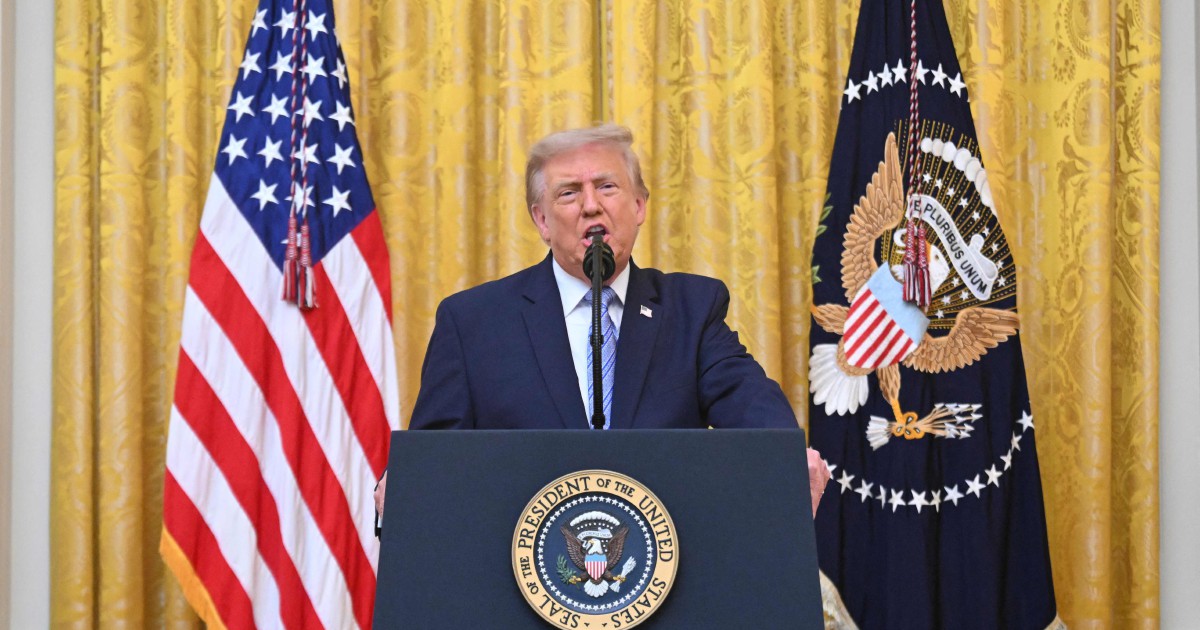
During remarks delivered on Thursday, US President Donald Trump revived allegations concerning the integrity of the 2020 presidential election that fact-checkers and election officials have repeatedly disputed. His comments represent a continued focus on the outcome of that contest, allegations he has maintained throughout multiple legal challenges and official investigations into the event.
Trump specifically claimed that China had obtained millions of voter records, presenting this as evidence of foreign interference in the electoral process. He additionally suggested that Venezuela possessed the technical capability to manipulate American voting machines, raising concerns about foreign adversaries' potential influence over the country's democratic mechanisms. These assertions form part of a broader narrative regarding the 2020 election that Trump has advanced since losing to Democrat Joe Biden.
Extensive investigations by election officials, law enforcement agencies, and independent fact-checkers have found no evidence supporting the core allegations Trump raised. The Department of Homeland Security, under his administration at the time, called the 2020 election "the most secure in American history." State election officials from both parties certified results, and numerous lawsuits challenging the election's legitimacy were dismissed by courts, including judges appointed by Trump himself.
For Malaysian audiences, understanding the American political context is crucial. The persistence of these claims in US political discourse reflects deeper divisions within the American democratic system and illustrates how electoral controversies can persist even after official verification. This has implications for how Southeast Asian nations perceive the stability of democratic institutions generally, particularly as countries in the region navigate their own electoral processes and concerns about foreign interference.
The allegations about Chinese involvement mirror broader geopolitical tensions between Washington and Beijing, tensions that extend beyond electoral matters into technology, trade, and military presence across the Indo-Pacific region. Malaysia and other ASEAN countries have stakes in these US-China relations, as tensions affect regional security arrangements, investment flows, and technological sovereignty decisions facing Southeast Asian governments.
Venezuela's mention in Trump's remarks reflects decades-long American adversarial relations with the South American nation. The invocation of Venezuelan capabilities to interfere with American voting systems appears designed to underscore connections between various state actors allegedly hostile to American interests, though substantiation remains absent from public records and verified investigations.
The timing of Trump's remarks, occurring within his presidential tenure, suggests a continued focus on grievances surrounding the 2020 election rather than forward-looking policy initiatives. This represents a significant portion of political discourse energy directed toward revisiting past contests rather than addressing contemporaneous challenges facing the nation.
Election security remains a legitimate policy concern in democracies worldwide, including in Southeast Asia, where electoral integrity remains fundamental to democratic legitimacy. However, distinguishing between documented vulnerabilities requiring remediation and unsubstantiated claims represents an essential responsibility for political leadership. Blurring these distinctions can erode public confidence in electoral systems without proportional security benefits.
The receptiveness with which such claims are received varies significantly within American political circles. Trump's core supporters have shown greater willingness to credit these narratives, while Democratic politicians and many election officials have rejected them outright. This polarization itself represents a challenge to democratic functioning, as shared agreement on basic electoral facts becomes increasingly elusive.
For regional observers, the controversy underscores how electoral disputes in major democracies can become prolonged political issues rather than settled matters of fact. This dynamic carries lessons for Southeast Asian democracies considering how to manage post-election disputes and maintain institutional stability when electoral outcomes are contested.
Multiple independent investigations, including audits and recounts in disputed states, confirmed the 2020 results. The Department of Justice found no widespread fraud that would have altered the election outcome. These official findings have not persuaded Trump or his allies to abandon their contested narrative, indicating that additional investigations or fact-checking efforts may prove insufficient to shift political positions already deeply entrenched.
The Global Disinformation Index and international media watchdogs have noted that unfounded election fraud claims originating from major democracies can influence discourse in other nations. Southeast Asian media consumers and policymakers increasingly confront information ecosystems where claims debunked in one context circulate globally with modified framing, requiring sophisticated media literacy.
Trump's persistence in advancing these allegations also illustrates how political actors in democracies navigate the tension between challenging official results and accepting democratic outcomes. This challenge is hardly unique to contemporary America, but its prominence in a leading global democracy carries weight in international democratic discourse and may influence how political actors elsewhere conceptualize acceptable post-election conduct.

