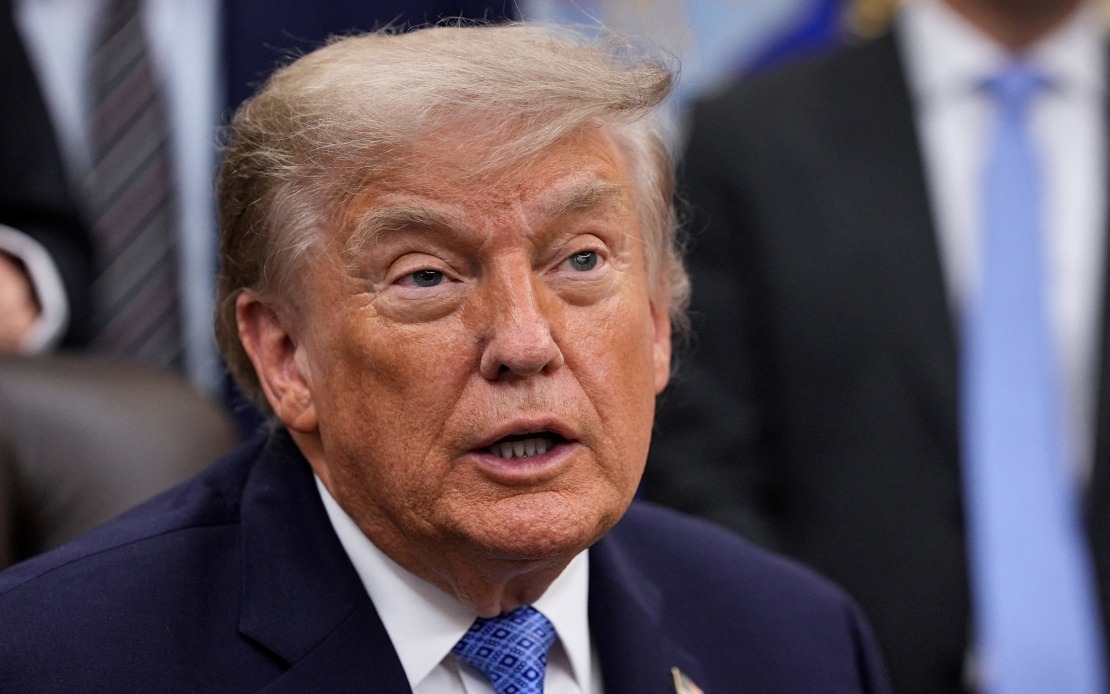
US President Donald Trump has escalated trade tensions with Canada by linking air quality to tariff policy, threatening to raise duties on Canadian imports unless the neighbouring country takes responsibility for wildfire smoke drifting across the border. In a Friday post on his Truth Social platform, Trump insisted that the economic costs of the pollution "must of necessity be added to the TARIFFS Canada is currently paying," indicating he would pursue Mark Carney, Canada's Prime Minister, to discuss the matter directly.
The smoke affecting much of northeastern North America originates primarily from dozens of active wildfires burning across Ontario and Minnesota. The phenomenon has created hazardous air quality conditions spanning major urban centres including Toronto, Chicago, Detroit, and Washington, with New York experiencing particularly poor visibility and persistent smoke odours throughout the affected region. The cross-border nature of the crisis underscores the physical reality that environmental challenges do not respect international boundaries, a reality that has nonetheless become entangled with broader trade disputes.
Trump's characterisation of the situation centres on allegations of Canadian forest mismanagement. He contended that Canada has failed to maintain its forests adequately and remove accumulated brush and debris, which he claimed directly precipitated the severe wildfires now plaguing both countries. His rhetoric escalated further, describing the United States as being "unnecessarily invaded by filthy, polluted, and unhealthy air, the quality of which is dangerous, and totally unacceptable." This framing transforms an environmental incident into a sovereignty issue, positioning American citizens as victims of Canadian negligence.
However, the scientific consensus on wildfire causation diverges markedly from Trump's analysis. Research overwhelmingly attributes the increasing frequency and intensity of North American wildfires to climate change rather than forest management deficiencies alone. Rising temperatures, prolonged droughts, and extended fire seasons create conditions where even well-maintained forests become combustible. This disconnect between Trump's public statements and established scientific understanding raises questions about the true motivations behind his tariff threats, particularly given the administration's mixed record on climate science acceptance.
Ontario Premier Doug Ford responded to the criticism with a pointed rebuke, suggesting that political grandstanding should yield to practical cooperation. Ford noted that Canada had consistently provided disaster assistance to American communities during their own emergencies, establishing a precedent of mutual aid rather than blame assignment. His intervention highlighted the traditional cross-border collaborative approach to environmental crises, contrasting sharply with Trump's confrontational stance. The Premier's reference to Canada's past assistance underscored that resource-sharing during natural disasters typically transcends political calculation.
The tariff threat represents a significant development in US-Canada relations, as it weaponises environmental consequences for trade objectives. This approach conflates distinct policy domains—climate and trade—in ways that complicate resolution of either issue. By linking air quality to tariff schedules, Trump injects economic coercion into what might otherwise be a technical discussion about forest management practices and transboundary pollution. The move suggests that environmental degradation could become leverage in ongoing trade negotiations, setting a precedent that troubles environmental cooperation generally.
For Southeast Asian observers, the Trump-Canada dispute carries implications beyond North American relations. The incident demonstrates how trade policy increasingly intertwines with environmental and climate matters globally. Nations across Southeast Asia that depend on forest ecosystems and face similar transboundary smoke challenges—particularly during dry seasons—may find themselves navigating comparable pressures. The precedent of weaponising environmental cross-border impacts through tariff threats could reshape how regional powers address shared environmental crises.
The timing of Trump's intervention reflects broader tensions in US-Canada relations extending well beyond wildfires. Trade disputes between the nations have periodified American politics for years, with tariffs on Canadian steel, aluminium, and agricultural products generating ongoing friction. By anchoring tariff increases in environmental grievance, Trump attempts to reframe protectionist measures as responses to legitimate health and safety concerns. This rhetorical manoeuvre creates political cover for trade actions that might otherwise face domestic opposition from business interests benefiting from continental trade flows.
The wildfire situation itself remains a pressing public health challenge regardless of political attribution. Air quality alerts continue affecting millions of people across both countries, creating genuine respiratory health risks particularly for vulnerable populations including children, elderly persons, and those with existing respiratory conditions. Schools have restricted outdoor activities, sports events have been postponed, and hospitals have treated increased numbers of air quality-related complaints. These real-world consequences extend beyond partisan debate, affecting ordinary citizens in both nations who bear no responsibility for either forest management policies or tariff decisions.
Moving forward, the effectiveness of Trump's tariff leverage in compelling Canadian action remains uncertain. Tariffs would likely increase costs for American consumers and businesses reliant on Canadian inputs, potentially creating domestic political pressure against the policy. Conversely, Canadian officials might resist responding to coercion, viewing tariff threats as illegitimate pressure tactics unmoored from genuine environmental cooperation. The approach risks poisoning the bilateral relationship precisely when collaborative crisis management would serve both nations' interests most effectively.
The broader question facing both governments concerns whether environmental challenges should be addressed through cooperative scientific and technical approaches or through trade coercion and political blame assignment. Historical precedent suggests that transboundary pollution issues resolve most effectively when nations treat them as shared problems requiring joint solutions rather than as opportunities for economic leverage. As climate change intensifies environmental stress across North America and globally, the willingness of major trading partners to cooperate rather than threaten will increasingly determine outcomes affecting millions of people's health and wellbeing.

