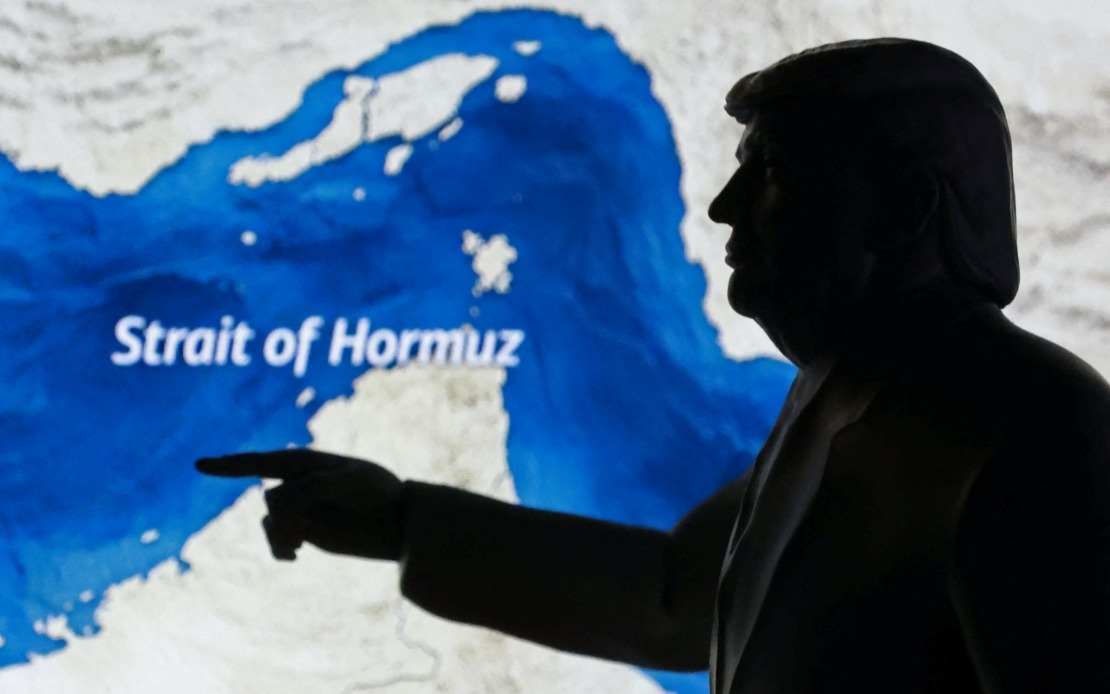
President Donald Trump has issued an uncompromising ultimatum regarding maritime security in one of the world's most critical shipping corridors, warning that the United States will respond to Iranian attacks on commercial vessels with strikes targeting Iranian infrastructure. The American leader announced the policy via his Truth Social platform on Wednesday, pledging that any attack on ships transiting the Strait of Hormuz—whether conducted by missiles, rockets, drones, or other weapons—would trigger American bombing campaigns against Iranian bridges or power plants, potentially including facilities near or within Tehran itself.
The stark warning represents a dramatic hardening of the Trump administration's position toward Iran and signals a willingness to escalate military operations in the volatile Persian Gulf region. The threat comes amid an ongoing cycle of tit-for-tat military strikes between Washington and Tehran that has unfolded over the past week, with each side claiming justification for its actions based on the other's preceding aggression. This pattern of escalation directly undermines diplomatic efforts undertaken just weeks earlier, raising questions about the viability of any negotiated settlement between the two adversaries.
For Malaysia and other Southeast Asian nations, the implications of renewed US-Iran hostilities centre on maritime commerce and energy security. The Strait of Hormuz remains the world's most critical oil transit chokepoint, with roughly one-third of all seaborne traded crude petroleum passing through these waters annually. Any sustained conflict affecting shipping in the region carries immediate consequences for fuel prices, supply chain reliability, and overall economic stability across Asia-Pacific economies that depend heavily on Gulf oil imports. Malaysian refineries and petrochemical sectors are particularly vulnerable to supply disruptions from this region.
The confrontation between Washington and Tehran marks a dramatic reversal from the diplomatic progress announced in June, when both nations brokered a framework agreement through Pakistani mediation aimed at resolving a conflict that ignited in February. That accord was intended to establish conditions for a comprehensive peace settlement and appeared to offer an off-ramp from military escalation. The rapid deterioration just weeks after that agreement suggests either fundamental misunderstandings about implementation mechanisms or a deliberate decision by one or both parties to abandon diplomatic channels in favour of military pressure.
American military operations have already targeted multiple Iranian locations throughout the past week, while Iranian forces have responded with strikes on what officials in Tehran claim are US military installations distributed across several countries in the region. This pattern of reciprocal attacks creates a dangerous dynamic wherein each side interprets its own actions as defensive responses to prior provocations, while viewing the opponent's reactions as unjustified aggression. Without third-party mediation or confidence-building measures, such tit-for-tat cycles historically spiral toward uncontrolled conflict.
The specific emphasis on commercial shipping attacks reflects legitimate security concerns about protecting merchant vessels, which remain vulnerable targets in congested shipping lanes. However, Trump's promise of a fixed, escalating response mechanism—one infrastructure target per attack—introduces a formulaic quality that may inadvertently invite further Iranian provocations if Tehran calculates the trade-off as acceptable or if miscalculation regarding attack attribution triggers unintended American responses. The absence of clear verification procedures for determining responsibility compounds this risk.
Regional actors, including countries like Malaysia that maintain diplomatic relations with both the United States and Iran, face difficult questions about how to respond to American threats of escalation that could destabilise an already fragile geopolitical situation. Southeast Asian governments typically favour dialogue over confrontation and have consistently advocated for peaceful resolution of disputes through multilateral mechanisms and international law. The current trajectory directly contradicts these principles and threatens to draw regional states into managing spillover effects from a conflict they did not create and cannot easily influence.
The threat to Iranian infrastructure near Tehran specifically suggests a willingness to strike at symbols of national sovereignty and government control, moves that historically provoke nationalist backlash and harden positions within target nations rather than compelling policy changes. Iranian leaders may interpret such threats as existential challenges requiring maximum deterrence, potentially spurring them toward more aggressive responses rather than restraint. This dynamic echoes historical patterns in US-Iran relations where escalatory rhetoric produced counter-escalation rather than capitulation.
Economic consequences extend beyond direct energy supplies to include broader financial market volatility. Insurance premiums for ships transiting the Strait of Hormuz typically spike during periods of heightened military tension, effectively raising transportation costs for all commercial goods moving through the region. These increased costs eventually flow through supply chains affecting consumer prices and manufacturing competitiveness across Asia-Pacific economies. Malaysian exporters and importers both suffer when shipping costs rise unpredictably due to geopolitical instability beyond their control.
The timing of Trump's threat also matters significantly for understanding potential intent. By publicly announcing a predetermined response matrix, the administration arguably aims to deter Iranian attacks through clarity about consequences. However, such public declarations also eliminate flexibility for graduated responses or diplomatic off-ramps that might otherwise allow both sides to claim victory and stand down. Ironically, the very transparency intended to deter Iran may actually constrain American options and remove diplomatic space for de-escalation.
International maritime organisations, including the International Maritime Organization to which Malaysia belongs, may need to develop contingency protocols for vessels operating in high-risk zones. The insurance industry will likely reassess coverage terms and pricing structures. Shipping companies may increasingly reroute around the Strait of Hormuz through longer, more expensive passages, further raising costs for global commerce. These cascading effects demonstrate how bilateral US-Iran tensions quickly become multilateral problems affecting nations with no direct involvement in the original dispute.
The fundamental challenge remains that military threats, however clearly articulated, rarely resolve underlying political disputes between nations. The Strait of Hormuz tensions reflect deeper disagreements about regional hegemony, sanctions regimes, and the terms for normalized relations. Until these core issues receive attention through sustained diplomatic engagement, tactical threats against specific targets will likely prove insufficient to establish lasting stability. The June framework agreement suggested movement toward such engagement, but Trump's recent ultimatum indicates that window may have already closed.

