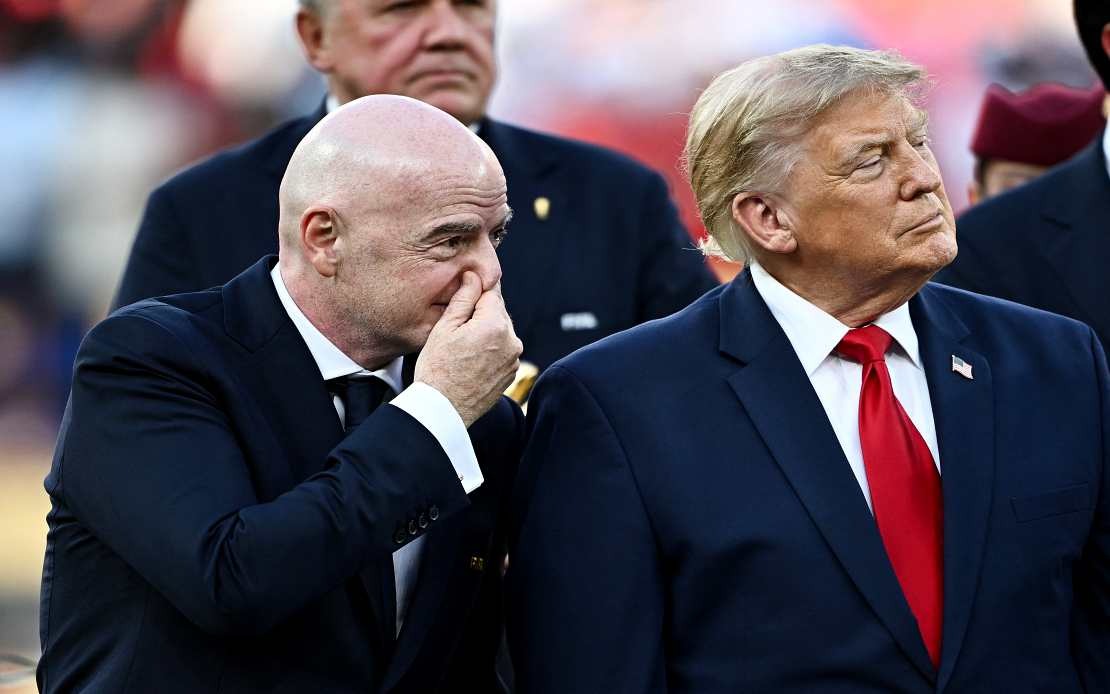
Donald Trump has waded into FIFA's internal power struggle by publicly defending President Gianni Infantino against growing pressure from international football confederations, signalling strong backing for the embattled sports administrator in a move that could shift the political dynamics within world football governance.
The US President's intervention came as Infantino faced coordinated criticism from the Union of European Football Associations, the Asian Football Confederation, and the Confederation of North, Central American and Caribbean Football over his handling of a major commercial restructuring proposal. The three confederations issued a joint letter calling for an independent investigation into the circumstances surrounding FIFA's plan to monetise its commercial rights through a controversial sale of stakes to private investors.
In a statement posted to Truth Social, Trump characterised Infantino as irreplaceable leadership for international football, specifically crediting him with overseeing the most commercially successful World Cup tournament in history. Trump stated that FIFA would make "a terrible mistake" if it considered removing Infantino, and predicted the organisation would never achieve comparable success or financial returns without him. This public endorsement from a former US president adds unexpected political capital to Infantino's position during what many observers view as a crisis of confidence in his tenure.
The controversy stems from FIFA's announcement in July that it intended to raise approximately US$4.2 billion by selling roughly 20 per cent ownership stakes in a newly created commercial entity that would assume control of the federation's media and broadcasting rights, including those for World Cup tournaments. This restructuring represented an unprecedented move toward privatising FIFA's most lucrative revenue streams, fundamentally altering how the world's most popular sport monetises its global broadcasting reach.
Reports suggested that stakes in the proposed commercial venture could be acquired by the investment foundation connected to Joshua Kushner, brother of Jared Kushner, who served as Trump's senior advisor during his presidency. The potential family connection may explain Trump's readiness to defend Infantino personally, linking his backing to broader business relationships and familial networks within international finance and sports commerce.
The backlash to the commercial proposal escalated dramatically when UEFA announced that all its member associations would boycott FIFA competitions if the privatisation scheme proceeded. This represented an extraordinary threat to FIFA's competitive calendar and broadcast revenues, effectively placing European football's most powerful confederations in direct confrontation with FIFA's leadership structure. Such coordination across multiple continental confederations signalled unprecedented unity against a specific FIFA policy initiative.
Facing this coordinated resistance, Infantino convened an emergency meeting with FIFA's leadership in early August to address the growing crisis. During this closed session, federation leaders expressed formal support for the president, though Infantino acknowledged that mistakes had been made in executing the FIFA Forward Enterprise commercial project, essentially admitting missteps in how the proposal had been developed and communicated to confederation leaders.
Following the mounting pressure and the UEFA boycott threat, FIFA announced the complete withdrawal of its commercial rights sale proposal. This reversal represented a significant defeat for Infantino's vision of restructuring FIFA's financial architecture and modernising its revenue generation model. However, the decision to abandon the plan has not entirely resolved questions about Infantino's future leadership or the broader governance challenges facing FIFA, particularly regarding how major strategic decisions are made and whether sufficient consultation occurs with key stakeholders.
Infantino's position within FIFA had already been eroding before the commercial rights controversy, with his influence visibly diminishing within the organisation's leadership circles. The emergency meeting and subsequent policy reversal occurred against a background of accumulated discontent with his management style and strategic direction. This broader loss of influence suggests that even the successful completion of the Qatar World Cup tournament in 2022—which Trump cited as justification for Infantino's indispensability—has not inoculated him against internal criticism.
Trump's public intervention introduces an additional complication into FIFA's internal dynamics, potentially signalling to Infantino that powerful international figures with significant business interests remain committed to his leadership. However, it may simultaneously reinforce perceptions among European confederations that FIFA decision-making processes are insufficiently transparent and that commercial interests connected to wealthy external actors wield disproportionate influence over federation policy.
For Southeast Asian football organisations and the AFC, which joined in the critical letter, Trump's endorsement of Infantino may be viewed with ambivalence. While Malaysian and regional football administrators have benefited from FIFA's global governance structures and development initiatives, the controversy highlights tensions between centralised FIFA decision-making and the legitimate interests of confederation members in participating meaningfully in strategic policy development. The commercial rights dispute demonstrated that major federation decisions can be implemented without adequate consultation with regional stakeholders who bear significant consequences.
Moving forward, Infantino's position appears to have stabilised in the immediate term due to both the policy reversal and Trump's public support, but fundamental questions about FIFA governance and decision-making processes remain unresolved. The federation must develop more inclusive mechanisms for consulting with confederations on major strategic initiatives if it hopes to prevent similar crises. For Malaysian football observers and administrators, the episode underscores the importance of regional confederations maintaining unified positions when global sports governance decisions threaten their interests or exclude them from meaningful participation.

