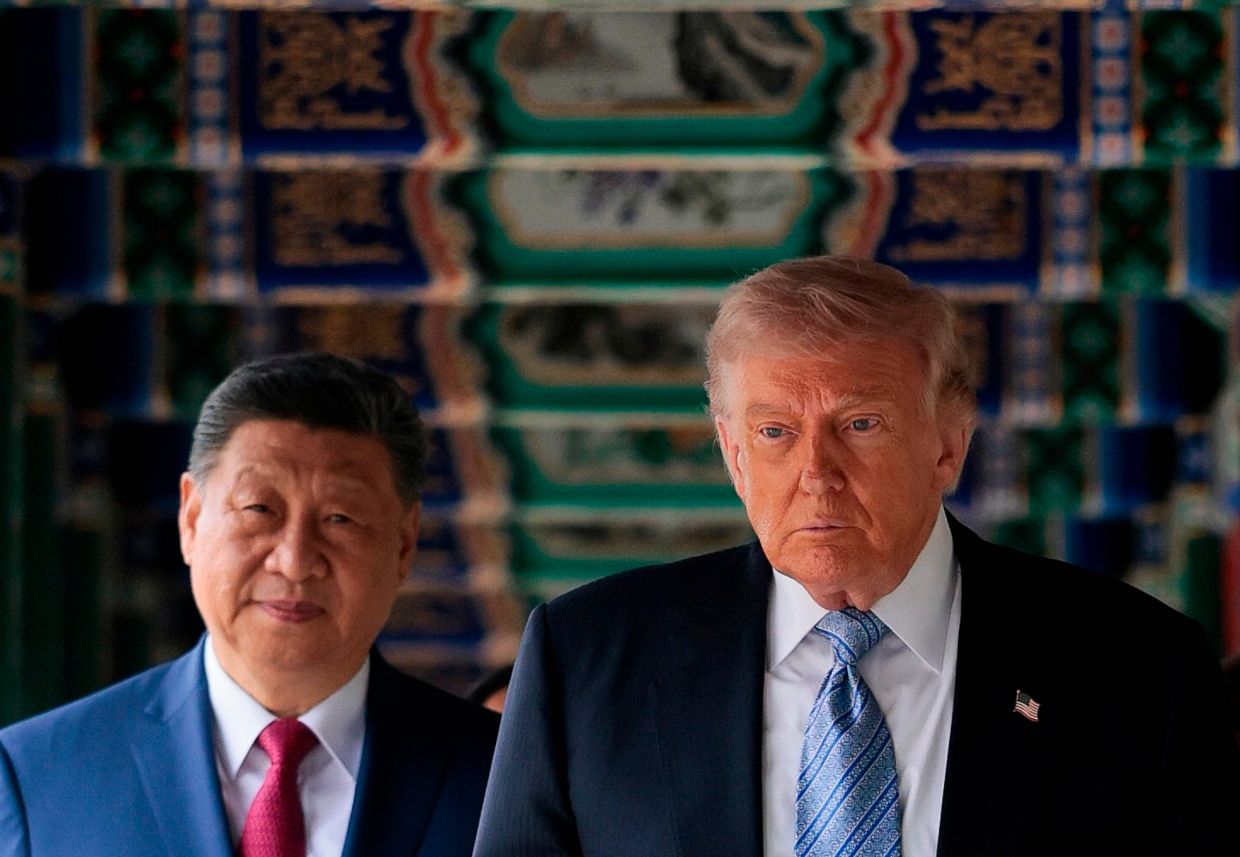
US President Donald Trump has demonstrated characteristic ambivalence toward Beijing, expressing disappointment over allegations that China is supplying weapons to Iran while simultaneously maintaining diplomatic preparations for Chinese leader Xi Jinping's scheduled visit to the United States on September 24. The apparent contradiction reflects a broader pattern of Trump's approach to managing what remains one of the world's most consequential bilateral relationships, marked by aggressive public posturing coupled with backchannels to preserve engagement.
The tension surfaced following reports that weapons would be transported from western China through Pakistan in a transaction valued at US$60 million to US$70 million. When asked about these allegations, Trump suggested he would find such activity surprising, citing assurances he received from Xi during their May meeting in Beijing. "He told me very strongly he wouldn't partake. But he knows I'd be quite disappointed," Trump said, signalling both his reliance on the Chinese leader's word and implicit warning about the consequences of violation.
Beijing's foreign ministry swiftly rejected the weaponry report as "untrue and not factual at all," reiterating China's purported commitment to de-escalation in the Middle East conflict. This denial mirrors Beijing's previous dismissal of similar allegations made before Trump's May visit, when Chinese officials termed comparable claims "completely groundless." The cyclical nature of these accusations and denials has become a fixture of Sino-American discourse, with each side maintaining firm positions that leave little room for verification or resolution.
Trump's conditional tolerance of Chinese conduct—marked by warnings about consequences should the denials prove false—sits uneasily alongside his concurrent assault on American health figures over the Covid-19 pandemic's origins. Just hours before discussing the weapons allegations, Trump launched a broadside against former US health official Anthony Fauci on his social media platform, reviving claims that the coronavirus leaked from a Wuhan laboratory. Trump accused Fauci of systematically attempting to "protect China," a charge that transforms scientific disagreement into a matter of alleged disloyalty or corruption.
These attacks on Fauci represent more than domestic political theatre; they carry implications for Trump's broader narrative about Chinese culpability and trustworthiness. By framing the pandemic's origin as established fact rather than contested science—despite the broader scientific consensus favouring natural spillover from animals—Trump creates an interpretive framework where Chinese deception becomes almost assumed. This underlying suspicion complicates his simultaneous effort to trust Xi's assurances about non-involvement in Iran's affairs, creating cognitive dissonance in his diplomatic messaging.
The administration's failure to impose consequences following its accusations reveals the limits of Trump's rhetoric. Twelve days after delivering a prime-time address alleging that China had conducted "the largest compromise of election data in history" and stolen 220 million US voter files, Trump declassified supporting documents and warned of an "unprecedented election security nightmare." Yet this dramatic escalation of accusations has been followed by no new sanctions, trade penalties, or diplomatic recriminations. Instead, preparation for Xi's September visit has proceeded uninterrupted, suggesting that Trump's public denunciations serve more as negotiating theatre than policy direction.
This pattern reflects the structural tension within Trump's China approach. Last week, Trump claimed that China was not "participating" in the Iran war, citing his May conversation with Xi as evidence. The US president stated that he was taking Xi "at his word" based on their bilateral relationship, a striking invocation of personal diplomatic trust that contradicts simultaneous accusations of wholesale election interference and weapons proliferation. Trump's warning that Chinese assistance to Iran "would be very bad for them" functions as both threat and face-saving device, allowing both leaders to maintain positions without immediate confrontation.
For regional observers in Southeast Asia, this volatility presents both risks and opportunities. Trump's unpredictable oscillation between accusation and accommodation makes it difficult for nations like Malaysia, Singapore, and Vietnam to calibrate their own China policies. The US President's tendency to prioritize personal relationships with Xi over institutional constraints or consistent application of consequences raises questions about the durability of American security commitments and the reliability of Washington's approach to regional concerns about Chinese assertiveness.
The September visit itself carries symbolic weight beyond the immediate bilateral agenda. Xi's presence in Washington during a politically charged period in the American calendar suggests that despite rhetorical fireworks, Trump views maintaining high-level engagement with Beijing as preferable to sustained escalation. The visit provides both leaders with opportunities to reset expectations, manage misunderstandings, and potentially establish clearer red lines—though Trump's pattern suggests such clarity may prove elusive. Whether concrete agreements emerge or the two nations simply reset the conversational baseline remains uncertain.
Trump's mixed signals ultimately reflect the genuine complexity of modern great-power competition. The United States and China maintain mutual interests in avoiding catastrophic confrontation while competing across economics, technology, and geopolitics. Trump's willingness to alternate between harsh condemnation and diplomatic engagement mirrors the contradictions inherent in this relationship. However, the absence of follow-through on accusations and the continuation of engagement despite inflammatory rhetoric risk reducing American credibility both with allies concerned about Chinese behaviour and with Beijing, which may conclude that threats carry limited weight.
The implications extend beyond bilateral Sino-American relations into broader questions about the international order. If the world's two major powers conduct diplomacy through alternating cycles of accusation and accommodation, with limited institutional consequences for alleged violations, it creates space for grey-zone activities by all actors. For Southeast Asian nations seeking to balance great-power interests while protecting their sovereignty, understanding whether Trump's inconsistency reflects strategic calculation or policy incoherence becomes essential to managing regional stability and charting independent courses.

