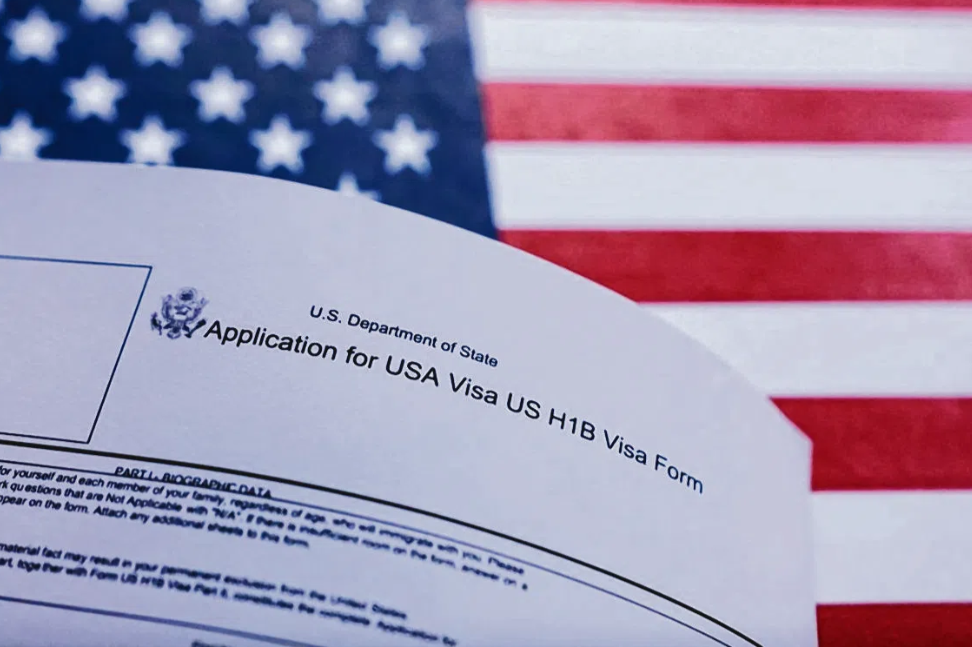
The departure of skilled foreign workers from American technology companies marks a pivotal shift in decades-long patterns of brain drain to the United States. Deepak, a 44-year-old technology professional, symbolises this reversal—after fifteen years building a career in America, he made the wrenching decision in May to uproot his wife and two children, selling two houses and dismantling the life he had constructed to return to India. His choice reflects a broader calculation that has become unavoidable for thousands of H-1B visa holders: the mounting legal, financial, and psychological costs of remaining in the United States now outweigh the professional advantages that once made emigration an obvious choice.
President Donald Trump's expansive immigration policies have created an extraordinarily hostile environment for temporary visa holders seeking to maintain their professional status. The administration's proposal to impose a $100,000 application fee for new H-1B visas—a staggering twenty-five-fold increase from existing charges—signalled an unmistakable intent to restrict foreign talent flows, even after a federal judge struck down this particular measure as unlawful in June. The subsequent proposal for a $4,000 surcharge on H-1B extensions and renewals, set to take effect in September, demonstrates the administration's determination to escalate barriers through alternative regulatory mechanisms. For workers like Deepak, these escalating costs combined with byzantine application procedures created paralyzing uncertainty about their legal status and employment prospects.
The psychological burden accompanying visa insecurity has proven as consequential as the financial obstacles. Unlike American citizens, H-1B holders facing redundancy must secure new employment within sixty days or face mandatory departure. This precarious position transforms job loss from a temporary setback into an existential crisis. The anxiety surrounding visa status—amplified by constantly shifting regulations that companies themselves struggle to interpret—has fundamentally altered the calculus for foreign workers. Where previous generations viewed temporary visa status as an acceptable price for access to Silicon Valley's innovation ecosystem and premium salaries, contemporary H-1B holders increasingly view it as an unsustainable constraint on their autonomy and security. Deepak's experience exemplifies this psychological reorientation: despite securing employment relatively quickly after his October layoff, he concluded that leaving America offered greater peace of mind than remaining in perpetual fear of visa complications.
Statistical evidence confirms that this sentiment reflects a genuine phenomenon rather than isolated anecdotal experience. Data compiled by Xpheno, a Bengaluru-based talent consulting firm, reveals that approximately 15,100 Indian professionals returned home in 2025, compared with 9,800 in 2024—a fifty-four percent year-on-year increase. More strikingly, 7,300 professionals had already returned during the first portion of 2026, suggesting the exodus is accelerating rather than stabilising. China's Ministry of Education reported that 536,000 students returned to China in 2025 after completing their education abroad, representing an 8.3 percent increase from the previous year. While these Chinese figures encompass broader student populations rather than exclusively H-1B visa holders, the directional trend indicates that the traditional American Dream narrative has lost considerable appeal across Asia's technology sectors.
The deterioration in H-1B petition approvals among major technology employers substantiates these departure trends. Analysis of data from the United States Citizenship and Immigration Services indicates that the top one hundred employers—including Amazon, Tata Consultancy Services, Infosys, Apple, and Microsoft—are tracking toward a decline exceeding ten percent in approved H-1B petitions for fiscal year 2026 compared with 2025. This contraction reflects not merely stricter regulatory scrutiny but also fundamental shifts in hiring behaviour within the technology sector. Simultaneous layoffs and hiring freezes across Meta, Visa, Amazon, and numerous other major employers have shrunk available positions while simultaneously expanding the pool of unemployed jobseekers. Foreign professionals have become the first casualties in this retrenchment, systematically deprioritised during both hiring decisions and workforce reductions despite their specialised skills.
The personal dimension of this professional exodus reveals the profound toll that immigration uncertainty exacts. Carrie, a Chinese national and data analyst, exemplifies the desperation confronting stranded visa holders. After being placed on notice by her Midwestern employer in her third year on an H-1B visa, she intensified her job search to a frenetic pace—submitting as many as thirty applications daily at her most desperate. That volume has now diminished to five applications per day, reflecting both dwindling energy and the mathematical reality that employer sponsorship has evaporated. With her employment-based visa status dependent on securing new sponsorship by end-August, she confronted a rapidly closing window for remaining in America. Her experience—systematic rejection despite competitive qualifications—demonstrates that even highly trained foreign workers now face insurmountable structural barriers rather than merely competitive labour market conditions.
The scale of the H-1B visa programme and its concentration among specific nationalities magnifies these disruptions. Indian nationals comprise approximately seventy percent of total H-1B visa holders, with Chinese nationals representing another twelve percent. The overwhelming majority work in technology sectors, meaning that policy affecting H-1B visas disproportionately impacts Asia's leading technology talent pools. This concentration created interconnected ecosystems where American technology companies grew dependent on Indian and Chinese technical expertise, and where prestigious American employment became an aspirational milestone for talented young professionals across Asia. Trump administration policies that fundamentally alter the attractiveness or accessibility of H-1B status therefore trigger cascading effects across Asia's talent markets.
Beyond legislative restrictions, hostile social environments have compounded the disincentives toward remaining in America. Reports compiled by the AAPI Equity Alliance document intensifying social hostility and online racist attacks specifically targeting Indian and Chinese professionals, who constitute America's largest, most educated, and highest-earning immigrant groups. These communities, once celebrated as exemplars of successful integration and innovation, have become targets of xenophobic rhetoric and discriminatory behaviour. The coincidence of visa restrictions, employment precarity, and rising social hostility creates a multidimensional push factor that transcends any single policy dimension.
The redirection of returning talent toward India's burgeoning ecosystem of Global Capability Centres offers an alternative pathway that barely existed in previous decades. These GCCs—approximately two thousand operations employing multinational corporations' technical functions within India—have collectively expanded to hire roughly one hundred thousand employees annually since 2023. Research from Xpheno indicates that the top one hundred twenty-five GCCs absorbed approximately seven thousand mid-level and senior technical professionals with more than a decade of experience during the past twelve months, including twenty-eight hundred returnees from American positions. While returning professionals typically encounter compressed salary packages compared with American compensation, the opportunity to leverage accumulated expertise within a thriving local ecosystem has transformed what might previously have been experienced as professional regression into career repositioning.
However, the integration of returning professionals into India's labour market presents nuanced challenges that complicate the narrative of seamless homecoming. Xpheno's research indicates that returnees gain employment advantages only when possessing specialised skills in data analytics or artificial intelligence—expertise that remains scarce relative to demand. Professionals with general experience in product management, software development, or technical leadership find that their American tenure confers limited premium over candidates with comparable Indian experience. This market dynamic suggests that the exodus will selectively absorb only the most specialised talent, while forcing generalist professionals toward either entrepreneurship, skill retraining, or accepting diminished professional status compared with their American tenures.
Some returning professionals are leveraging their accumulated American experience and savings to experiment with career alternatives previously unavailable during years of intense H-1B employment. Ram, a thirty-eight-year-old product manager who returned to Bengaluru in early 2025 after nine years in Connecticut, has consciously chosen to maintain distance from the job market while exploring alternative directions. For the first time since beginning his H-1B journey, Ram has access to what he describes as a luxury of temporal flexibility and genuine choice. Whether this orientation toward professional experimentation represents a minority perspective or signals broader emotional shifts among returning cohorts remains uncertain, but it suggests that the American H-1B programme's loss may represent gain for alternative innovation pathways developing across Asia.
The implications extending from these talent flows transcend American domestic policy or Asian labour markets. A sustained exodus of H-1B talent to India and China fundamentally disrupts assumptions undergirding American technological dominance. For decades, the United States maintained competitive advantages by absorbing and retaining global technical talent, providing immigrants with opportunities to participate in frontier innovation while benefiting from their expertise. As these incentive structures deteriorate through visa restrictions, employment precarity, and hostile social environments, American technology companies face the prospect of diminished access to precisely the talent pools upon which their expansion has depended. Simultaneously, India and China benefit from the repatriation of professionals bearing American experience, credentials, and capital, potentially accelerating technological advancement within these economies. The reversal of brain drain patterns initiated during the Trump administration may ultimately register as a consequential inflection point reshaping global technological competition across subsequent decades.

