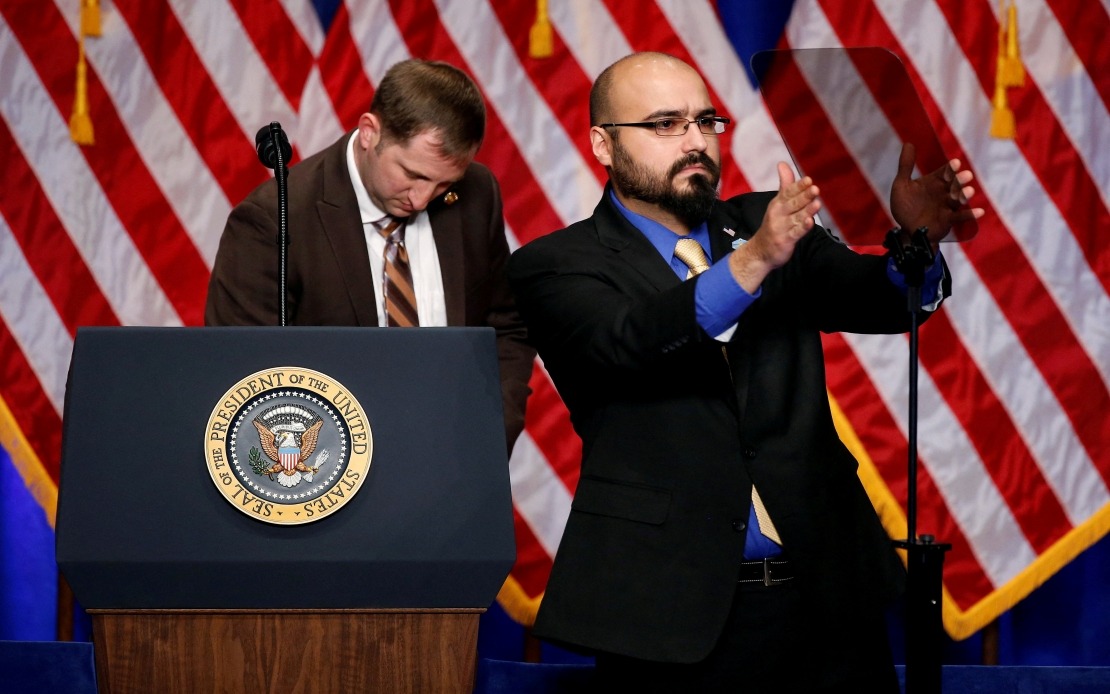
The White House confirmed on Thursday that a teleprompter operator working for United States President Donald Trump has been placed on unpaid leave amid allegations that he exploited privileged access to presidential speeches to place profitable bets. The development represents an unusual breach of operational security within the executive office and raises questions about oversight mechanisms protecting sensitive presidential communications. White House press secretary Karoline Leavitt characterised the situation as "deeply unfortunate and frankly a disgrace," indicating the seriousness with which the administration viewed the transgression.
The operator in question has served in his role since 2016, meaning he has maintained close access to Trump's remarks across both the former president's initial term and his current administration. According to reporting by broadcaster ABC, the individual is suspected of leveraging his inside knowledge of upcoming speeches to accumulate winnings exceeding $100,000 through strategic betting. The scale of alleged profits suggests a pattern of activity rather than isolated wagers, implying sustained exploitation of his proximity to classified or sensitive speechwriting content.
The bets were placed on Kalshi, a platform specialising in prediction markets where users can wager on real-world events. Such platforms have grown increasingly popular among traders seeking alternatives to traditional financial markets, offering the ability to stake money on political outcomes, weather patterns, and other verifiable occurrences. The use of Kalshi in this instance highlights how modern financial technology can create unforeseen vulnerabilities within government operations, as information advantages translate directly into monetary gain through legally accessible trading mechanisms.
For Malaysian and regional observers, this incident underscores broader governance challenges facing democracies worldwide. Insider trading scandals, whether in stock markets or emerging prediction markets, represent systematic failures in institutional integrity. The relative ease with which a White House staff member could apparently convert privileged information into profits raises uncomfortable questions about how thoroughly background checks and security protocols actually function, and whether existing safeguards adequately address modern trading platforms.
Kalshi's leadership moved swiftly to distance the platform from wrongdoing. Robert DeNault, the company's lawyer and head of enforcement, stated on social media that Kalshi had "promptly" identified the suspicious trading activity, conducted an internal investigation, and reported findings to the Commodity Futures Trading Commission, the federal regulator overseeing prediction markets. This rapid referral suggests that while the operator's conduct violated ethical and possibly legal standards, the platform's compliance infrastructure functioned as intended.
The involvement of the Commodity Futures Trading Commission introduces regulatory complexity to the matter. Unlike traditional stock exchanges regulated by the Securities and Exchange Commission, prediction markets operate under CFTC jurisdiction, reflecting their status as derivatives trading venues. The commission now faces the task of determining whether the operator's conduct constitutes criminal insider trading, administrative misconduct, or some hybrid violation that existing statutes may not cleanly address. This ambiguity highlights how financial innovation often outpaces regulatory frameworks.
The teleprompter operator's suspension rather than immediate termination suggests the White House is allowing due process to unfold before making permanent employment decisions. However, the characterisation of events as "a disgrace" by the press secretary indicates Trump administration officials have already formed judgments about culpability. The distinction between unpaid leave and outright dismissal may reflect either procedural caution or an intention to preserve severance options pending legal outcomes.
This incident carries implications beyond individual accountability. It demonstrates vulnerabilities in how presidential communications are protected and who retains access to sensitive information within the executive branch. Teleprompter operators occupy uniquely privileged positions, often seeing speeches before public delivery and sometimes before final vetting by communications advisors. That someone holding such access could allegedly exploit it for personal financial gain suggests institutional safeguards require strengthening across multiple government agencies.
For Southeast Asian policymakers watching American governance, the episode illustrates how modern financial markets create novel incentive structures that traditional security clearance processes may not anticipate. Personnel trusted with access to classified or restricted information historically faced temptation to sell intelligence to foreign adversaries or unauthorised journalists. Contemporary prediction markets offer a more subtle path to converting privileged knowledge into profit—one that generates forensic trails through trading platforms rather than dead drops or encrypted communications.
The broader regulatory landscape surrounding prediction markets remains contested globally. The United States has gradually liberalised rules around such platforms following years of prohibition, but the regulatory environment remains comparatively restrictive compared to offshore venues. This insider trading incident will likely inform ongoing policy discussions about whether expanded prediction markets warrant stronger governance requirements or represent acceptable risks accompanying financial innovation.
Kalshi's cooperation with federal regulators and proactive referral demonstrate how private sector entities can serve as first-line monitors for misconduct. The platform's enforcement infrastructure caught behaviour that White House security protocols apparently missed, suggesting that government agencies might benefit from closer integration with financial sector compliance systems when employees engage in trading activities.
The case ultimately reflects tension between openness and security inherent in democratic governance. Modern prediction markets represent genuine innovations enabling citizens to express probabilistic beliefs about future events through market mechanisms. Yet the same transparency and accessibility that makes these platforms valuable also creates opportunities for exploitation by individuals with information asymmetries. How democracies navigate this tradeoff will shape both financial regulation and government security practices in coming years.
As the CFTC investigation progresses and any potential legal proceedings unfold, this incident will likely establish precedents for how insider trading is prosecuted within the prediction markets context. The outcome may influence not only White House personnel policies but also how other government agencies approach employees' participation in emerging financial markets.

