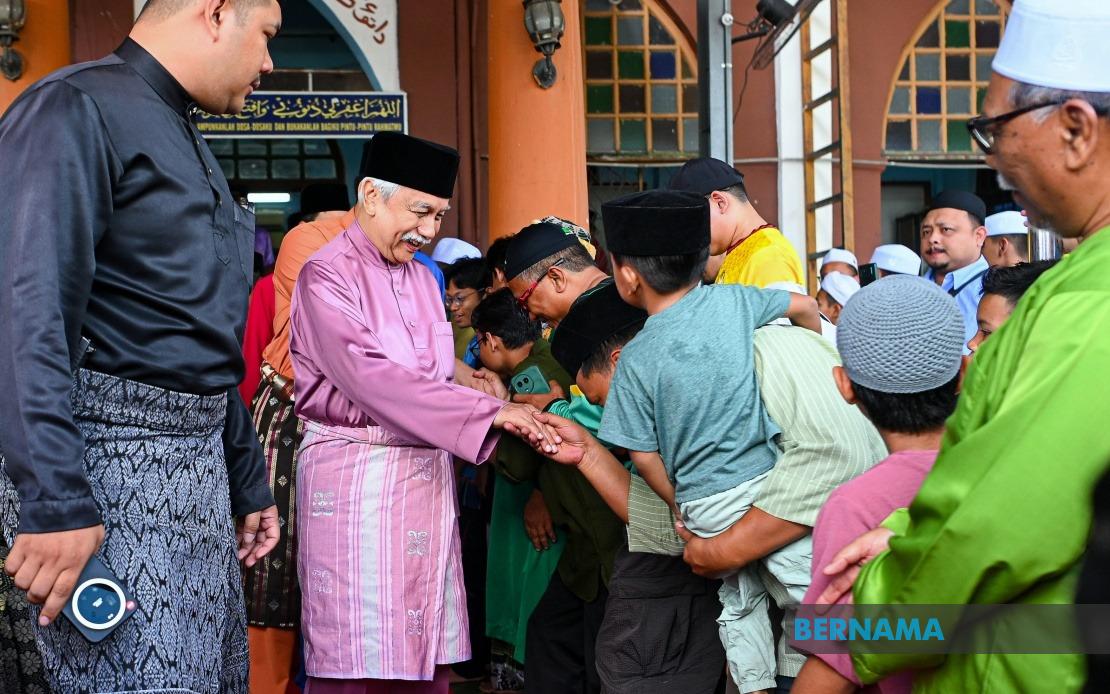
The Yang Dipertuan Besar Negeri Sembilan, Tuanku Muhriz Tuanku Munawir, participated in Friday prayers at Masjid Kariah Pantai in Seremban on July 17, joining more than 500 worshippers in the weekly Islamic religious observance. The occasion reflected the royal household's continued commitment to public religious duties and community participation in the state's spiritual life.
The royal delegation included members of the immediate family, demonstrating the prominence placed on this religious engagement. Accompanying Tuanku Muhriz were his two sons, Tunku Besar Seri Menanti Tunku Ali Redhauddin and Tunku Zain Al-'Abidin, underscoring how senior state leadership models religious observance for broader public emulation. The presence of the Menteri Besar's family served to reinforce the significance of the gathering within Negeri Sembilan's administrative hierarchy.
State officials also lent their presence to the gathering, highlighting the intertwining of political and religious institutions at the state level. Undang of Luak Sungei Ujong Datuk Klana Petra Muhammad Faris Johari and Menteri Besar Datuk Seri Aminuddin Harun attended the prayers, reflecting how traditional leadership structures continue to participate visibly in communal religious practices. Such attendance by government figures at mosques remains common across Malaysia, where religious observance and state governance maintain close associations.
The sermon delivered by Imam Amru Zubair Abu Hanifah addressed contemporary challenges to Islamic faith, a recurring theme in Friday khutbahs across Southeast Asia. By focusing on threats to religious conviction in modern times, the imam engaged with broader concerns among Muslim communities navigating rapid social change, digital connectivity, and competing ideological influences. This thematic choice suggests ongoing discussions within Malaysian Islam about maintaining doctrinal integrity amid globalization and cultural pressures.
Following the completion of prayers, Tuanku Muhriz and his sons engaged directly with congregation members, a practice that emphasizes the accessibility and approachability expected of the region's royal figures. Such informal interaction after formal religious proceedings helps maintain the popular legitimacy of monarchical institutions within their respective communities. The gesture reflects the symbolic importance of visible royal participation in everyday religious life, rather than merely ceremonial appearances.
Distribution of contributions to young attendees represented another dimension of the royal visit, combining spiritual leadership with material support for the younger generation's religious engagement. By providing financial assistance to children participating in Friday prayers, the royal household signaled encouragement for youth involvement in Islamic observance. This practice aligns with broader initiatives across Malaysian states to strengthen religious participation among younger demographics, who increasingly face competing attractions and alternative leisure activities.
The scale of attendance—over 500 congregants—indicates robust community engagement with Friday prayers in urban Seremban despite Malaysia's ongoing urbanization and the pressures facing traditional religious institutions. The large turnout suggests that mosques continue serving as important social and spiritual anchors within town centers, drawing participants across demographic and socioeconomic lines. Such numbers are noteworthy in contemporary Malaysia, where observers have periodically expressed concerns about declining attendance at communal religious observances among certain segments of the population.
For Negeri Sembilan specifically, the occasion underscored the state's position within Malaysia's broader Islamic institutional landscape. As one of the peninsular states with a reigning Yang Dipertuan Besar, Negeri Sembilan maintains distinctive governance arrangements that blend traditional Minangkabau-derived systems with federal constitutional arrangements. Royal participation in mosque activities reinforces this unique constitutional and cultural identity within the federation.
The event also reflected continuity in religious observance practices despite recent disruptions from the COVID-19 pandemic, which had previously limited congregational gathering and public religious participation across Malaysia. The return of large-scale mosque gatherings with prominent state figures represents a reestablishment of pre-pandemic communal religious norms, suggesting confidence in managing public health alongside spiritual obligations.
From a broader Southeast Asian perspective, such occasions demonstrate how monarchical institutions in Malaysia integrate Islamic religious practice into their constitutional and social functions. Unlike purely secular monarchies elsewhere in the region, Malaysian royalty maintains intimate connections with Islamic observance and institutional religion, reflecting the Federation's constitutional position of Islam as the religion of the federation while other religions are freely practiced. This integration of monarchy and Islam remains distinctive within Southeast Asia's contemporary governance models.

