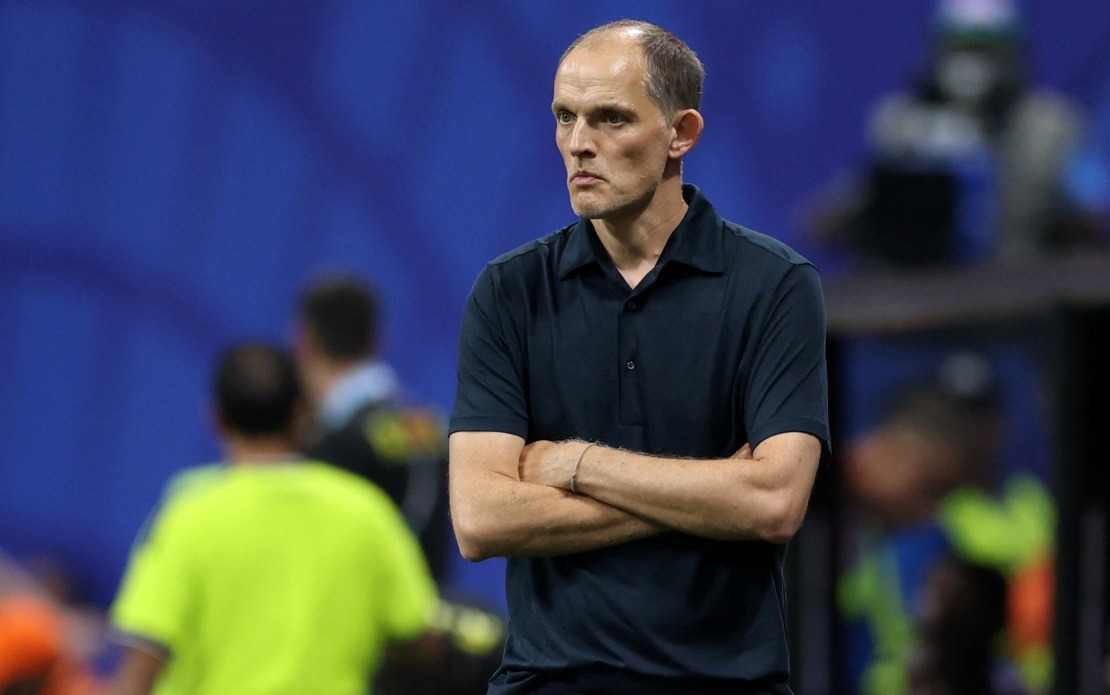
Thomas Tuchel has offered a candid assessment of England's World Cup semi-final defeat to Argentina, pointing to a critical shift in his team's approach after taking the lead as the decisive factor in their 2-1 loss. Speaking in the immediate aftermath of the match on Wednesday, the German coach accepted that his squad's decision-making deteriorated significantly once Anthony Gordon put them ahead in the 55th minute, ultimately contributing to a collapse that saw Argentina score twice in the closing stages to secure passage to the final.
The turnaround came with shocking speed. After Gordon's breakthrough appeared to have positioned England for a remarkable upset against the defending world champions, the momentum reversed with alarming finality. Enzo Fernandez restored parity five minutes from time, leaving England vulnerable, and Lautaro Martinez sealed Argentina's comeback with a stoppage-time winner. For Tuchel, who has built considerable credibility in English football since taking charge, the result represented a deeply frustrating conclusion to what had been a positive tournament performance.
Tuchel's primary criticism focused on England's inability to maintain their tactical discipline and intensity once they had seized the advantage. The team, he explained, became increasingly tentative in possession, ceding territorial control and allowing Argentina to generate numerous dangerous opportunities. Rather than building on their advantage through controlled play or creating additional scoring chances, England found themselves constantly on the back foot, repeatedly forced to defend crosses and shots from an opponent that had supposedly been neutralised by falling behind.
The defensive structure remained unchanged throughout the match, a point Tuchel emphasised when responding to immediate post-game scrutiny of his substitution strategy. England continued operating within their established 4-4-2 formation, meaning the tactical framework itself was not the issue. What shifted, according to the manager, was the quality of execution and the psychological resilience shown by the players themselves. The passivity that crept into England's play represented a behavioural regression rather than a systematic flaw in the setup.
When pressed on his decision-making regarding replacements, Tuchel rejected the suggestion that introducing attacking reinforcements would have altered the outcome. He acknowledged the temptation to push forward in search of a decisive second goal, particularly given the stakes involved in a World Cup semi-final. However, he reasoned that the specific circumstances of the match—characterised by Argentina's intensifying pressure and England's diminished ability to control proceedings—meant that offensive substitutions would have compounded rather than solved their difficulties.
Instead, Tuchel framed the problem as one of execution within an unchanged system. His players had fundamentally lost the ability to win contested possession, a critical ingredient in preventing Argentina from dictating terms. Simultaneously, when England did secure the ball, they struggled to retain it effectively, resulting in frequent turnovers that gifted Argentina repeated opportunities to threaten. The manager recognised that these issues stemmed from decision-making on the pitch rather than the structural framework within which the players were operating.
The German coach acknowledged that such post-match criticism is an inevitable component of football at the highest level, particularly when defeat follows decisions that can reasonably be questioned in hindsight. With millions of observers dissecting every choice, Tuchel suggested a certain philosophical acceptance of debate around tactical selections. Yet he maintained a distinction between accepting discussion and entertaining regrets, a nuance that captured both his humility and his conviction regarding his own judgment.
Despite the disappointment, Tuchel offered a defence of his team's overall performance across the tournament and specifically in this semi-final. He contended that England had produced one of their better displays under his management, operating in exceptionally challenging circumstances against a supremely talented opponent. The achievement of taking the lead against Argentina represented something he felt deserved recognition, even though the inability to convert that advantage into passage to the final overshadowed those positives.
Tuchel's perspective on the match reflected both the margins involved in elite-level football and his assessment of how close England came to engineering a historic outcome. Being one goal away from the final against such opposition represented significant achievement, even if the ultimate result proved bitter. His refusal to express regret suggested confidence in the decision-making process, even while acknowledging that the execution of those decisions at ground level had ultimately faltered when it mattered most.
For Malaysian and Southeast Asian observers of world football, Tuchel's candid post-match analysis offered insight into how elite managers reconcile defeat with their own conviction. The England situation also underscored how tournament football at the highest level can hinge on marginal differences in concentration and psychological resilience. Argentina's experience in recovering from a deficit demonstrated the mental fortitude required to succeed in knockout competitions, a quality that separates champions from capable challengers across all levels of the sport.

