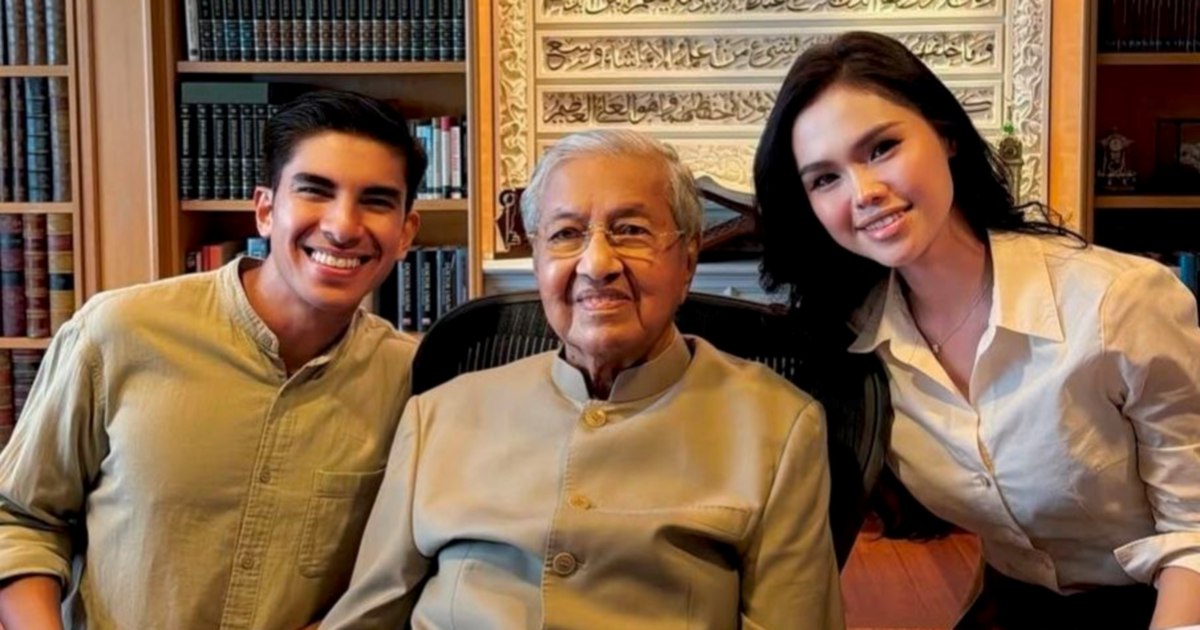
Actress and singer Bella Astillah has disclosed receiving candid marriage counsel from former Prime Minister Tun Dr Mahathir Mohamad during a recent engagement with her fiancé, Muar MP Syed Saddiq Syed Abdul Rahman. The revelation underscores the elevated social position of the couple within Malaysia's political and entertainment spheres, and highlights Tun M's continued willingness to dispense guidance despite his advanced age and removed status from active governance.
The encounter between the entertainment personality and the seasoned political figure represents an interesting intersection of Malaysia's showbusiness and political worlds. Bella Astillah, known for her dual career spanning music and acting, found herself in the company of one of Southeast Asia's most influential political figures, reinforcing how prominent entertainment figures in Malaysia maintain connections across institutional power structures. Such interactions, once reserved for formal state functions, increasingly occur within the context of personal life milestones.
Syed Saddiq Syed Abdul Rahman, the youngest lawmaker representing Muar in Johor, has garnered significant media attention both for his legislative efforts and his relationship with Bella Astillah. The MP's engagement to the entertainer captured public imagination, blending two distinct spheres of Malaysian society that rarely intersect at such an intimate level. His presence alongside his fiancée during the meeting with Tun M suggests deliberate cultivation of mentorship relationships within the country's upper echelons.
Tun Dr Mahathir Mohamad's willingness to offer matrimonial guidance to younger Malaysians reflects his ongoing engagement with national affairs and prominent figures, even following his exit from the office of Prime Minister. At his stage of life, such counsel carries weight derived from decades of personal and professional experience, and younger couples often seek his perspectives on navigating complex life transitions. The former leader's involvement in such matters demonstrates how venerated elder statesmen in Malaysia continue to wield soft influence beyond formal political structures.
The nature of the advice itself remains undisclosed, though conventional expectations would suggest counsel addressing commitment, partnership dynamics, and the complexities of maintaining relationships under public scrutiny. For celebrities marrying into political families—or vice versa—such challenges prove particularly acute. The amalgamation of entertainment-industry pressures and political responsibilities creates unique demands on modern Malaysian couples seeking to balance public visibility with personal privacy.
Bella Astillah's decision to publicly share this encounter speaks to the cultural significance Malaysians attribute to blessings and guidance from elder statesmen. By revealing her receipt of counsel from Tun M, the actress effectively confers legitimacy upon her forthcoming marriage and signals respect for institutional wisdom. This disclosure strategy also serves broader social functions, anchoring her union within established networks of influence and authority that resonate across Malaysian society.
The encounter also illustrates shifting patterns in how Malaysia's younger generation, particularly those occupying prominent positions, approaches mentorship and guidance. Rather than relying solely on familial counsel or peer networks, figures like Syed Saddiq deliberately cultivate relationships with elder statesmen whose experience transcends single sectors. Such cross-generational engagement strengthens social cohesion and facilitates transfer of institutional knowledge in informal settings.
From a media perspective, the disclosure transforms a private moment into a newsworthy event precisely because it involves a figure as consequential as Tun M. In Malaysian culture, narratives involving respected former leaders carry inherent newsworthiness, particularly when framed around themes of national continuity and wisdom transmission. The story underscores how intertwined Malaysia's entertainment, political, and social commentary spheres have become in contemporary times.
The broader implications extend to Malaysia's perception of institutional stability and intergenerational dialogue. When prominent younger figures—whether entertainers or politicians—seek counsel from elder statesmen, they implicitly affirm the relevance of accumulated experience and the persistence of meritocratic frameworks beyond formal hierarchies. This dynamic proves especially significant in Southeast Asia, where respect for age and experience remains deeply embedded within cultural frameworks despite modernisation pressures.
For Syed Saddiq specifically, association with figures like Tun M may enhance his standing within the Johor political landscape and the broader Malaysian parliament. Younger politicians often benefit from visible endorsement or mentorship from recognized elder figures, as such associations signal credibility and continuity with established political traditions. Similarly, Bella Astillah's public acknowledgment of receiving guidance from a former PM elevates her status within entertainment circles and suggests integration into more formal institutional networks.
The timing of such disclosures also warrants consideration. As Malaysia's political landscape continues experiencing significant flux, with shifting coalitions and generational transitions becoming more pronounced, moments of continuity—such as younger leaders receiving wisdom from elder statesmen—carry symbolic weight. They suggest enduring institutional frameworks and values transcending immediate political circumstances. This becomes particularly relevant in Southeast Asia, where political stability remains perpetually contested.
Looking forward, the engagement between Bella Astillah and Syed Saddiq, buttressed by Tun M's involvement, exemplifies how Malaysia's elite classes—spanning entertainment, politics, and business—increasingly converge around shared cultural moments and life events. Such intersections, publicised and celebrated, reinforce social cohesion while simultaneously demonstrating how personal relationships intersect with institutional legitimacy in contemporary Malaysia.

