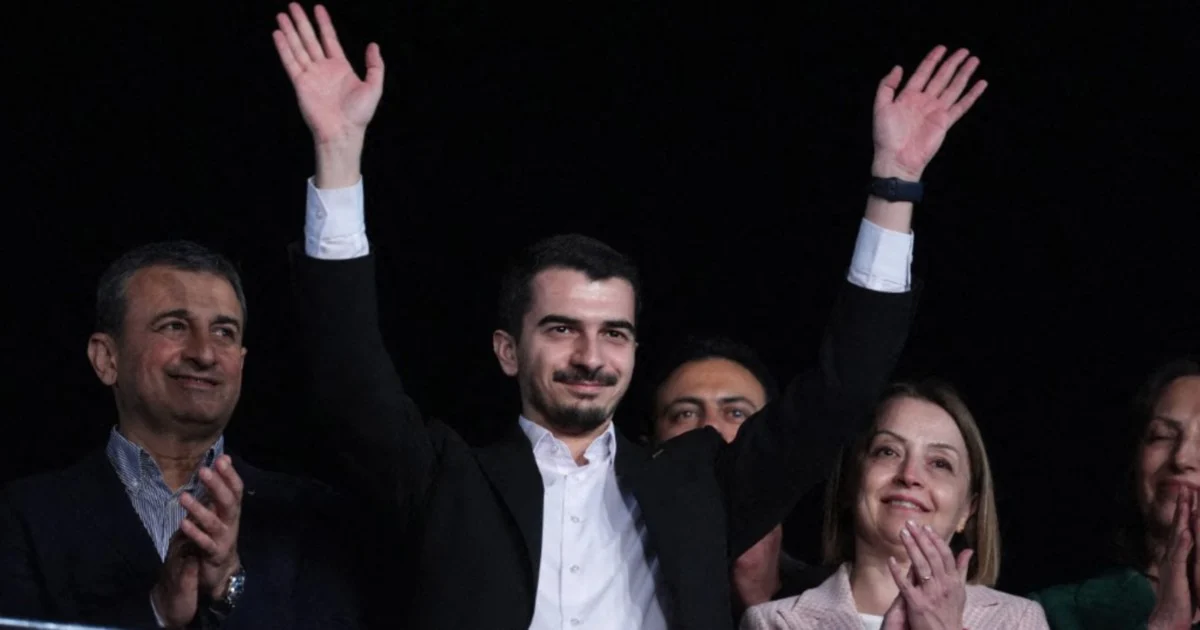
Turkish prosecutors have cast a wide net in a major anti-corruption investigation that touches the upper echelons of municipal governance, ordering the detention of 36 individuals including the mayor of an Ankara district under opposition control. The Ankara chief prosecutor's office announced the move, which comes as part of a sweeping inquiry into allegations of bribery and irregularities in the award of public contracts.
The involvement of a mayor from Turkey's main opposition party lends particular weight to the investigation, injecting another layer of complexity into the country's already charged political environment. The Ankara district in question is governed by the opposition, making this case especially sensitive in a nation where accusations of politicised prosecutions frequently feature in public discourse. The scale of the operation—involving three dozen suspects—suggests prosecutors are targeting what they view as an organised pattern of misconduct rather than isolated wrongdoing.
Tender-rigging and bribery allegations have long plagued Turkish municipal administration, particularly as urbanisation and infrastructure development have created lucrative contracting opportunities. The case under investigation appears to centre on alleged collusion between local government officials and private actors in the awarding of public contracts, a scheme that would typically involve kickbacks, inflated bids, or manipulation of procurement processes to favour connected businesses. Such practices drain public resources and distort competition in the construction and services sectors.
For Malaysian observers, Turkey's experience offers instructive parallels. Both nations grapple with municipal governance challenges in rapidly developing urban centres, and both have witnessed periodic corruption investigations targeting local politicians and contractors. The mechanisms of tender fraud—phantom bidding, bid-rigging consortiums, and official complicity—transcend borders and represent persistent governance challenges in the Southeast Asian and broader regional context.
The prosecutor's decision to include municipal officials alongside private sector figures reflects an emerging investigative approach in Turkey that focuses on systemic corruption networks rather than individual bad actors. This methodology recognises that public procurement fraud typically requires coordinated participation from both government officials controlling tender processes and business interests willing to participate in schemes. By casting suspicion across both domains, investigators can potentially unravel the complete architecture of alleged wrongdoing.
Ankara's status as Turkey's capital and second-largest city makes governance failures there particularly consequential. The municipality controls substantial budgets for infrastructure, urban services, and development projects—precisely the areas where tender manipulation causes greatest harm to public interests. Corruption at this level inflates costs for taxpayers, redirects funds from genuine public needs, and creates perverse incentives that reward connected businesses over more efficient competitors.
The investigation's timing and scope are likely to attract close scrutiny from political quarters. In Turkey's polarised environment, where accusations of selective prosecution are routinely levelled against authorities, the involvement of opposition-party officials invites assertions of political motivation. Conversely, if the allegations are substantiated, the case demonstrates that no political affiliation provides immunity from accountability. Either narrative carries significant implications for public confidence in institutional impartiality.
From a regional governance perspective, the case underscores how corruption investigations—even when technically justified—can become entangled with political competition when they target officials from minority parties or opposition movements. This dynamic has proven particularly acute in Turkey, where government-opposition relations have deteriorated markedly since the 2016 coup attempt. Ensuring that anti-corruption efforts maintain credibility across the political spectrum represents an ongoing institutional challenge.
The detention orders themselves represent a formal investigative step rather than final judgment. Turkish law permits prosecutors to hold suspects while they gather evidence and conduct interrogations. The subsequent course of the investigation—whether it leads to formal charges, trial proceedings, or acquittals—will ultimately determine the factual basis of the allegations. For the accused officials and business figures involved, the coming weeks will prove crucial in contesting or substantiating the prosecutors' initial findings.
For Turkish municipalities and contractors operating in similar governance environments across the region, the investigation serves as a reminder that anti-corruption enforcement remains an active concern. Even as political controversy swirls around specific cases, the fundamental problem of tender manipulation and official complicity persists as a governance challenge requiring sustained institutional attention. The investigation's eventual outcome may influence how other Turkish municipalities and their oversight bodies approach procurement transparency and accountability mechanisms.
The case also reflects international pressure on Turkey regarding rule of law and anti-corruption efforts. Foreign observers and international organisations frequently scrutinise Turkish judicial independence and prosecutorial impartiality. High-profile investigations targeting multiple officials across political lines offer opportunities to demonstrate that accountability transcends partisan affiliation, though scepticism about such claims remains considerable in contemporary Turkish political discourse and international commentary.

