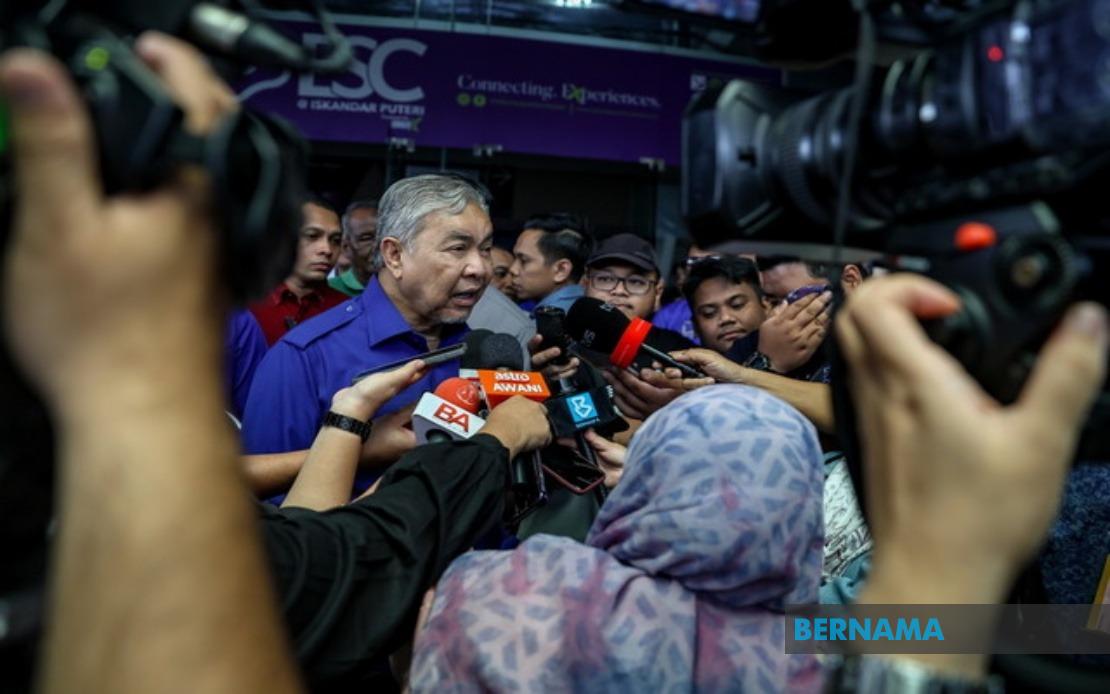
Malaysia's vocational education system is poised for a significant restructuring as Deputy Prime Minister Datuk Seri Dr Ahmad Zahid Hamidi confirmed that the government will finalise the establishment of a dedicated Technical and Vocational Education and Training (TVET) Commission before the end of 2024. The new institutional body will supersede the existing National TVET Council, representing a strategic shift aimed at strengthening the nation's technical training infrastructure at a time when skills development has become increasingly critical for economic competitiveness.
Addressing a gathering at the Johor Darul Ta'zim TVET MARA Roadshow in Iskandar Puteri on July 5, Ahmad Zahid outlined the procedural steps required to bring the commission into being. He explained that concurrent with institutional preparations, the government is concurrently drafting associated legislation that will be tabled before Parliament, encompassing both the Dewan Rakyat and Dewan Negara. The dual track approach reflects the complexity involved in creating a new statutory body that must align with existing parliamentary governance frameworks and constitutional requirements.
The pathway to establishing this commission has already progressed through preliminary approval stages. Ahmad Zahid disclosed that the Cabinet has already granted policy-level endorsement for the initiative, demonstrating government commitment to the reform agenda. However, the formal procedural step of obtaining parliamentary sanction remains outstanding, a process that demands careful examination of legal implications and constitutional provisions. This distinction between policy approval and legislative approval underscores the deliberative nature of institutional reform in Malaysia's parliamentary system.
Currently, the government is conducting extensive consultation processes with diverse stakeholders across the TVET ecosystem. These engagement sessions bring together educational institutions, industry representatives, employer associations, and other relevant organisations to gather input and build consensus around the commission's proposed structure, functions, and operational framework. Such stakeholder participation is vital for designing an institution that genuinely addresses sectoral needs and enjoys broad buy-in from those it will ultimately serve and regulate.
Once these consultation processes conclude, Ahmad Zahid indicated that the administration will prepare a comprehensive Cabinet paper for ministerial consideration. This internal government mechanism provides a formal avenue for reviewing the commission proposal in its entirety, incorporating stakeholder feedback, and addressing any outstanding technical or legal questions before seeking parliamentary approval. The sequencing of these steps demonstrates the structured approach being taken rather than rushing legislation through Parliament without adequate preparation.
The commission's mandate will extend considerably beyond what the National TVET Council previously undertook. Rather than limiting itself to policy formulation, the new body will assume active responsibility for implementing and enforcing the policies it develops. This expanded remit reflects international best practice, as Ahmad Zahid noted that countries with advanced technical education systems typically vest such comprehensive authority in dedicated commissions. The integration of formulation, implementation, and enforcement functions should theoretically create better policy coherence and faster translation of strategic direction into practical outcomes within institutions and training programmes.
Ahmad Zahid, who currently serves as chairman of the National TVET Council, drew comparative reference to how developed economies structure their vocational training governance. The commission model represents an evolution from the council framework, suggesting that Malaysian policymakers have studied international approaches and determined that a more robust institutional structure will better serve national objectives. This benchmark-setting against developed country practices reflects broader government attempts to position Malaysia's technical education on par with advanced economies competing for talent and investment in a knowledge-based global economy.
Beyond the institutional restructuring, Ahmad Zahid used the Johor platform to address the demographic transformation reshaping the state's electoral landscape. The lowering of voting age to 18 through the Undi18 initiative has fundamentally altered Johor's political composition, with voters aged 40 and below now constituting approximately 52 percent of the state's total electorate. This demographic shift carries profound implications for political parties and state governance, as younger citizens bring different priorities, communication preferences, and development expectations compared to older generations.
Recognising the political significance of youth mobilisation, Ahmad Zahid expressed confidence in younger Johoreans' alignment with the state's Menteri Besar Datuk Onn Hafiz Ghazi. The Barisan Nasional chairman's positioning of Onn Hafiz as a young leader reflects deliberate political strategy to leverage generational affinity and project continuity in state leadership. The emphasis on presenting a youthful face to younger voters suggests Barisan Nasional's attempt to counter perceptions of age or out-of-touch leadership that might undermine support among the expanding cohort of newly enfranchised voters and younger citizens generally.
The dual focus of Ahmad Zahid's remarks—on institutional reform of TVET infrastructure and on generational political engagement—illustrates how governments must simultaneously address structural development needs while responding to demographic shifts with political implications. The timing of the TVET roadshow in Johor, coinciding with articulation of youth electoral significance, suggests deliberate coordination between skills development messaging and political outreach to younger demographics. For Malaysia's younger workforce, vocational training quality directly impacts employment prospects and earning potential, making TVET reform particularly relevant to their economic futures and life opportunities.

