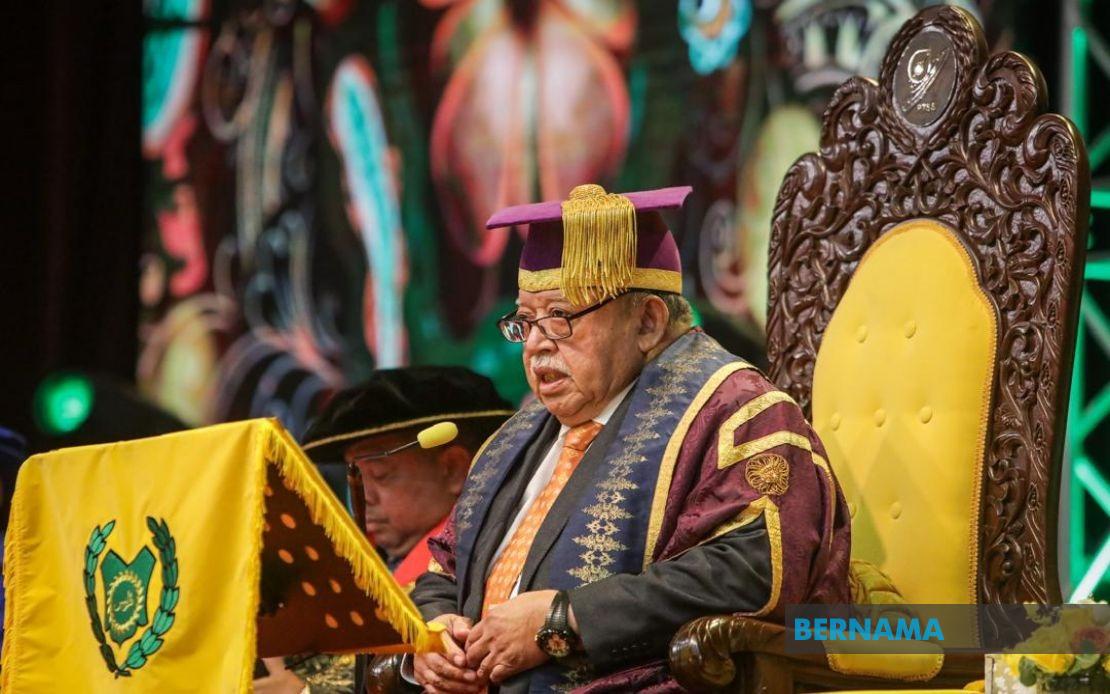
Technical and vocational education has emerged as a cornerstone for developing a workforce capable of driving national progress in an era of rapid technological change, according to the Raja of Perlis, Tuanku Syed Sirajuddin Jamalullail, who delivered these remarks at a major convocation ceremony in the northern region. Speaking at the 2026 Northern Zone Polytechnic and Community College Convocation Ceremony held at Politeknik Tuanku Syed Sirajuddin in Arau, the Ruler emphasized that TVET programmes produce individuals possessing not only technical competence but also the creative and innovative mindset required to navigate contemporary challenges.
The acceleration of technological disruption across multiple sectors has fundamentally altered how governments and educational institutions approach workforce development. The Raja's comments reflect a broader recognition across Malaysia that artificial intelligence, automation, robotics and digitalisation are no longer emerging trends but established forces reshaping employment structures and industrial operations. Unlike previous generations where vocational qualifications represented a secondary pathway to tertiary education, TVET now occupies a central position in national development strategy. The proliferation of sophisticated technologies demands a continuous pipeline of technically skilled workers who can operate, maintain, troubleshoot and innovate within these systems.
What distinguishes the Raja's perspective is his deliberate positioning of innovation not as an optional competitive advantage but as a fundamental requirement for national survival and progress. In a globalised economy where countries compete on technological capability and productivity, nations that fail to cultivate an innovation culture among technical professionals risk falling behind regional competitors. The statement signals that Malaysia views TVET graduates as potential innovators rather than merely skilled technicians executing predetermined tasks. This philosophical shift has significant implications for curriculum design, pedagogical approaches and assessment methodologies within polytechnics and community colleges across the country.
The Ruler specifically urged that innovation must transcend the generation of novel concepts and instead focus on translating ideas into practical solutions addressing real societal needs. This distinction matters considerably because it establishes a framework connecting technical education to tangible societal benefit and economic value creation. Graduates emerging from TVET institutions should possess the capability to identify problems within their industries or communities and develop implementable solutions that generate positive outcomes. Such an approach bridges the persistent disconnect between educational output and labour market absorption, ensuring that technical skills directly correspond to employer requirements and economic opportunities.
Central to the Raja's message was an equally forceful emphasis on maintaining moral and ethical foundations alongside technical prowess. The articulation that outstanding graduates cannot be judged solely by expertise but must also demonstrate honesty, trustworthiness and strong character reflects a sophisticated understanding that technical capability divorced from ethical grounding creates liability rather than asset. Malaysia, like many Southeast Asian nations, has experienced instances where technically skilled individuals employed their capabilities for corrupt or destructive purposes. By integrating character development and patriotism into the TVET philosophy, the Raja positioned moral education as integral rather than supplementary to technical training.
The convocation ceremony itself, spanning eight days across the northern region and encompassing 6,104 graduates from Perlis, Kedah and Penang, represents a substantial human capital milestone for the northern corridor. These numbers underscore the significant scale of TVET output that feeds into regional labour markets annually. The concentration of this graduation event in the northern zone reflects the decentralisation of polytechnic provision across Malaysia, ensuring that technical education remains geographically accessible and responsive to regional economic characteristics and industrial clusters. The achievement of such cohort sizes indicates substantial institutional capacity and demonstrates government commitment to channelling youth toward skilled trades and technical professions.
Among the graduating cohort, Teerti Ganapathi Rao, age 22, received the Director-General of Polytechnic and Community College Education Award for completing a Diploma in Digital Technology through the Department of Information and Communication Technology at Politeknik Tuanku Syed Sirajuddin. Recognition of digital technology specialization among award recipients reflects the priority assigned to information technology competencies within TVET frameworks. As organisations across all sectors increasingly digitalize operations, the demand for graduates with formal digital literacy, cybersecurity awareness and software proficiency continues accelerating. The prominence of digital technology qualifications within TVET convocations signals alignment between educational provision and market absorption trends.
For Malaysian policymakers and educational administrators, the Raja's statements carry significant weight in shaping institutional priorities and resource allocation decisions. TVET institutions now operate within a policy environment that explicitly validates their contribution to national competitiveness and development. This validation translates into potential justification for enhanced funding, infrastructure investment, and recruitment of high-calibre educators capable of teaching advanced technical subjects. Regional competitiveness with countries like Singapore, Thailand and Vietnam increasingly depends on TVET system quality, as multinational manufacturers and service providers locate operations where skilled labour availability matches their requirements.
The broader Southeast Asian context adds weight to Malaysia's TVET expansion strategy. The region faces acute skills shortages in manufacturing, construction, hospitality and emerging digital sectors, creating opportunities for Malaysian TVET graduates to pursue employment across regional labour markets. Conversely, countries throughout Southeast Asia are simultaneously strengthening their own TVET systems, creating competitive dynamics around workforce quality and attractiveness to employers. Malaysia's emphasis on innovation and character development within TVET may offer differentiation in regional skills markets, positioning graduates as problem-solvers and ethically grounded professionals rather than mere task executors.
The recognition that traditional employment landscapes have fundamentally transformed carries profound implications for how TVET institutions structure curriculum and career guidance. Self-employment, freelancing, and entrepreneurship increasingly characterise career trajectories for technical professionals. TVET systems that equip graduates only with narrow technical competencies risk producing workers ill-equipped for contemporary career realities. Educational frameworks incorporating innovation capability, entrepreneurial mindset, and adaptability alongside technical mastery better prepare graduates for volatile employment environments where job descriptions and role requirements evolve continuously.
Looking forward, the integration of TVET output with Malaysia's broader economic transformation agenda becomes increasingly critical. The government's aspiration to transition toward higher-value manufacturing, digital services and knowledge-based industries requires a workforce pipeline where TVET qualifications form a foundation for continuous upskilling rather than representing a terminal point in formal education. This necessitates stronger articulation pathways between polytechnic programmes and higher education institutions, enabling TVET graduates to progress toward advanced qualifications without penalty or extensive repetition of previously mastered content. Such progression pathways exist in leading TVET systems internationally and deserve consideration within the Malaysian context.

