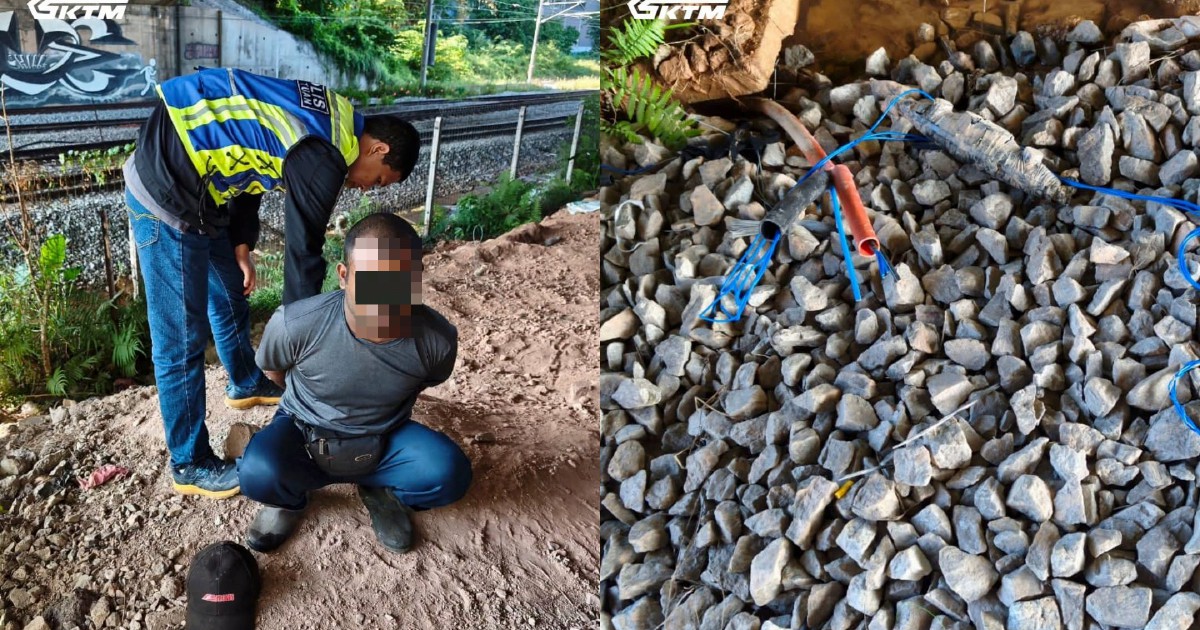
Keretapi Tanah Melayu Bhd (KTMB) auxiliary police officers have arrested two individuals caught in the act of stealing railway cables in Shah Alam, continuing a pattern of criminal activity that has plagued Malaysia's rail infrastructure in recent years. The arrest, made yesterday, demonstrates the transport operator's ongoing effort to combat the widespread theft of valuable materials from its network across the Klang Valley and beyond.
The interception represents a significant operational success for KTMB's security division, which has intensified patrols and surveillance along vulnerable sections of track where cable theft remains endemic. Railway cables, particularly copper and aluminium variants, command substantial black-market prices, making them attractive targets for opportunistic thieves and organized scrap metal operations seeking quick profits. The materials stripped from railway infrastructure often find their way to illegal salvage yards and recyclers operating without proper licensing or oversight.
Cable theft from railway networks poses multifaceted dangers that extend well beyond financial loss. The removal of critical cables disrupts communication systems, signalling equipment, and power distribution mechanisms essential for safe train operations. Such interference can compromise safety protocols, delay services, and in extreme cases, create hazardous conditions for both passengers and railway personnel. The hidden costs of repeated infrastructure damage accumulate rapidly, straining KTMB's maintenance budgets and compromising service reliability when commuters depend on punctual operations.
The Shah Alam incident underscores the vulnerability of railway sections within urban and semi-urban areas where population density and accessibility create opportunities for theft. Unlike isolated rural stretches where physical barriers provide some deterrent, Shah Alam's proximity to residential neighbourhoods and industrial zones facilitates both the approach and escape of would-be thieves. The region's existing infrastructure challenges, coupled with inadequate lighting in certain stretches and limited surveillance capabilities, have historically made this zone a hotspot for cable theft activities.
KTMB's auxiliary police force, though smaller and less equipped than the Royal Malaysian Police, plays a crucial frontline role in protecting railway assets. These uniformed officers conduct regular foot and mobile patrols, monitor security cameras where installed, and liaise with state police on serious offences. However, the auxiliary force faces resource constraints that often prevent comprehensive 24-hour coverage of all vulnerable sections, leaving certain periods and locations at elevated risk. Yesterday's successful apprehension reflects both improved coordination and heightened vigilance during peak theft hours.
The broader context of infrastructure theft in Malaysia reveals a systemic challenge requiring coordinated intervention across multiple agencies. Beyond KTMB, electricity distribution companies, telecommunications operators, and local water authorities have experienced similar losses. Organized scrap metal rings operate with apparent impunity in certain states, purchasing stolen materials without proper documentation and processing them through networks that obscure their illicit origins. These criminal enterprises profit handsomely from materials that should have remained in public service.
Facing persistent losses, KTMB has implemented several countermeasures designed to deter and prevent theft. Enhanced security measures include improved perimeter fencing, upgraded lighting in high-risk zones, and expanded closed-circuit television coverage. The operator has also increased communication with the Royal Malaysian Police to establish rapid response protocols when suspicious activities are reported. Additionally, KTMB has worked with local authorities to identify and monitor scrap yards in proximity to rail corridors, though enforcement remains inconsistent.
The arrest in Shah Alam carries implications for local commuters and the wider transport system. Every incident of cable theft creates cascading delays, potential service cancellations, and reduced public confidence in KTMB's reliability. For residents depending on the rail network for daily commutes to Kuala Lumpur's commercial districts and employment centres, these disruptions translate directly into increased travel times and alternative transportation costs. The cumulative economic impact extends to businesses requiring predictable goods transport via rail, diverting freight to less efficient road networks.
Legal consequences for those apprehended in cable theft vary depending on circumstances and prosecutorial decisions. Railway cables constitute property theft under Malaysian law, potentially attracting charges under the Penal Code with penalties including imprisonment and fines. When theft causes damage that disrupts essential services, authorities may pursue additional charges relating to endangerment or sabotage. However, enforcement effectiveness depends on efficient prosecution and deterrent sentencing, areas where Malaysian courts have sometimes struggled with backlogs and inconsistent penalties.
The sustainability of KTMB's security operations hinges on adequate government funding and political prioritization of rail infrastructure protection. Recent budget allocations have not kept pace with operational costs or technological advancement, leaving the operator dependent on reactive measures rather than comprehensive preventive infrastructure. Neighbouring Singapore and Thailand have implemented more sophisticated security frameworks combining physical barriers, digital monitoring, and coordinated law enforcement responses that have substantially reduced theft incidents.
Looking forward, addressing railway cable theft requires sustained commitment from multiple stakeholders. KTMB must continue investing in security infrastructure while improving coordination with police. State authorities must enforce licensing requirements for scrap metal dealers and conduct regular inspections. The public plays a vital role by reporting suspicious activities near rail corridors, providing KTMB's security teams with actionable intelligence. Only through such comprehensive, sustained effort can Malaysia hope to protect critical transport infrastructure from the ongoing depredation that undermines service quality and public investment returns.

