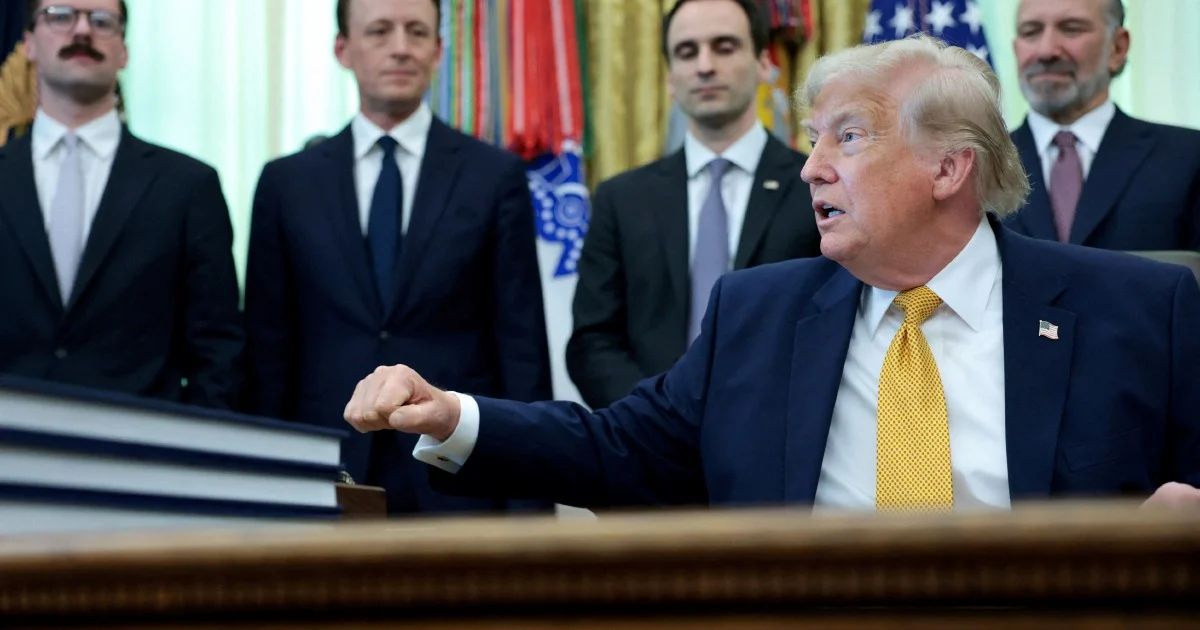
The United States Justice Department revealed on Monday that two more individuals have been taken into custody as part of an ongoing investigation into an alleged scheme to launch an assault on the White House. The purported plan centred on an occasion when President Donald Trump was scheduled to host a mixed martial arts competition featuring a cage fight on the grounds of the presidential residence.
The arrests represent an expansion of the federal investigation into what authorities characterize as a coordinated threat against the executive branch and its leadership. The timing of the suspected attack plan — coinciding with a high-profile UFC event at the White House — suggests that the alleged conspirators may have viewed the gathering as an opportune moment to carry out their intentions. Large-scale public events at sensitive government installations typically involve heightened security protocols, yet they can simultaneously present complex logistical challenges for law enforcement.
Details regarding the specific charges facing the two newly arrested individuals remain limited, though the Justice Department's continued enforcement actions indicate the seriousness with which federal prosecutors are treating the allegations. The progression from initial arrests to subsequent detention of additional suspects suggests that investigative authorities have uncovered evidence pointing toward a broader network of potential involvement in the alleged plot.
For Malaysian observers, this incident underscores the sophisticated security apparatus that surrounds American presidents and the constant vigilance required to protect national leaders and government facilities. The White House, as the residence and workplace of the sitting president, faces an extraordinarily complex security environment where routine functions must be balanced against genuine threats. The hosting of public events such as sports competitions at the presidential residence adds layers of complexity to an already demanding protective mission.
The alleged plot also highlights broader concerns about security vulnerabilities at high-profile events, particularly those held at government installations. Throughout the world, authorities grapple with the challenge of accommodating legitimate public gatherings and media access while maintaining robust protective measures. The intersection of public access, media coverage, and executive security represents an ongoing tension in democratic societies, where transparency and accessibility must coexist with protection against potential threats.
US law enforcement agencies have demonstrated commitment to identifying and prosecuting individuals suspected of plotting against government officials and installations. The Justice Department's announcement of these arrests reflects the investigative capabilities of federal agencies and their ability to detect alleged conspiracies before they materialize into actual violence. Such preventative law enforcement work often depends upon informant networks, digital communications surveillance, and coordination between multiple federal agencies.
The specific nature of a UFC cage fight at the White House represents an unusual venue for a major mixed martial arts event. While professional sports events at government facilities are not unprecedented, hosting combat sports at the president's residence carries particular symbolic and security implications. The event itself would necessitate extensive preparation, including credential verification for athletes, media personnel, and security staffing far exceeding standard security protocols.
From a Southeast Asian perspective, the incident demonstrates that threats to national leadership and government installations are not uniquely American phenomena. Governments throughout the region face their own security challenges when balancing public access with protective imperatives. The alleged plot also illustrates how intelligence and law enforcement cooperation prove essential in identifying potential threats at an early stage, before violence can occur.
The Justice Department's continued enforcement actions suggest that the investigation remains active and potentially ongoing. Federal prosecutors may be pursuing additional leads or gathering further evidence that could implicate additional individuals. The pace of arrests — with multiple suspects apprehended over a relatively short timeframe — indicates that authorities possess substantial investigative material supporting their law enforcement decisions.
Interpretations of this alleged plot must account for the complexity of distinguishing between genuine threats and protected political speech or protest. American constitutional traditions protect considerable latitude for expression, even regarding government officials and institutions. Federal law enforcement must navigate these boundaries carefully, ensuring that legitimate security concerns are addressed without infringing upon fundamental rights to free expression and assembly.
The involvement of the Justice Department in these arrests reflects the serious nature of allegations pertaining to violence or threats against federal installations and officials. Such matters typically fall within federal jurisdiction rather than state or local authority, given their implications for national security and the functioning of the federal government. The department's willingness to pursue and publicize these arrests demonstrates a commitment to safeguarding government personnel and facilities.
Looking forward, this incident will likely prompt renewed discussions about security protocols for events held at the White House and other sensitive government locations. While specific details about how the alleged plot was discovered and prevented remain limited, federal agencies will presumably conduct internal reviews of their protective measures. These reflections often lead to enhanced security practices that are then implemented across similar high-profile venues and occasions.
The case underscores the reality that American officials, regardless of political affiliation, operate within a threat environment that demands constant vigilance and sophisticated security infrastructure. The alleged plot targeting President Trump during a UFC event represents merely one example of the numerous potential threats that law enforcement agencies must monitor and counter daily. For international observers, including those in Malaysia and Southeast Asia, such incidents reinforce the complexity of providing both executive protection and democratic access.