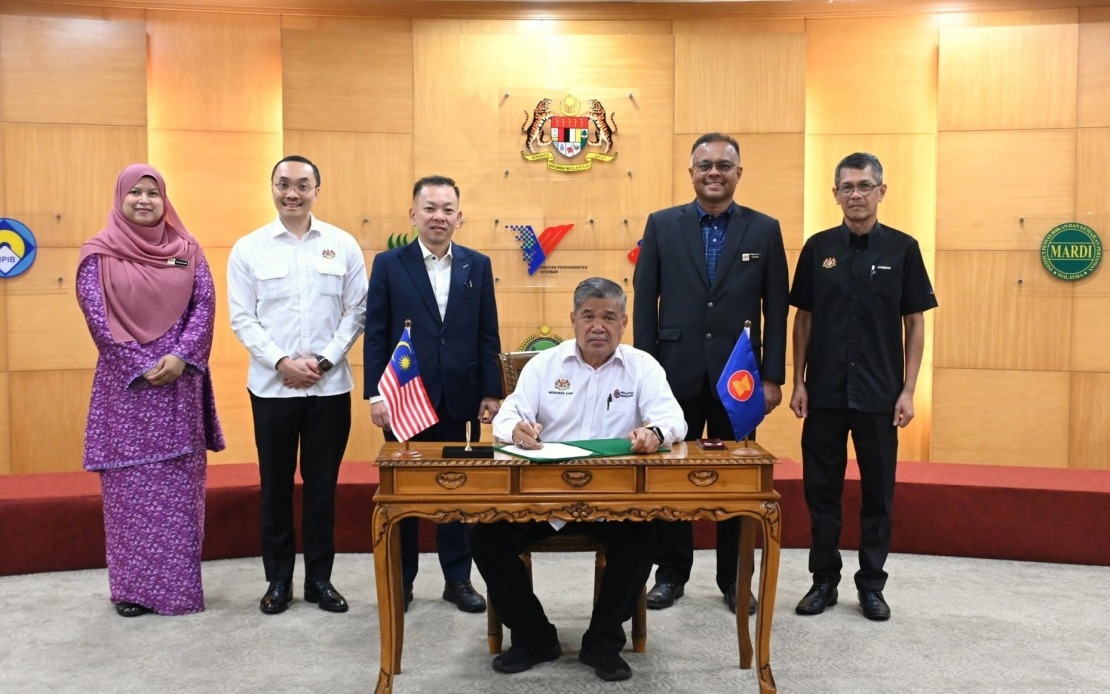
Malaysia has taken a major step to expand its agricultural footprint across Southeast Asia by ratifying two regional memoranda of understanding that promise enhanced market access and technological advancement in climate-smart farming. Agriculture and Food Security Minister Datuk Seri Mohamad Sabu inked both agreements at the recent ASEAN Ministers on Agriculture and Forestry meeting, marking a strategic pivot towards leveraging collective regional strength to compete in global agri-trade while building resilience against climate-related disruptions.
The first accord, formally titled the ASEAN Cooperation in Agriculture and Forest Products Scheme, represents a comprehensive framework binding member states through five interlocking pillars. These foundations encompass bolstering food security across the bloc, lowering trade barriers for agricultural and forestry goods, attracting private capital into the sector, ensuring biodiversity and ecosystem integrity, and forging unified ASEAN positions when navigating international agricultural negotiations. By institutionalising these priorities, the agreement creates a structured platform for member nations to coordinate rather than compete, a critical distinction in a region where agricultural production often overlaps and markets can be volatile.
Under this framework, Malaysia has been designated with specific leadership responsibilities that position it as a thought leader within ASEAN's agricultural ecosystem. The Ministry of Plantation and Commodities will helm initiatives related to palm oil and cocoa commodities, sectors where Malaysia commands substantial regional and global market share. Simultaneously, the Ministry of Agriculture and Food Security will spearhead collaboration on agri-food products more broadly, reflecting Malaysia's diverse agricultural base. This dual-country system empowers Malaysia to shape regional standards and practices in commodities where it possesses competitive advantages, while contributing expertise to broader food production issues.
The scheme's provisions regarding joint international positioning carry particular significance for Malaysian producers. Palm oil, in particular, has long faced reputational challenges in Western markets despite its efficiency and nutritional properties. Through coordinated ASEAN campaigns, Malaysia and its neighbours can present a unified defence of their commodity positions, counteracting isolated campaigns by importing nations that may lack nuance regarding sustainable production practices. This collective voice amplifies the region's negotiating weight far beyond what individual nations could achieve in isolation.
Market diversification represents another tangible benefit embedded within the agreement. Malaysian exporters will gain expanded pathways for industrial crops, livestock products, specialty herbs, medicinal formulations, and forest derivatives ranging from mushrooms to wild honey. For value-added producers and smallholder farmers, this opens channels previously inaccessible through purely bilateral relationships, while for larger exporters, it creates preferential trading frameworks within the ASEAN region itself—a market of over 600 million consumers with rising purchasing power.
The second MoU, this one forged between ASEAN collectively and China, extends the ambition beyond intra-regional cooperation into the broader Asian sphere. Spanning eighteen distinct cooperation areas over a five-year horizon, the ASEAN-China partnership targets sustainable agricultural production methodologies alongside measures to strengthen supply chain robustness. The agreement specifically emphasises low-carbon climate-smart agriculture, a category encompassing precision farming, water conservation technologies, regenerative practices, and emissions-reduction strategies that align with global net-zero commitments while protecting yields.
This China dimension carries strategic weight for Malaysia beyond mere commercial advantage. As climate impacts intensify—with Southeast Asia particularly vulnerable to temperature swings, erratic rainfall, and pest migrations—access to cutting-edge agricultural science becomes essential infrastructure. The agreement facilitates technology transfer mechanisms that would otherwise require years of research investment or expensive licensing arrangements. Chinese agricultural research institutions possess significant expertise in drought-resistant crop varieties, efficient irrigation systems, and integrated pest management approaches developed through scaling agriculture across diverse Chinese climates and geographies.
Disaster risk management provisions within the ASEAN-China framework address a pressing regional concern. Floods and droughts have repeatedly devastated crop cycles across Southeast Asia, destabilising both domestic food supplies and export revenues. Agricultural insurance schemes coordinated through ASEAN mechanisms, combined with improved early warning systems and coordinated responses, create genuine resilience. When monsoons fail or extreme rainfall occurs, a farmer with proper insurance coverage and access to drought-resistant varieties faces dramatically better prospects than one relying on traditional approaches alone.
Cross-border pest and disease control represents perhaps the most technically sophisticated component of the agreement. Agricultural threats do not respect national boundaries—the fall armyworm that devastated maize crops across Africa in recent years could similarly ravage Southeast Asian harvests without coordinated surveillance and response protocols. By establishing research cooperation frameworks and information-sharing mechanisms, ASEAN nations can detect emerging threats more rapidly and deploy collective expertise to contain them before they metastasise across the region.
For Malaysia specifically, these agreements align with the nation's broader policy trajectory toward sustainability and economic diversification. Rather than relying solely on commodity exports or low-value agricultural production, Malaysia can leverage ASEAN platforms to position itself as a hub for agricultural innovation within the region. Local research institutions, technology providers, and agricultural businesses can tap into expanded markets and partnership opportunities, while Malaysian policymakers gain access to best practices and comparative data from across Southeast Asia.
The climate-smart agriculture emphasis also speaks to Malaysia's commitments under international climate accords. By systematically transitioning toward lower-carbon production methods coordinated through ASEAN frameworks, Malaysia demonstrates tangible progress on sustainability metrics that increasingly influence trade relationships and investment decisions. European markets, for instance, are implementing carbon border adjustment mechanisms that will eventually price environmental externalities into agricultural imports—early adoption of climate-smart practices provides competitive advantage when such mechanisms take effect.
Implementation will determine whether these agreements translate ambitious language into material benefits. Historical ASEAN MOUs have suffered from slow ratification, inconsistent enforcement, and competing national interests that undermine stated cooperation. Success requires sustained political commitment from Malaysian leadership, adequate budgetary allocation to support capacity-building and technology adoption, and proactive engagement with ASEAN secretariat institutions that oversee agreement operationalisation.
Looking forward, these twin agreements position Malaysia within an increasingly integrated Asian agricultural sphere where competitive advantage flows to nations that can simultaneously expand market access, enhance sustainability credentials, and build climate resilience. For Malaysian farmers, agribusiness enterprises, and rural communities, the potential benefits extend beyond headline trade statistics to encompass improved technologies, expanded opportunities, and greater protection against systemic shocks that have historically destabilised agricultural livelihoods.

