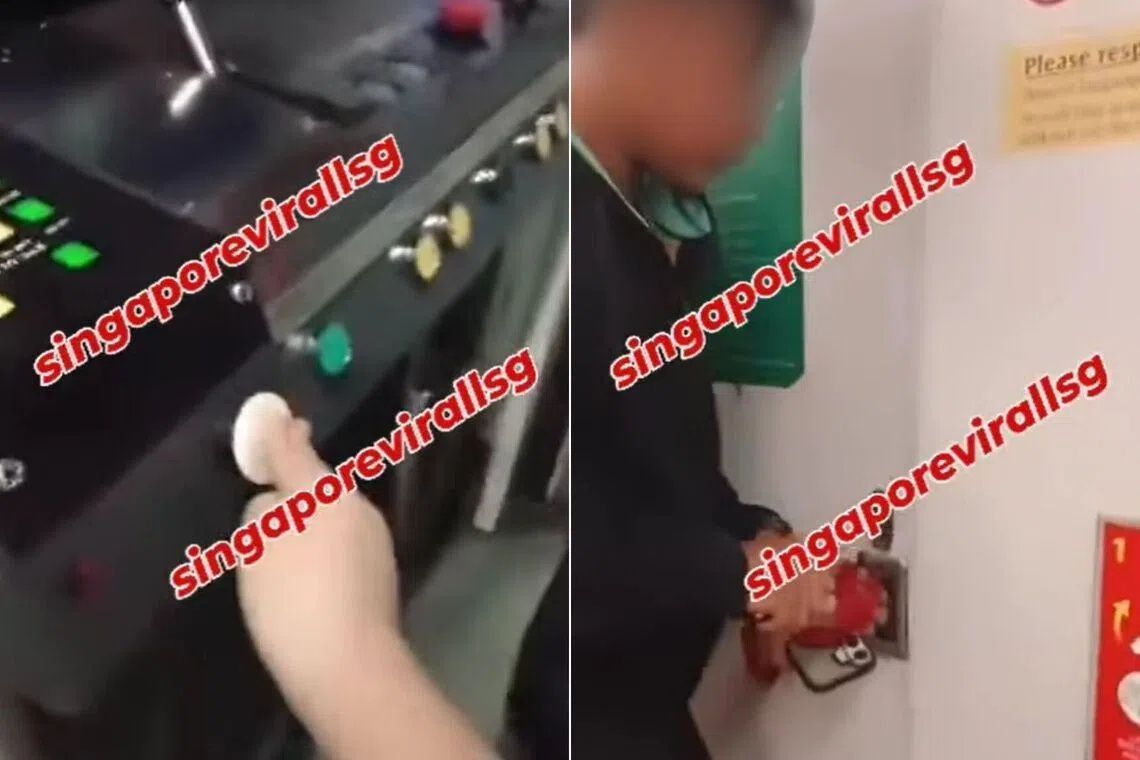
Two primary school-aged boys in Singapore have escaped prosecution after breaking into a restricted area of a moving MRT train, instead receiving conditional warnings from police. The incident, which occurred aboard a North-South Line service on February 21, has only recently drawn public attention after videos circulated online, sparking fresh discussions about rail safety and youth behaviour on public transport.
Footage shows the two boys, aged 11 and 12, using a tool to forcibly pry open the partition door leading to the train's back cabin—an area strictly off-limits to passengers. Once inside the restricted zone, the youngsters can be seen pressing what appears to be a white control button multiple times, inadvertently triggering the train's on-board alarm system. The incident unfolded while the train was in operation, with a horn audibly sounding in the background of the video.
The social media circulation of these clips has been substantial. One video posted on the singaporevirallsg Instagram page accumulated more than 281,000 views, nearly 140 comments, and over 200 shares as of late June—indicating that the incident resonated with the public even months after it occurred. This delayed viral spread suggests that such breaches of MRT protocol may resonate with younger audiences online, potentially normalising risky behaviour on trains if not addressed adequately.
SMRT Trains president Lam Sheau Kai confirmed the details of the incident in a June 30 media statement. He explained that the moment the alarm was triggered, the train captain in the front cabin was immediately notified and contacted SMRT's Operations Control Centre, which manages all daily train operations across the network. Staff at the next station were promptly alerted and investigated the scene, leading to a police report being filed the same day.
The two boys exited the train at the subsequent station, but their actions were already captured on CCTV cameras installed throughout the MRT system. This footage proved instrumental in identifying the culprits and understanding the sequence of events. Police subsequently confirmed they received the report on February 21 and launched an investigation into the unauthorised cabin access.
After completing their inquiries, police decided not to pursue formal criminal charges. Instead, the two boys were issued conditional warnings under the Rapid Transit System Regulations. Police stated that this decision was made in consultation with the Attorney-General's Chambers following careful consideration of the case facts and circumstances. The distinction is significant: a conditional warning is a form of admonishment that avoids a criminal record while still formally addressing the breach.
The approach reflects a balance between holding the boys accountable and recognising their age and the circumstances involved. Singapore's legal framework grants prosecutors discretion in such matters, particularly when dealing with juveniles. The Attorney-General's Chambers, which holds prosecutorial authority, determined that conditional warnings were more appropriate than court proceedings, suggesting officials viewed this as a lapse in judgment rather than a serious criminal act.
Lam's public statement emphasised SMRT's stance on such incidents, framing them as serious security and safety violations. He noted that unauthorised access to restricted train areas creates substantial risks for both the individuals involved and other passengers, while potentially disrupting operations and inconveniencing commuters across the network. This messaging suggests concerns that social media glorification of such stunts could inspire copycat behaviour among other young people.
The incident highlights growing anxieties across Southeast Asian transport authorities about passenger conduct on rail networks, particularly among younger demographics who may view train cabins and controls as novelty attractions. For Malaysian readers familiar with the Kuala Lumpur Metro and other local rapid transit systems, the case underscores how quickly dangerous behaviour can spread online and influence youth conduct. Similar breaches on Malaysian systems could similarly endanger operations and passenger safety.
The timing of the social media surge—occurring months after the actual incident—also raises questions about how authorities communicate with the public regarding rail safety incidents. SMRT's quick response in issuing a statement upon the videos going viral demonstrates the need for transport operators to actively counter misinformation and reckless behaviour documentation circulating on platforms.
The case serves as a reminder that public transport infrastructure requires consistent passenger cooperation to function safely. While the conditional warning approach aims to deter future misconduct without permanent scarring of young offenders' records, the viral nature of the incident means the boys' actions have already achieved a level of notoriety that may inadvertently glamourise the breach to other youth audiences.
Regional transport authorities will likely monitor whether such incidents increase following viral documentation. The balance between leveraging social media for legitimate transport safety messaging while simultaneously preventing the viral spread of hazardous passenger behaviour remains a challenge for MRT operators across Asia, including those managing systems in Malaysia where similar vulnerabilities may exist.

