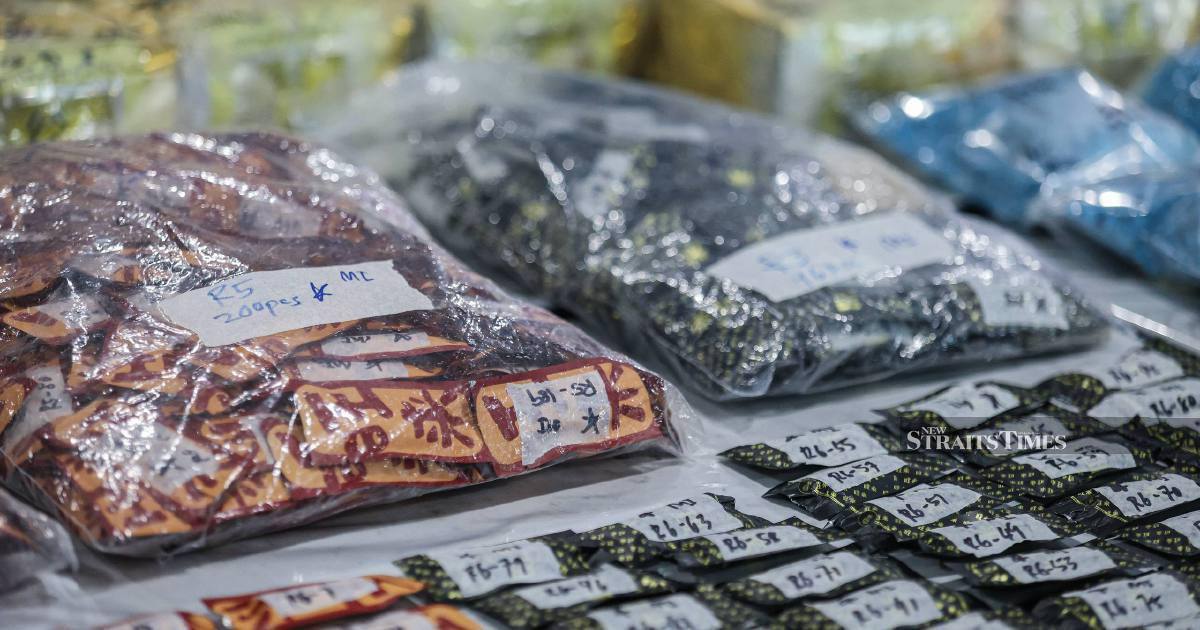
Authorities in Johor have apprehended two brothers following what enforcement officials describe as a major maritime drug trafficking operation that would have delivered more than RM6.85 million worth of contraband across regional sea routes. The Malaysian Maritime Enforcement Agency conducted the interception on Sunday, executing what appears to be a coordinated effort to disrupt an established smuggling corridor operating along Malaysia's eastern seaboard.
The operation represents the latest instance of drug trafficking networks attempting to exploit Malaysia's extensive coastline and maritime boundaries. The Johor region, with its proximity to Singapore and various sea lanes connecting to neighbouring countries, has emerged as a recurring flashpoint for such illicit activities. Maritime enforcement officials have intensified operations in these waters over recent years, recognizing that organised crime syndicates frequently favour sea routes to avoid land-based checkpoints and surveillance infrastructure.
What distinguishes this particular case is the involvement of the substance being referred to in street vernacular as 'Piu Piu', a synthetic drug that has gained circulation within Southeast Asian illicit markets. This naming convention suggests the drug has achieved some degree of market recognition and distribution channels within the region, indicating an organised supply chain rather than isolated trafficking attempts. The nomenclature itself reflects how street-level drug terminology evolves and spreads through communities, often outpacing official nomenclature and regulatory classification.
The suspects were transporting the narcotics by sea, a methodology that offers certain operational advantages to trafficking organisations. Maritime routes provide greater anonymity than road transportation, reduce the likelihood of random searches at established checkpoints, and allow smugglers to exploit gaps in coastal surveillance coverage. The brothers were presumably attempting to deliver their cargo to a neighbouring country, likely Singapore or another regional destination where demand for synthetic drugs remains substantial among certain consumer demographics.
This seizure adds to mounting evidence that Malaysia's maritime domain continues to represent vulnerable territory for transnational criminal organisations. While the country has invested considerably in naval assets and enforcement personnel, the sheer length of the coastline and the sophistication of modern smuggling operations create persistent challenges. The involvement of family members in such operations, as evidenced by the two brothers, reflects how criminal networks often leverage kinship ties for logistical and operational purposes, strengthening internal trust while compartmentalising knowledge of the overall enterprise.
The value assigned to this particular shipment—RM6.85 million at street-level prices—indicates a substantial consignment by any measure. This magnitude of operation suggests the involvement of organised criminal groups with significant capital and established distribution networks capable of absorbing such quantities. The sophistication required to coordinate maritime transportation, source the narcotics, arrange financial transactions, and identify receiving parties in neighbouring jurisdictions points to well-resourced organisations operating across multiple countries.
Regional drug enforcement cooperation remains critical for disrupting these operations. Singapore's proximity and the porosity of the maritime border mean that Malaysian and Singaporean authorities must maintain robust intelligence-sharing and coordinated enforcement activities. MMEA's operational effectiveness depends partly on information provided by partner agencies and civil informants who report suspicious maritime activity. This particular interception may have benefited from such intelligence networks, though enforcement officials typically maintain operational secrecy around their investigative methods.
The apprehension of these two individuals raises questions about the broader trafficking enterprise they were allegedly servicing. Investigators will likely focus on identifying upstream suppliers and downstream distribution networks, pursuing not merely street-level dealers but the organisational infrastructure sustaining these operations. Such investigations frequently reveal connections to international organised crime syndicates with operations spanning Southeast Asia, East Asia, and increasingly, international jurisdictions.
Synthetic drugs present particular enforcement challenges compared to traditional plant-based narcotics. Manufacturing facilities can be relocated relatively quickly, chemical precursors are sourced from multiple legitimate industrial suppliers, and trafficking organisations constantly modify chemical compositions to evade regulatory control and stay ahead of prohibition frameworks. The proliferation of 'Piu Piu' and similar synthetic compounds reflects this evolving landscape within regional drug markets.
For Malaysian policymakers, this incident underscores the necessity for sustained investment in maritime enforcement capabilities, intelligence infrastructure, and international cooperation mechanisms. The country's geographical position makes it simultaneously a transit point and destination for various contraband. Addressing this challenge requires not only enforcement actions but also demand-reduction initiatives, greater community awareness programmes, and targeted interventions addressing socioeconomic factors that incentivise participation in trafficking activities.
The case also highlights how enforcement successes, while publicised and celebrated, represent singular interventions within a much larger problem landscape. For every successful seizure, intelligence assessments suggest multiple shipments reach their intended destinations. Understanding and disrupting the underlying economics driving such operations—profitability, market demand, and organisational resilience—represents the broader strategic challenge confronting regional authorities.

