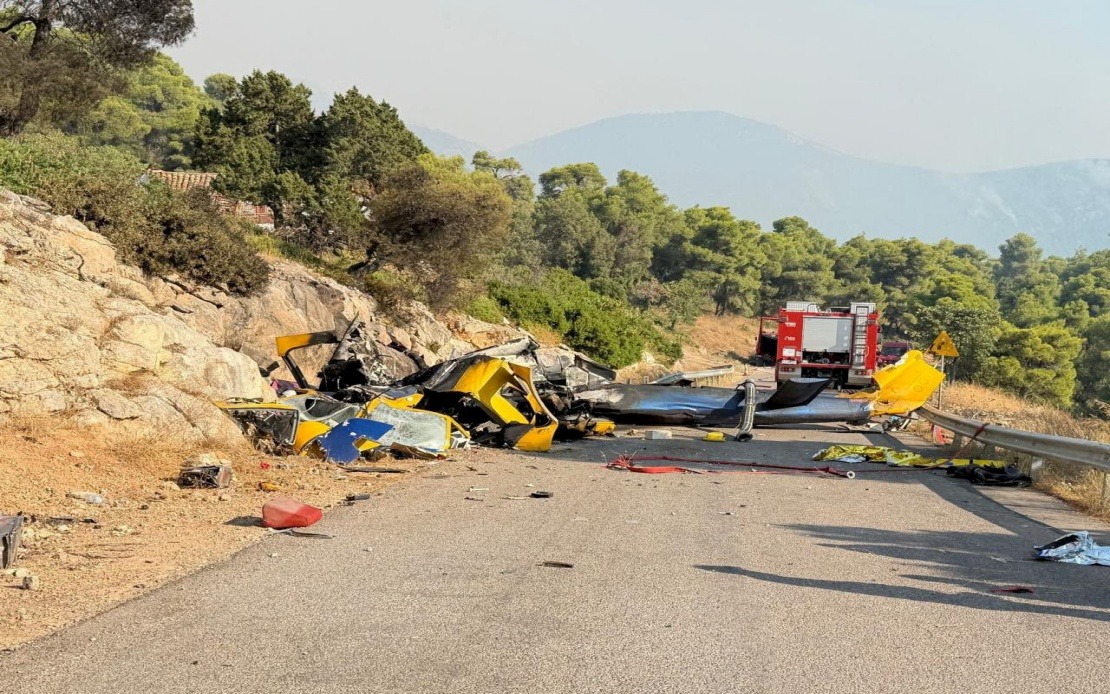
A tragic mid-air collision between two firefighting helicopters has claimed the lives of two crew members in Greece, underscoring the inherent dangers faced by aerial firefighting personnel across the Mediterranean region. The accident occurred on Sunday as both aircraft were engaged in active operations against a substantial wildfire spreading across western Attica, with officials confirming that a Danish pilot and a Greek firefighting coordinator perished in the crash near the coastal settlement of Psatha.
The incident claimed lives from two different nationalities, highlighting the international nature of crisis response efforts in Europe and the reliance of countries like Greece on external expertise during severe natural disasters. According to Greek Fire Service spokesperson Vassilis Vathrakogiannis, two individuals survived the collision, including a British pilot and another Greek firefighting coordinator, with at least one of the survivors sustaining injuries requiring medical attention. Each of the Bell helicopters involved in the accident had been carrying two crew members, meaning the collision impacted a total of four personnel engaged in a coordinated firefighting mission.
The helicopters were operating as rental aircraft rather than government-owned assets, representing a common approach adopted by Mediterranean nations that lack sufficient organic air resources to combat the scale and intensity of summer wildfire seasons. Greece had contracted these Bell aircraft specifically to augment its domestic firefighting capabilities during the challenging summer months when hot, dry, and windy conditions create an environment conducive to rapid fire spread across the countryside and populated regions alike.
The circumstances surrounding the collision remain subject to ongoing investigation, with authorities yet to determine the precise cause of the mid-air encounter. Such accidents during emergency operations typically stem from a combination of factors including reduced visibility from smoke, challenging communications between ground coordinators and aircraft, spatial disorientation in congested airspace, or mechanical failure, though investigators will need to examine multiple lines of evidence before drawing conclusions.
The tragedy arrives amid Greece's broader struggle with multiple significant wildfires simultaneously devastating different parts of the country. The combination of elevated temperatures, low humidity levels, and strong winds has created conditions that stretch firefighting resources to their absolute limits, forcing authorities to prioritise certain areas while leaving others vulnerable to uncontrolled fire spread. This reality means that aerial assets like the two helicopters involved in Sunday's collision represent critically valuable components of the overall firefighting response.
For Malaysia and other Southeast Asian nations, the Greek incident serves as a sobering reminder of the occupational hazards inherent in aerial firefighting operations, especially given the region's own seasonal challenges with transboundary haze and the increasing frequency of severe wildfires driven by climate change. Many Southeast Asian countries maintain limited helicopter fleets specifically dedicated to firefighting and often rely on contracted civilian operators during peak seasons, creating similar operational dynamics and risk profiles to those present in Greece.
The collision also raises important questions about airspace management and communication protocols during large-scale emergency operations. When multiple aircraft operate simultaneously over relatively contained geographical areas under pressure to respond immediately to developing fire fronts, the margin for error diminishes substantially. Standardised procedures, updated technology for collision avoidance, and real-time situational awareness systems become essential components of operational safety frameworks.
International cooperation in firefighting capabilities has expanded significantly across Europe, with nations routinely seconding personnel and equipment to assist neighbouring countries during crises. The presence of Danish and British crew members alongside Greek personnel in this operation reflects this cooperative ethos, yet the accident demonstrates that collaboration, while essential, does not entirely eliminate the inherent risks associated with emergency aerial operations in challenging environmental conditions.
Greece's continued battle with widespread wildfires during summer months reflects broader climate patterns affecting Mediterranean and European regions. Rising temperatures and changing precipitation patterns have extended the fire season and intensified the severity of conflagrations, compelling countries to maintain heightened preparedness levels and invest in expanded firefighting infrastructure including helicopter services. The Sunday collision will likely prompt a comprehensive review of operational protocols, crew coordination procedures, and safety measures governing aerial firefighting activities in Greece and potentially across other European nations operating similar programmes.
The loss of skilled personnel in such circumstances also represents a human tragedy that reverberates through emergency services communities. Firefighting professionals, particularly those engaged in the most dangerous aerial operations, are acutely aware of occupational risks yet continue essential work protecting populations and infrastructure. This incident will inevitably influence discussions about hazard compensation, operational limits during adverse conditions, and the technological investments required to enhance safety outcomes during emergency response missions.

