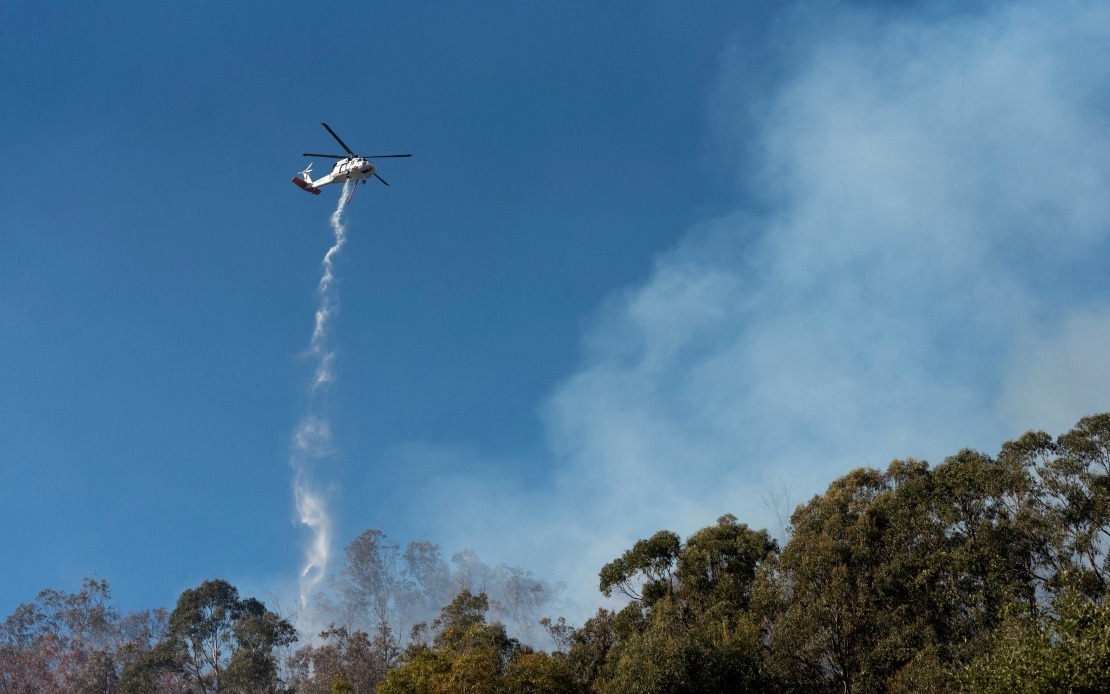
A tragic accident during wildfire suppression operations in central Utah has claimed two lives, underscoring the hazardous nature of aerial firefighting. The helicopter, a Sikorsky S-64 under contract with the US Forest Service, crashed near Richfield at approximately 10 am local time on Friday while supporting efforts to combat the Widemouth 2 Fire. Both the pilot and one crew member aboard perished in the incident, though their identities have not yet been disclosed. The crash represents a sobering reminder of the dangers faced by those engaged in wildland firefighting, a profession that operates at the intersection of extreme physical conditions and technical complexity.
The National Transportation Safety Board has assumed lead investigator status, working to determine the exact cause of the accident. Preliminary reports indicate the aircraft went down in isolated, mountainous terrain under circumstances that remain unclear. The helicopter was actively engaged in firefighting operations when the accident occurred, suggesting the pilot was maneuvering in challenging conditions typical of aerial fire suppression work. Such operations often involve flying at low altitudes over uneven terrain, carrying heavy loads of water or fire retardant, and responding to rapidly changing conditions on the ground—all factors that increase operational risk significantly.
The crash site itself presents formidable challenges for responders. The remote location, combined with active fire conditions and extremely rugged topography, initially prevented emergency crews from reaching the wreckage. The situation became more complicated when the helicopter impact ignited additional fires in the vicinity, creating a dangerous environment that raises serious safety concerns for any rescue or recovery personnel attempting to access the site. This secondary fire threat exemplifies how one emergency can quickly cascade into multiple interconnected crises in the wilderness setting.
Utah Governor Spencer Cox issued a statement acknowledging the bravery of those who work in wildland firefighting while recognizing the inherent perils of their profession. "Wildland firefighting is among the most dangerous jobs in the world," Cox said, framing the incident as "a painful reminder of the extraordinary risks these brave men and women accept to protect us." The governor's remarks reflect broader recognition that aerial firefighting, despite its technological sophistication and training requirements, remains inherently hazardous. Pilots and crew members operating these specialized aircraft must contend not only with mechanical and weather-related challenges but also with the unpredictability of fire behaviour.
The Widemouth 2 Fire itself represents a significant wildland fire event for Utah. The blaze ignited on July 27 after lightning struck dry vegetation on the Fishlake National Forest near Kanosh, a small community in the central portion of the state. During its early growth phase, the fire encountered ideal conditions for rapid expansion: prolonged drought, exceptionally high temperatures, and volatile wind patterns that shifted the fire's direction unpredictably. These environmental factors overwhelmed initial containment efforts and necessitated mandatory evacuations of nearby residential areas.
The fire's footprint has become extensive by regional standards. As of the latest official assessment, the Widemouth 2 Fire has consumed more than 114,000 acres—equivalent to approximately 461 square kilometres—making it one of Utah's largest wildfires in the current calendar year. At the time of the helicopter crash, the fire remained only 24 per cent contained, indicating that the vast majority of the affected area remained actively burning or under immediate threat. Destruction to civilian property has been documented, with authorities confirming that at least six structures have been destroyed, though property damage assessments continue as the fire remains active.
For Malaysian and Southeast Asian readers, this incident carries particular relevance given the region's own increasing experiences with large-scale wildfires, particularly during dry seasons in Indonesia and other neighbouring countries. The cooperation between national and interagency resources visible in Utah's response—coordination between the US Forest Service, the Federal Aviation Administration, the National Transportation Safety Board, and state authorities—illustrates best practices for managing catastrophic fire events. The deployment of specialized aerial assets, including large-capacity helicopters like the Sikorsky S-64, represents a resource-intensive approach that not all jurisdictions can readily access or afford.
The human cost of this tragedy extends beyond the two fatalities to include the broader implications for emergency management strategy. When highly trained specialists are killed while conducting essential protective operations, questions inevitably arise about operational protocols, risk assessment procedures, and whether the urgency of ground-level fire suppression justifies the exposures inherent in aerial support missions. These are questions that fire management agencies must continually revisit as they calibrate operational safety standards against the pressing need to contain expanding wildfires that threaten populated areas and critical infrastructure.
The investigation now underway will examine multiple variables: mechanical factors affecting the aircraft itself, environmental conditions at the moment of impact, pilot decision-making under operational stress, and institutional factors including mission planning and safety protocols. The findings will likely influence how federal agencies approach similar operations in future high-risk environments. For now, authorities have appealed to the public to allow investigators and emergency responders the necessary time and space to conduct their work thoroughly and safely, emphasizing that the investigation's integrity depends on unimpeded access to the crash site and surrounding area.
The incident occurs within a broader context of intensifying wildfire seasons across western North America, driven by warming temperatures, extended drought periods, and fuel accumulation in forests previously managed through controlled burns. This environmental trajectory means that demand for aerial firefighting resources continues to grow, even as the risks associated with such operations remain substantial and not fully mitigable. The two crew members who died on Friday became part of a grim statistical reality: wildland firefighting consistently ranks among the most hazardous occupations in terms of fatality rates per worker, a fact that Arizona, California, and other fire-prone states confront regularly.

