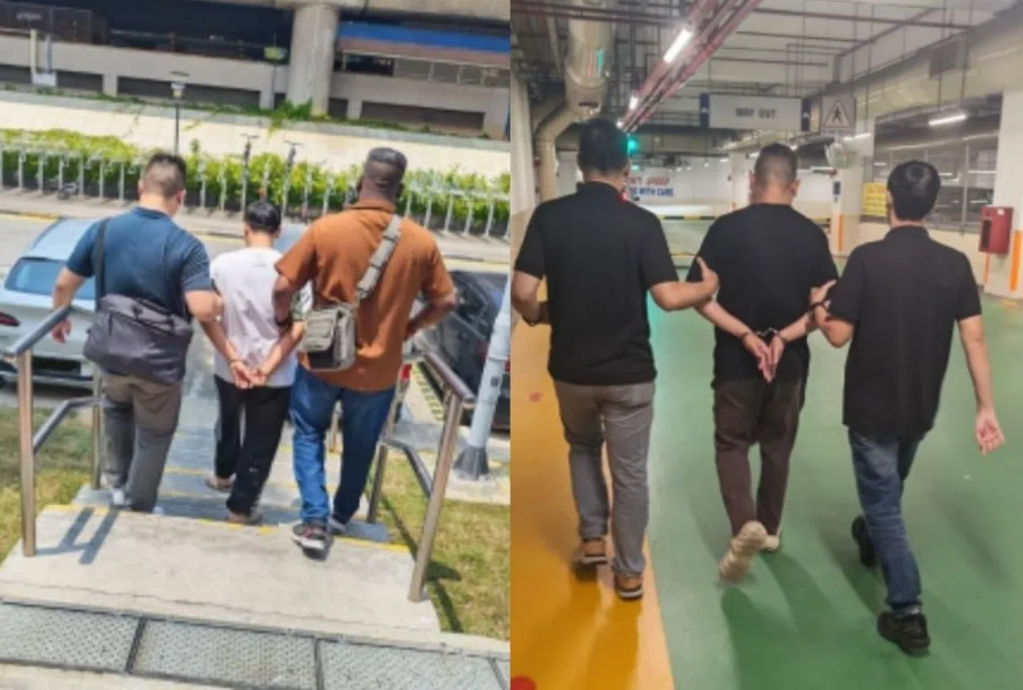
Two Malaysian employees working at mobile phone retail outlets in Singapore were arrested on Tuesday, August 25 for their alleged role in a sophisticated identity fraud and money laundering operation centred on compromised government login credentials. The pair, aged 25 and 47, are suspected of systematically exploiting customer information obtained during routine shop transactions to establish fraudulent digital payment accounts, creating a pipeline through which scam proceeds could be funnelled and converted into usable funds.
The modus operandi uncovered by Singapore police reveals a troubling vulnerability in how personal data circulates through seemingly legitimate commercial channels. When customers visited these mobile phone shops to purchase SIM cards or update their account details, the suspects seized opportunities to request access to Singpass—Singapore's national digital identity authentication system—on the pretext of assisting with routine administrative tasks. Once they obtained the login credentials, they surreptitiously created LiquidPay accounts, a Singapore-based fintech service operated by Liquid Group, without the knowledge or consent of the actual account holders.
The scale of the operation extends well beyond the two arrested individuals. Police investigations have identified more than 170 Singaporean and foreign workers whose Singpass accounts were compromised through similar tactics. These hijacked credentials were leveraged to establish over 160 additional LiquidPay accounts, each fraudulently registered and positioned to receive illicit funds. The discovery suggests a well-coordinated criminal network operating across multiple locations and coordinating the exploitation of numerous victims simultaneously.
Since early March this year, at least 20 Singapore citizens and work permit holders have come under police investigation for their involvement in registering these fraudulent LiquidPay accounts. The accounts flagged in police records received a total of S$110,063 derived from various scam operations, indicating that the scheme served as a critical infrastructure point in a broader ecosystem of financial crime. The funds flowing through these e-wallets likely originated from phishing schemes, loan scams, or investment fraud targeting vulnerable members of the community.
For Malaysian readers, this case carries particular significance given the cross-border dimension. Malaysia and Singapore maintain extensive economic ties, with thousands of Malaysian workers employed in Singapore across various sectors including retail, services, and finance. The involvement of Malaysian nationals in facilitating cybercrime highlights how criminal networks exploit the labour mobility and trust that characterise the region's employment landscape. The incident raises questions about employment screening, training on regulatory compliance, and the vulnerability of workers operating in high-customer-contact roles to recruitment by criminal organisations.
The investigation was jointly conducted by Singapore's police Cyber Command division and the Singpass Trust & Safety team at the Government Technology Agency of Singapore. This inter-agency coordination reflects the evolving sophistication of law enforcement responses to digital crimes that blur the lines between identity theft, financial fraud, and organised crime. The decision to involve the government technology agency underscores that attacks on digital identity infrastructure represent threats to the foundations of secure e-governance and digital commerce systems that Southeast Asian governments have invested heavily in developing.
The charges being brought against the two arrested men carry severe consequences. Both face prosecution under provisions criminalising assistance in retaining benefits from criminal conduct, an offence attracting a maximum prison sentence of 10 years and fines reaching S$500,000. These substantial penalties reflect the gravity with which Singapore treats crimes that facilitate money laundering and undermine the integrity of government authentication systems. The sentencing framework signals that individuals facilitating financial crime through their employment will face consequences commensurate with their role in enabling larger criminal enterprises.
Parallel investigations continue into Singaporeans and foreign workers who willingly surrendered their Singpass credentials to third parties. These individuals face their own potential liability, with maximum penalties of three years imprisonment and S$10,000 in fines. This prosecutorial approach acknowledges that such victims of social engineering or coercion bear some culpability for compromising secure authentication credentials, yet recognises that the penalties are proportionally lighter than those targeting active facilitators of fraud.
The incident exposes critical gaps in how financial technology platforms vet transactions and account registrations. While LiquidPay itself does not appear to have been negligent, the ease with which fraudulent accounts can be created and activated raises systemic questions about know-your-customer verification procedures in the rapidly expanding digital payment ecosystem. As Southeast Asian fintech sectors mature and proliferate, regulatory frameworks must evolve to prevent exploitation of these new financial channels by organised criminal syndicates.
For Malaysia, the case provides a cautionary reminder about the vulnerabilities that emerge when citizens work abroad in positions providing access to sensitive information. It underscores the importance of workplace training, awareness of social engineering tactics, and clear protocols governing customer data access. Malaysian labour organisations and employers sending workers to Singapore would benefit from enhanced pre-departure orientation covering cybersecurity responsibilities and the legal consequences of facilitating financial crimes in their host countries.
The operation also demonstrates how digital identity systems, while offering efficiency benefits, create new security challenges when authentication credentials become targets for sophisticated organised crime. Singapore's response, involving dedicated cyber law enforcement units and government technology agencies, provides a model for how Southeast Asian nations might coordinate defences against similar threats. As the region deepens digital transformation across government services and financial sectors, the capacity to investigate and prosecute crimes against these systems becomes increasingly critical to maintaining public trust and system integrity.

