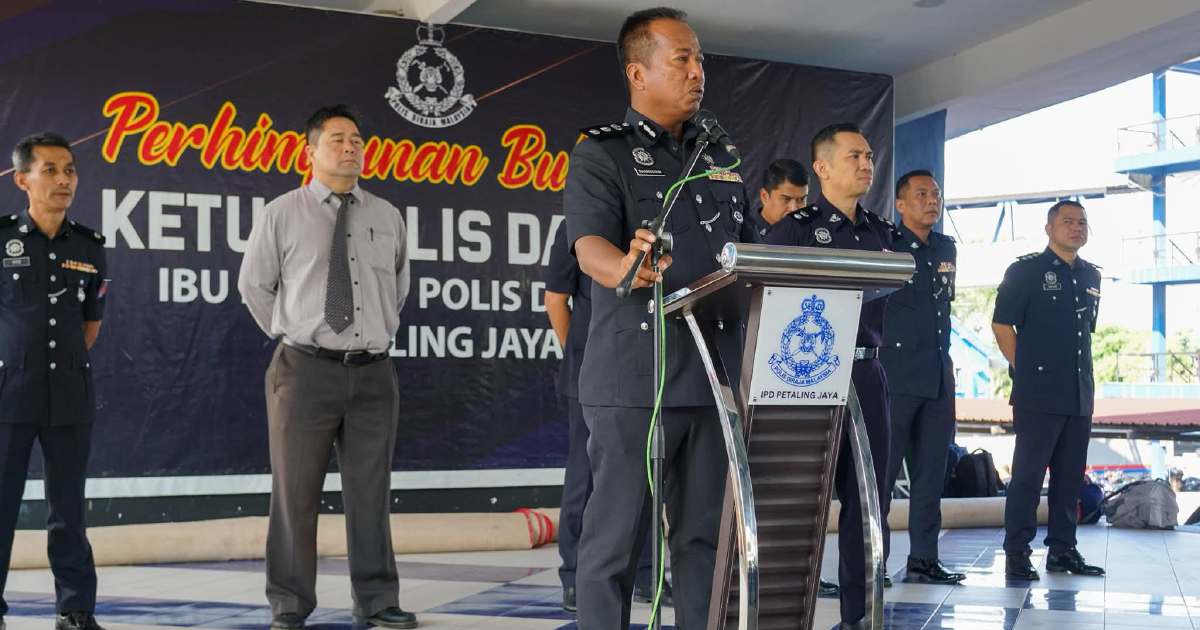
A late-night police pursuit that wound through the streets of Kuala Lumpur's northern suburbs has ended in the arrest of two suspects whose lengthy histories of criminal and narcotic-related offences made them high-priority targets for law enforcement. The dramatic chase, which stretched across several kilometres from Sri Damansara before concluding in Gombak, captures the sort of dynamic enforcement operations that authorities routinely conduct as they attempt to maintain public order across the densely populated Klang Valley region.
The two men, both aged in their 50s, represent a demographic that has become increasingly visible in Malaysia's law enforcement statistics when it comes to repeat offenders. Their individual track records span multiple convictions and encounters with narcotics units, suggesting patterns of behaviour that had drawn sustained police attention prior to yesterday's incident. The ages of the suspects indicate individuals who have spent decades navigating Malaysia's criminal justice system, with the accumulated violations pointing to persistent engagement in illicit activities rather than isolated lapses in judgment.
The vehicle used in the pursuit, a Nissan Grand Livina, is a common sight throughout Malaysian streets as a practical seven-seater family car. That such an ordinary vehicle featured in a high-speed police chase underscores how criminal activity operates within the context of everyday transport infrastructure. The decision by the suspects to attempt evasion rather than comply with police directives during what began as a traffic stop or routine vehicle check transformed a mundane encounter into an operational incident requiring active pursuit protocols.
The geographic scope of the chase—spanning from Sri Damansara, a residential and commercial area in the north-western portion of the city, through to Gombak, an established township further north—illustrates the extent to which fugitives traversed major arterial routes and residential thoroughfares in attempting to escape. Such pursuits pose inherent risks to public safety, as speeding vehicles navigating through populated areas can endanger innocent road users and pedestrians. The fact that police managed to bring this operation to a safe conclusion without reported collateral damage represents a successful outcome in what could have escalated into a more serious incident.
The timing of the arrest—late evening or night hours—aligns with patterns that Malaysian police have documented regarding heightened criminal activity during reduced visibility and lower traffic density periods. Night-time operations, whether for enforcement or the commission of crimes themselves, present distinct operational challenges for law enforcement personnel who must balance rapid response requirements with safety considerations. The timing may also suggest that the suspects were engaged in activities specifically suited to nocturnal operations, though authorities have not yet detailed the underlying motivation for the attempted getaway.
Criminal records extending across drug-related charges carry particular significance in the Malaysian context, where narcotics enforcement represents a cornerstone of police operations and judicial attention. The conjunction of extensive criminal histories with drug-specific offences suggests that these individuals may have had ongoing involvement in Malaysia's illicit substance trade at various levels. Such individuals frequently attract monitoring by anti-narcotics units, and their appearance in a fleeing vehicle scenario may represent the culmination of ongoing investigation rather than an entirely chance encounter.
The arrest procedure following the conclusion of the chase would have involved standard detention protocols and subsequent investigation procedures. Given the circumstances of apprehension—flight from police and the commission of a traffic-related offence compounding existing legal jeopardy—the two men now face multiple potential charges arising from the single incident. The nature of charges prosecutors ultimately pursue will depend on the specific circumstances of the chase, any property or substances discovered in the vehicle, and the statutory framework that best reflects the severity of the conduct.
For residents in the affected areas of Sri Damansara and Gombak, such incidents reinforce the reality that criminal activity and police enforcement operations occur within familiar neighbourhoods rather than remaining abstract news items. The visibility of police pursuits through residential zones serves as both a deterrent and a reminder of ongoing law enforcement presence. However, the disruption caused by such operations—traffic disruptions, the spectacle of emergency responses, and public safety concerns—reflects the tangible cost of pursuing suspects who resist apprehension through vehicular flight.
The broader implications of this arrest extend to how Malaysian police prioritise resource allocation and enforcement strategies. The existence of individuals with such extensive criminal backgrounds remaining active and engaged in flight from police suggests ongoing challenges in maintaining sustained pressure on repeat offenders. While individual arrests represent tactical victories, systemic effectiveness ultimately depends on whether rehabilitative or incapacitative approaches successfully interrupt career criminal patterns.
The investigation proceeding from this arrest will likely examine the vehicle's contents, the circumstances triggering the initial police contact, and whether the two men were engaged in a coordinated operation or travelling together by circumstance. Communications records, surveillance footage, and witness statements will contribute to building a comprehensive case against the accused. The Petaling Jaya police district, responsible for operations across this sector, will now conduct detailed interrogations and forensic examinations to establish the precise nature of any offences committed beyond the act of fleeing police.

