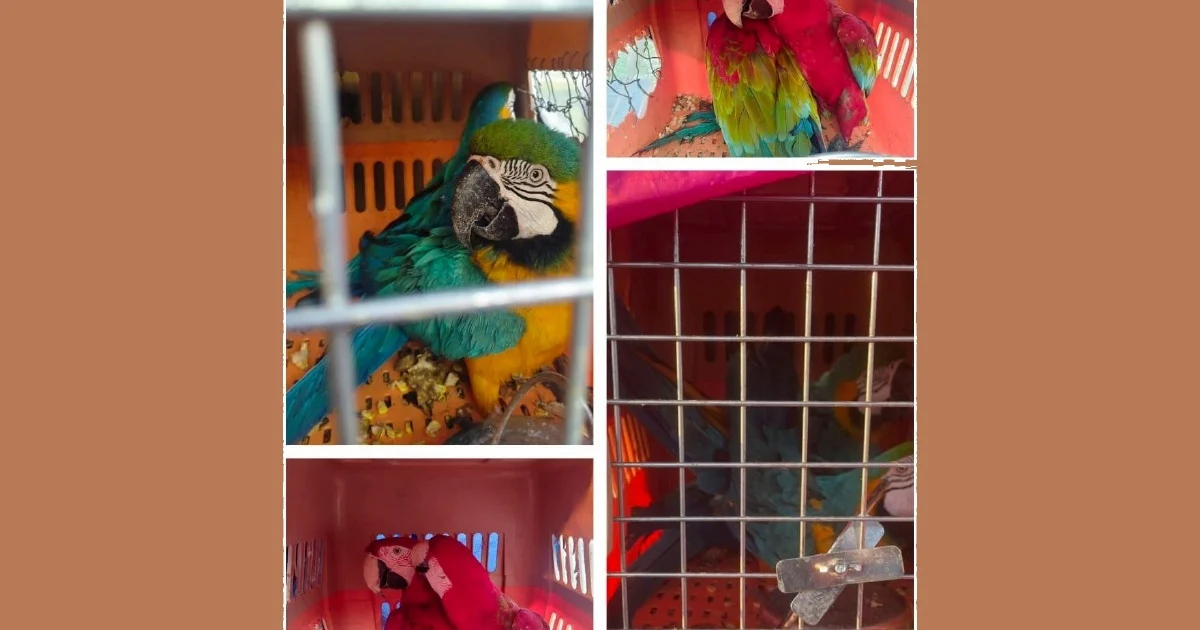
Wildlife enforcement authorities in Kelantan have arrested two individuals after discovering eight protected macaws being transported illegally along Jalan Bandar Tumpat in Tumpat. The seized birds are estimated to be worth RM400,000, according to officials who conducted the operation. The arrests mark another significant step in efforts to combat the increasingly lucrative illegal wildlife trade that continues to threaten Malaysia's biodiversity and contravenes international conservation agreements.
The operation that led to the discovery showcases the ongoing vigilance required to intercept wildlife trafficking at the state level. Macaws, native to Central and South America, are among the world's most sought-after exotic birds due to their striking plumage, intelligence, and capacity for social bonding with humans. Their illegal trade remains a substantial problem globally, with criminal networks exploiting demand from collectors and private breeders willing to pay premium prices for these creatures, often without regard for the species' conservation status or the methods used to obtain them.
Malaysia's position as a Southeast Asian hub for international trade has unfortunately made it vulnerable to becoming a transit point for smuggled wildlife destined for markets in China, the Middle East, and Europe. The trafficking of protected species represents a multi-billion-ringgit illegal industry that operates alongside drug smuggling and human trafficking in terms of organized crime sophistication. Local enforcement agencies have intensified monitoring at borders and major transport corridors, recognizing that disrupting supply chains at crucial interception points can significantly impact overall trafficking volumes.
The RM400,000 valuation attributed to these eight macaws underscores the extraordinary profit margins that motivate criminal syndicates. A single healthy macaw can command prices ranging from RM20,000 to RM80,000 in black markets, depending on species rarity, age, and condition. These economics create powerful incentives for smugglers to take substantial risks, often employing sophisticated concealment methods and fraudulent documentation to move animals across borders. The fact that two individuals were apprehended together suggests they may have been part of a larger organized operation rather than casual traffickers.
Kelantan, located on Malaysia's east coast with significant international borders and multiple entry points, has become an area of particular concern for wildlife authorities. The state's geography and existing cross-border trading relationships make it susceptible to wildlife trafficking networks that exploit informal trade routes and less-monitored transportation corridors. Previous operations in the region have uncovered shipments of reptiles, birds, and mammals destined for illegal markets, indicating that enforcement agencies must maintain constant vigilance to disrupt these activities.
Protected species regulations under Malaysian law are stringent, reflecting the country's commitment to international conservation frameworks including the Convention on International Trade in Endangered Species (CITES). The arrest of these individuals demonstrates that wildlife enforcement does carry meaningful legal consequences. Offenders convicted of transporting protected wildlife without permits face substantial fines and potential imprisonment, serving as a deterrent to would-be smugglers. However, enforcement officials acknowledge that penalties must remain competitive with profit incentives to truly discourage participation in trafficking networks.
The seizure also highlights the importance of public awareness and community reporting in combating wildlife crime. Citizens who observe suspicious transportation of unusual animals or suspicious activity at borders and transport hubs can provide crucial intelligence that enables timely interventions. Malaysia's Department of Wildlife and National Parks (PERHILITAN) and customs authorities actively encourage reporting of suspected trafficking through multiple channels, recognizing that frontline officers cannot monitor every shipment without public support.
Beyond the immediate criminal charges these individuals will face, the broader implications of wildlife trafficking extend to ecosystem health and conservation outcomes. Illegal trade exacerbates population pressures on vulnerable species, disrupts breeding programs, and removes genetic diversity from wild populations. When specimens are removed from their natural habitats through poaching and trafficking, the ecological consequences can be severe, affecting food chains, pollination patterns, and overall biodiversity. The removal of eight macaws, while perhaps seemingly small in global terms, represents a loss that contributes to cumulative conservation impacts.
The operation's success also demonstrates the technical capability that Malaysian enforcement agencies have developed through training and international cooperation. Wildlife trafficking investigations require specialized knowledge spanning species identification, smuggling routes, criminal networks, and evidence handling standards that meet prosecution thresholds. Collaboration between federal agencies, state authorities, and international partners like INTERPOL's Wildlife Crime Working Group has strengthened Malaysia's capacity to identify, investigate, and prosecute trafficking cases with greater sophistication than was possible a decade ago.
Moving forward, authorities emphasize that sustainable solutions require addressing root causes of wildlife trafficking, including poverty in source communities, corruption among officials, and persistent demand from consumer markets. Development initiatives in regions where wildlife poaching occurs, coupled with alternative livelihood programs, can reduce the economic pressure driving individuals toward illegal harvesting. Simultaneously, demand-reduction campaigns targeting markets in consuming countries seek to diminish appetite for exotic species among collectors and breeders, addressing the market incentives that perpetuate trafficking networks.

