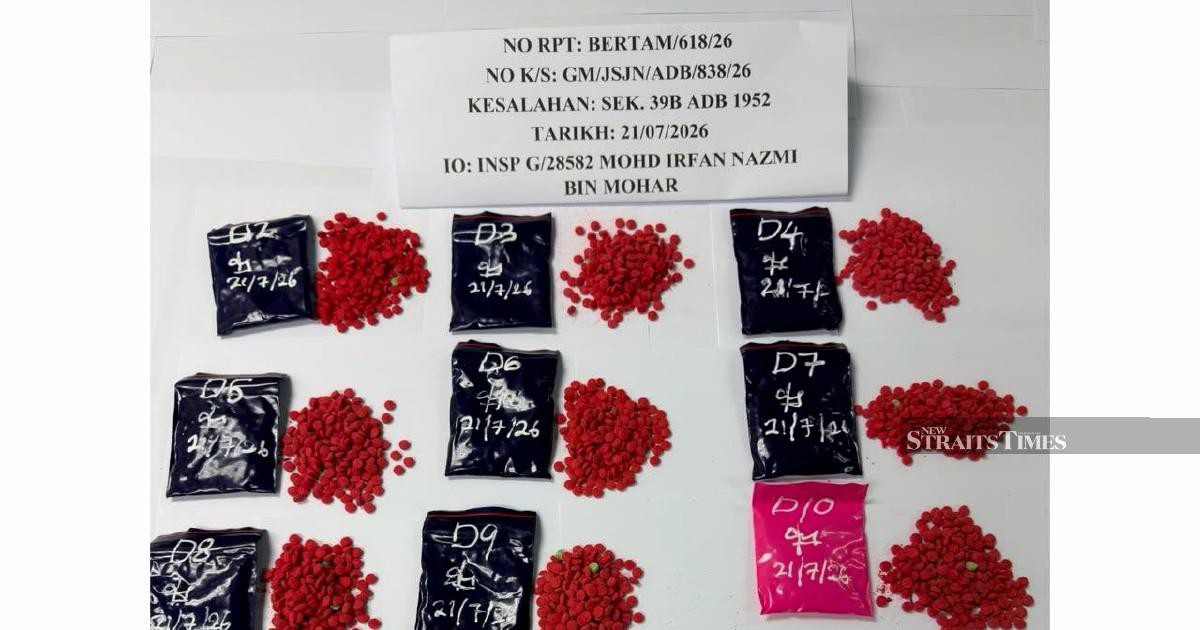
Two Myanmar nationals have been detained in Gua Musang following an enforcement operation that yielded a substantial seizure of yaba pills, underscoring continuing efforts by Malaysian authorities to combat cross-border drug trafficking from Southeast Asia. The suspects were apprehended after a brief pursuit that culminated in their capture and the recovery of approximately 6,000 yaba tablets, with an estimated street value near RM60,000.
The operation represents one of numerous enforcement actions targeting the illicit amphetamine trade, which has become increasingly prevalent across Malaysia and the broader region. Yaba, a methamphetamine derivative also known as "crazy medicine" or "speed," remains a significant concern for law enforcement agencies owing to its accessibility, potency, and widespread abuse among younger demographics. The drug's relatively affordable pricing compared to other stimulants has contributed to sustained demand patterns across urban and rural communities alike.
Gua Musang, located in Kelantan in the eastern peninsular region, sits along traditional drug trafficking routes connecting Thailand and Malaysia. The town's geographical position has rendered it a focal point for anti-narcotics operations, with law enforcement agencies routinely conducting patrols and intelligence-led investigations targeting smuggling networks. The location's significance in drug trafficking corridors reflects the broader vulnerability of Malaysia's land and sea borders to transnational criminal organisations operating throughout the Golden Triangle region.
The pursuit itself highlighted the reactive nature of many enforcement operations, wherein officers responded to suspicious activity and initiated a chase that ultimately resulted in the arrest. Such operations often represent the visible face of drug enforcement, though investigators emphasise the importance of sustained intelligence gathering and coordination with regional counterparts in disrupting supply chains before contraband reaches street level.
Myanmar's ongoing internal conflicts and institutional weaknesses have contributed to its emergence as a primary source of synthetic drug production and trafficking. The country has become a major manufacturing hub for methamphetamine and fentanyl derivatives, with criminal syndicates operating across porous borders to supply demand markets throughout Southeast Asia and beyond. Malaysian law enforcement agencies have consistently identified Myanmar and Thailand as key source countries, necessitating enhanced border security protocols and cross-border cooperation frameworks.
The detention of the two suspects follows established procedures whereby suspects face investigation under Malaysia's Dangerous Drugs Act 1952. The severity of the alleged offence—possession of yaba with intent to distribute—carries substantial penalties including lengthy imprisonment terms and substantial fines. Conviction typically results in sentences ranging from several years to decades in custody, though circumstances and cooperation with authorities may influence judicial outcomes.
The RM60,000 valuation reflects current street-level pricing structures, though actual seizure values remain subject to multiple variables including purity levels, local market conditions, and trafficking network margins. Enforcement agencies calculate such valuations to communicate the magnitude of trafficking operations and demonstrate progress in narcotics interdiction efforts to public and political audiences.
This seizure contributes to Malaysia's cumulative drug enforcement statistics, with authorities regularly releasing data documenting contraband quantities and arrest figures. These metrics serve dual purposes: informing policy discussions regarding resource allocation and enforcement strategy while simultaneously providing intelligence regarding evolving trafficking patterns, consumption trends, and criminal network operations.
Regional cooperation mechanisms, including information sharing through the ASEAN Secretariat and bilateral agreements with Thailand and Myanmar, remain essential to curtailing drug trafficking networks. Malaysian authorities increasingly emphasise collaborative approaches combining enforcement, demand reduction, and rehabilitation initiatives. However, enforcement operations targeting street-level traffickers and couriers must be accompanied by investigation into higher-level supply chain actors and financial mechanisms sustaining these networks.
The broader context surrounding this arrest reflects persistent challenges confronting Southeast Asian governments navigating synthetic drug crises. Supply reduction through enforcement and supply chain disruption requires sustained investment and political commitment, particularly given the profitability of drug trafficking and associated corruption risks. Malaysian authorities have demonstrated incremental progress through targeted operations and intelligence gathering, though complete elimination of synthetic drug trafficking remains an aspirational rather than realistic objective given structural factors enabling production and transnational movement.
For Malaysian readers, such seizures underscore the reality of ongoing drug enforcement activities and the personal risks traffickers face when attempting to move narcotics across borders. Simultaneously, the persistence of significant seizures indicates continued trafficking attempts despite elevated risks, reflecting the substantial profit margins attracting new participants into criminal networks. Public awareness campaigns and community reporting mechanisms remain complementary strategies supporting formal enforcement infrastructure in disrupting local distribution networks.

