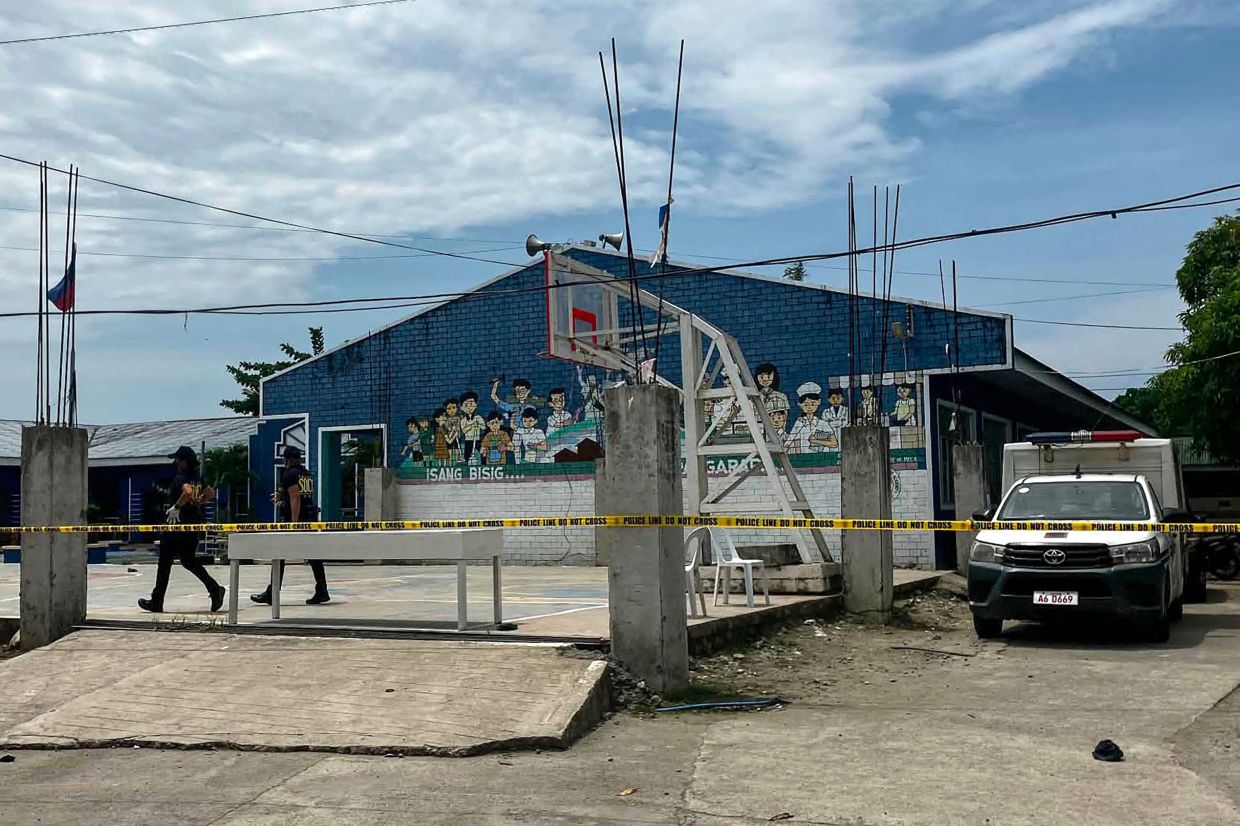
A midday shooting at San Jose National High School in Tacloban city has shocked the Philippines and reignited concerns about school safety and youth violence in the country. Two students, aged 14 and 15, entered their crowded campus armed with handguns on Monday and opened fire in what police describe as a calculated assault targeting fellow students. The attack resulted in three deaths and left seven more wounded, according to regional police chief Brig. Gen. Jason Capoy, who confirmed that both suspects have been taken into custody.
The identity of the victims and the precise timeline of events remain subject to ongoing investigation, but initial reports paint a picture of chaos and terror. According to Capoy's account, the two suspects—who were close friends—entered at least two separate classrooms during their rampage. After shooting in the first location, they pursued fleeing students into an adjacent room, suggesting a deliberate effort to maximize casualties rather than a spontaneous outburst. Video footage posted online captures the horror experienced by those present: students huddled beneath desks screaming and weeping as gunfire erupted outside their classroom doors, some calling their parents in desperation while others fled the campus in visible distress. Police recovered at least 40 shell casings at the scene, indicating sustained and intensive gunfire.
The question of how two teenagers managed to bring firearms into a school with over 1,500 students has already sparked criticism of security protocols. Capoy revealed that the campus, despite its large student population, operated with only a single security guard stationed at multiple entry and exit points—a staffing level that proved wholly inadequate to screen visitors or prevent unauthorized weapons from entering. The weapons themselves traced back to lapses in firearm custody and management. One of the suspects obtained a 9 mm pistol from his aunt, a police officer currently being investigated for her role in the matter. The other suspect wielded a caliber .38 revolver, whose source has not been disclosed in available reports.
Perhaps most concerning to school administrators and education officials is the motive articulated by the suspects during preliminary interrogation. Both teenagers cited bullying as their justification for the attack, though Capoy declined to provide specific details about the nature or extent of the harassment they claimed to have experienced. Neither suspect had prior criminal records, suggesting they were otherwise unremarkable students whose grievances—real or perceived—festered until they erupted in unprecedented violence. The claim of bullying introduces a familiar and troubling dimension to school violence globally: the link between social ostracism and lethal retaliation, a connection that has motivated mass casualty events in educational settings across multiple countries and continents.
The demographic composition of the casualties adds another disturbing element to the incident. Police indicated that most of the dead and wounded were female students, though the exact breakdown remains unclear. This detail raises questions about whether the suspects targeted girls specifically or whether the gender distribution reflects the broader student population at the school. The Philippine education system, like many in Southeast Asia, continues to grapple with gender-based bullying and harassment, making this observation potentially significant for understanding the context in which the shooting occurred.
One suspect was apprehended immediately at the school following the attack, but the second initially escaped and hid in a nearby house before police, alerted by residents, located and arrested him. The swift response by community members and law enforcement prevented further casualties, though the initial period when one armed attacker remained at large clearly amplified panic and fear among parents, students, and school staff. The incident unfolded in broad daylight during school hours, maximizing the potential for bloodshed and ensuring that any emergency response would face challenges in securing the sprawling campus.
President Ferdinand Marcos Jr. responded to the tragedy by ordering a comprehensive investigation and instructing law enforcement to strengthen security measures across all schools, workplaces, and public gathering spaces nationwide. Communications Undersecretary Claire Castro conveyed the president's sentiment that the attack represented a devastating breach of the safety that citizens should reasonably expect in educational and communal environments. The presidential intervention signals recognition that this incident, while rare in a Philippine context, demands systematic policy responses to prevent recurrence.
The legal framework governing juvenile offenders in the Philippines will significantly shape how these cases proceed. Under a 2006 law, the minimum age of criminal liability is set at 15 years old. The 14-year-old suspect may therefore be exempt from criminal prosecution depending on whether authorities can establish that he fully understood the nature of his actions and their consequences. Both suspects will eventually be transferred to government welfare officers rather than remaining in the adult criminal justice system, a transfer that reflects international standards regarding juvenile justice while potentially frustrating victims' families seeking accountability. The investigation must now determine whether the suspects met the legal threshold for understanding their crime—a determination that carries immense practical and symbolic weight.
School shootings remain statistically uncommon in the Philippines compared to other nations, though firearms-related crime broadly is endemic due to the proliferation of unlicensed weapons throughout the archipelago. The last high-profile shooting in an educational institution occurred in 2022, when a gunman opened fire at an upscale Manila-area university during graduation festivities, killing three people including a former town mayor with whom the shooter had an established dispute. That incident demonstrated that Filipino schools and universities are not immune from such violence, despite their relative rarity compared to some international contexts.
The San Jose National High School shooting now stands as a watershed moment in Philippine discourse about school safety, youth mental health, bullying prevention, and the accessibility of firearms to minors. The fact that a police officer's weapon played a direct role in the attack underscores the need for stricter protocols governing how law enforcement personnel secure their service firearms at home and in public spaces. Meanwhile, the perpetrators' claims of bullying will likely prompt schools nationwide to scrutinize their anti-bullying programs and consider whether current interventions adequately identify and support students experiencing severe social distress.