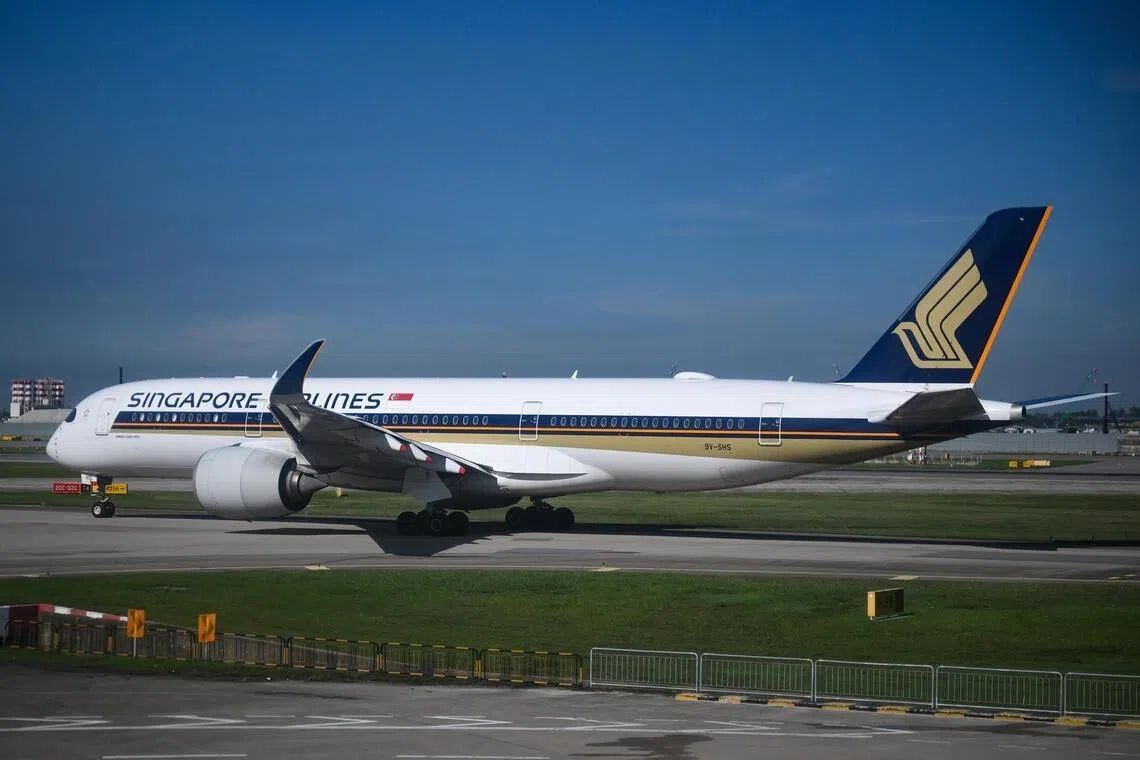
The advancing Typhoon Noul is creating significant disruption across Southeast Asian aviation networks, with major carriers suspending operations on routes connecting Singapore to China's southern coastal region this weekend. Singapore Airlines has taken the precautionary step of cancelling three flights as the powerful storm system moves toward Hong Kong and the neighbouring Guangdong province, citing deteriorating weather conditions that pose risks to passenger safety.
Singapore Airlines confirmed the cancellations in an advisory issued at 4.45pm on July 25, affecting services on both Saturday and Sunday. Flight SQ856, which was scheduled to depart for Shenzhen on July 25, will not operate. Additionally, the return service SQ855 from Shenzhen to Singapore on July 26 and the direct flight SQ899 from Hong Kong to Singapore on July 26 have both been suspended. The airline indicated that further schedule modifications remain possible and urged customers to monitor the flight status page on its website for the latest information regarding their bookings.
Passengers affected by these cancellations have been offered financial remedies to ease the disruption. Singapore Airlines confirmed that affected travellers are entitled to receive a full refund for any unused portion of their tickets, providing some financial relief for those whose plans have been derailed. For customers who booked through travel agents or partner airlines, the carrier recommended contacting their original booking agents or purchasing airline for assistance, ensuring that support is channelled through the appropriate channels depending on how the ticket was purchased.
The disruption extends beyond Singapore's national carrier. Cathay Pacific, Hong Kong's flagship airline, has enacted an even more sweeping cancellation programme affecting its Hong Kong hub operations. The carrier announced the suspension of all flights scheduled to arrive at or depart from Hong Kong International Airport between 1.15am and 6pm on July 26, a substantial eight-hour window reflecting the anticipated intensity of the typhoon's passage over the territory. While most services within this timeframe have been entirely cancelled, Cathay Pacific acknowledged that a select number of other flights will experience delays rather than outright cancellation, suggesting a phased approach to managing operations as conditions permit.
Cathay Pacific has committed to rebooking all affected passengers on alternative flights, though the airline emphasised that customers will only be informed of their new flight arrangements once these have been confirmed and finalised. This approach recognises the uncertainty inherent in predicting the exact timing and severity of the storm's impact, and avoids the risk of announcing provisional arrangements that may subsequently require further changes. The airline has not yet announced potential compensation arrangements beyond rebooking, though such decisions may be forthcoming as the full scope of disruptions becomes apparent.
Metereological forecasts indicate that Typhoon Noul will make landfall in the coastal zone spanning from Hong Kong westward into Guangdong province during the evening hours of July 25 through the early morning of July 26. According to analysis from China's National Meteorological Center cited by international news agencies, the storm will bring torrential rainfall and gale-force winds to the affected region, conditions that preclude safe flight operations at major air traffic hubs. The timing of the predicted landfall aligns closely with the operational windows that both carriers have chosen to suspend or heavily restrict services.
The scale of human displacement underscores the typhoon's severity. Chinese state broadcaster CCTV reported in a late evening bulletin on July 24 that more than 20,000 people had already been evacuated from the Guangdong province region ahead of the storm's arrival. This large-scale preventive evacuation reflects both the destructive potential of the approaching system and the effectiveness of disaster preparedness mechanisms in densely populated coastal areas. The evacuation of such numbers indicates that local authorities have assessed risks to residential and commercial areas as sufficiently serious to warrant mass movement of people away from vulnerable zones.
For Malaysian travellers and businesses, the implications of these disruptions merit consideration. Singapore's position as a regional aviation hub means that cancellations and delays on routes to southern China reverberate through connectivity from Malaysia and other neighbouring nations. Companies with supply chain operations linking Malaysia to factories in Guangdong or Shenzhen may experience shipping delays as logistics networks adjust to the disrupted air connections. Leisure travellers intending to connect through Singapore to Hong Kong or mainland China should expect cascading delays and may wish to defer non-essential journeys until the weather system has cleared the region.
The incident highlights how natural disasters and severe weather events remain significant sources of operational uncertainty for the aviation industry across Southeast Asia, despite advances in aircraft design and forecasting capabilities. While modern jets are engineered to withstand extreme conditions, operational decisions necessarily prioritise the safety margins provided by avoiding flight operations during typhoons entirely rather than attempting to operate under marginal conditions. Airlines face the competing pressures of maintaining schedule integrity against the necessity of ensuring passenger safety, a tension that invariably resolves in favour of caution when typhoons threaten major transport corridors.
Both carriers have established clear protocols for managing passenger communications and rebooking arrangements, reflecting lessons learned from previous severe weather disruptions. The emphasis on directing customers to websites and partner contact channels suggests that carriers anticipate high call volumes and have sought to distribute the assistance burden across multiple channels. Passengers should expect response times to be slower than usual and may need to demonstrate patience as airline staff work through the substantial number of affected bookings.

