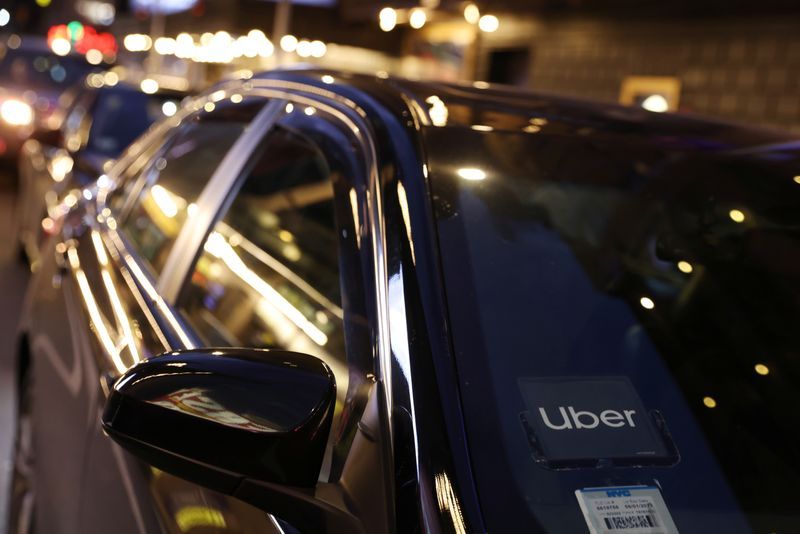
A coalition of institutional investors led by Detroit's Police and Fire Retirement System has mounted a legal challenge against Uber Technologies' board of directors, alleging that executives and board members systematically downplayed compliance risks and ignored warnings about the ride-sharing platform's exposure to sexual misconduct allegations. The derivative lawsuit, filed in San Francisco federal court on Monday, represents a significant escalation in corporate governance disputes at the technology company and marks another chapter in Uber's contentious relationship with regulators and safety advocates across multiple jurisdictions.
At the heart of the shareholder complaint lies a troubling pattern of institutional negligence. According to court documents, the board received repeated alerts—both from internal compliance teams and external advisors—flagging the company's inadequate safeguards against driver-perpetrated sexual abuse and harassment. Rather than implementing comprehensive remedial measures, shareholders contend that directors adopted a minimalist approach to risk management that left the company vulnerable to mass litigation. The scale of exposure is staggering: as of June 1, Uber faced 3,571 lawsuits in San Francisco federal court alone involving allegations of sexual misconduct by drivers, a number that underscores the systemic nature of the problem.
The litigation also encompasses broader compliance failures that extend beyond driver conduct. Federal authorities filed separate charges against Uber last year, accusing the company of systematically excluding passengers with disabilities from its services—a practice that violated accessibility laws protecting individuals who rely on service animals or require stowable wheelchairs. Additionally, the government alleged deceptive billing practices and misleading cancellation policies that harmed consumers. Shareholders argue these violations were not isolated incidents but reflected a corporate culture where cost-cutting and regulatory circumvention were prioritized over legal compliance and consumer protection.
The complaint characterizes Uber as "a serial compliance offender" whose reputation has been "irredeemably damaged" by sustained negative media coverage and legal setbacks. This framing suggests shareholders view compliance lapses not merely as operational challenges but as fundamental threats to shareholder value. The reputational harm extends to investor confidence: Uber's share price has declined more than 25% since reaching a peak on September 22 of the previous year, a decline that shareholders attribute in part to the mounting legal and regulatory pressures stemming from governance failures.
Internally, the data on brand perception paints a bleak picture. According to information presented in the complaint, fewer than 40% of Uber users report believing the company takes passenger safety seriously. This statistic represents a critical erosion of consumer trust and suggests that the company's public relations efforts have failed to convince riders that management is adequately addressing known risks. For a platform business that depends entirely on consumer participation and driver supply, such low safety perceptions create a material business problem that extends beyond legal liability.
CEO Dara Khosrowshahi, who has led the company for nearly nine years, is named among the defendants. Shareholders acknowledge that Khosrowshahi has adopted a somewhat less aggressive regulatory posture than his predecessor, but they argue that this modest shift represents insufficient course correction. Their complaint suggests that while the current leadership is "less brazen in pushing regulatory limits," the company continued to economize on compliance infrastructure and safety investments—a distinction that proves immaterial in light of the overall pattern of failures.
The derivative lawsuit mechanism itself warrants explanation for regional readers unfamiliar with American corporate law. Rather than suing the company on behalf of all shareholders, derivative suits are brought by select shareholders on behalf of the corporation itself, with any damages recovered flowing to the company rather than to individual plaintiffs. In this case, shareholders seek to compel directors to personally reimburse Uber for losses stemming from their alleged breaches of fiduciary duty and violations of federal securities law—a remedy designed to create personal financial incentives for board members to exercise proper oversight.
Uber's broader regulatory challenges continue to mount. Earlier this month, Uber and its rival Lyft jointly sued New York City to block a new municipal law they argue would restrict their ability to deactivate drivers who pose safety risks to passengers. This litigation highlights a recurring tension in the ridesharing industry: platform companies often resist regulations they claim would hamstring their operational flexibility, even when those regulations are designed to protect public safety. The lawsuit suggests that despite the mounting legal exposure highlighted in the shareholder complaint, Uber continues to contest safety-focused regulations.
For investors and industry observers across Southeast Asia, this case carries broader implications. Many countries in the region have welcomed Uber and similar platforms with relatively light-touch regulatory frameworks, betting that innovation and market competition would generate sufficient safety and service quality improvements without heavy-handed government intervention. The Uber litigation suggests that this model may be inadequate: even a massive global company with sophisticated technology and substantial resources has struggled to maintain compliance with basic safety and accessibility standards, raising questions about whether smaller or less well-capitalized platforms can be trusted to self-regulate.
The shareholder lawsuit also reflects evolving expectations about corporate board accountability. Institutional investors—particularly pension funds managing retirement assets for workers—increasingly view board oversight of risk management as a fiduciary responsibility comparable to financial controls. By characterizing compliance failures as breaches of duty to the corporation and its shareholders, this litigation signals that large institutional investors are willing to deploy legal tools to hold boards accountable for systemic misconduct, regardless of whether that misconduct directly violates securities laws.
Uber has not yet responded to requests for comment, and the company's trajectory in this litigation remains uncertain. However, the involvement of a major pension fund as plaintiff suggests that the case will attract sustained attention from the investment community. The coming months will likely see discovery disputes, motions to dismiss, and potentially settlement negotiations that could reshape corporate governance expectations at the company.
The case also underscores an uncomfortable reality for technology platforms operating globally: the operational model that made Uber successful—rapid scaling with minimal regulatory friction—has created persistent legal and reputational liabilities that may ultimately impose greater costs than the savings generated through aggressive cost-cutting. For Malaysian entrepreneurs and policymakers evaluating whether to welcome similar platforms, Uber's travails offer a cautionary lesson about the importance of building compliance infrastructure and safety mechanisms from inception rather than attempting to retrofit them after problems emerge.