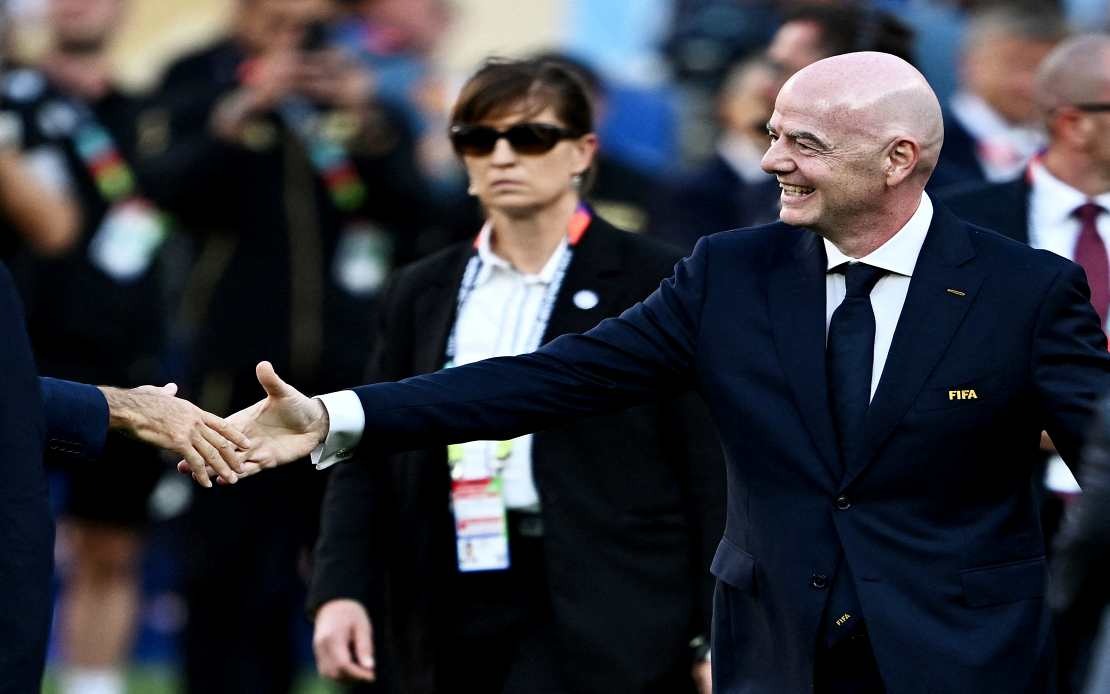
The Union of European Football Associations has escalated its confrontation with FIFA by issuing a formal legal warning to President Gianni Infantino, signalling its intention to pursue lawsuits, arbitration, and regulatory complaints stemming from a contentious plan to privatise portions of world football's governing body. The written notice, revealed by The Telegraph, represents a significant hardening of UEFA's position and underscores deepening fractures within the global football establishment over governance and financial transparency.
The dispute centres on FIFA's announced plan to raise US$4.2 billion by offering approximately 20 per cent of shares in a newly created entity responsible for managing the organisation's extensive media and commercial rights portfolio—encompassing the lucrative World Cup broadcasting and sponsorship agreements. The proposed arrangement would have transferred control of these revenue streams to private investors, with media reports suggesting that Joshua Kushner's investment foundation stood ready to acquire the stakes. The American investor's family ties to the Trump administration added a geopolitical dimension to the controversy, triggering concerns across European football hierarchies about American financial influence over the sport's most prestigious competitions.
The commercial restructuring proposal held profound personal implications for Infantino himself. According to multiple media accounts, the plan would have dramatically increased his annual compensation from 3 million euros to 30 million euros—a tenfold expansion that appeared to reward the FIFA president for engineering the privatisation scheme. This salary escalation element crystallised criticism from UEFA and other stakeholders, transforming what might have been presented as a straightforward financial innovation into a transaction bearing unmistakable hallmarks of self-enrichment at football's institutional expense.
Europe's football confederation moved decisively when word of the scheme became public. On Thursday, UEFA announced that all its member associations would boycott FIFA competitions until the proposed sale was completely withdrawn. The scale and speed of this coordinated response—involving hundreds of clubs and national teams across the continent—demonstrated the intensity of opposition to Infantino's proposal. The collective action signalled that UEFA membership would not tolerate what many regarded as a privatisation that threatened to commercialise football at the expense of the sport's traditional governance structures and fan interests.
Infantino capitulated within days. By Saturday evening, FIFA announced the abandonment of its commercial rights sale strategy, effectively conceding to the pressure campaign mounted by UEFA and its members. The sudden reversal suggested that even with backing from powerful investors and the apparent approval of FIFA's inner circles, the proposal could not withstand the unified opposition of European football's institutional weight. However, the swift withdrawal did little to mollify UEFA's leadership, which viewed the entire episode as symptomatic of deeper governance failures within FIFA.
In its formal legal notice to Infantino, UEFA demanded the immediate identification, location, and preservation of all documents and electronically stored information related to the failed proposal. This preservation requirement carries significant implications. By mandating document retention, UEFA has established a forensic record that would be available in any subsequent legal proceedings, potentially exposing internal FIFA deliberations, communications between Infantino and investors, board discussions, and the decision-making processes that led to the commercial rights sale proposal. The preservation order essentially locks down evidence before FIFA officials have opportunity to determine which materials might be inconvenient to reveal.
The language of UEFA's formal notice reflects the severity with which the confederation views the episode. The phrase "actively considering legal action, arbitration, and/or regulatory complaints" indicates multiple potential avenues for accountability. UEFA has left open the possibility of litigation in courts, recourse to FIFA's own arbitration mechanisms, and complaints filed with sports regulators and potentially broader governmental authorities. This multi-pronged approach maximises pressure and suggests UEFA will pursue accountability regardless of which individual legal mechanisms prove most effective.
For Malaysian football stakeholders and Southeast Asian football communities broadly, the dispute carries important ramifications. The World Cup and continental tournaments generate enormous broadcasting revenues that filter through confederations to member nations and ultimately to domestic leagues. FIFA's commercial arrangements determine the scale of these financial flows. A successful privatisation would have potentially reduced the revenue streams available to confederations outside Europe and the Americas, concentrating wealth among private investors and FIFA's executive leadership. Malaysia's Football Association and other Southeast Asian bodies have genuine interests in how FIFA manages these critical revenue sources, even if they lacked the political leverage to influence the outcome directly.
The episode also illuminates fundamental tensions within global sport governance between entrenched institutional structures and private capital seeking investment opportunities. Infantino's proposal represented an attempt to unlock FIFA's financial assets for private equity involvement—a move increasingly common in other sports but historically resisted by football's traditional power centres. UEFA's successful opposition suggests that Europe's football confederations retain sufficient collective power to block initiatives they perceive as threatening to their interests, even when such initiatives enjoy leadership support from the governing body's president.
Moreover, the corporate governance issues raised by the commercial rights proposal extend beyond the specific transaction. The fact that Infantino's personal financial compensation stood to increase dramatically through the arrangement raised questions about whether FIFA leadership operated under sufficient ethical constraints and oversight. UEFA's subsequent demands for legal accountability suggest that the confederation views governance reform at FIFA as necessary to prevent similar conflicts of interest from emerging in the future.
The unresolved legal threat also creates ongoing uncertainty for FIFA's planning processes. With UEFA promising potential lawsuits and regulatory complaints, FIFA faces a period of organizational instability where major strategic decisions could be challenged retrospectively. This legal overhang may discourage Infantino from pursuing similarly ambitious commercial or governance initiatives without explicit consensus from major confederations including UEFA. The practical effect is a shift in power dynamics, with European football asserting greater influence over FIFA's strategic direction than perhaps existed before the commercial rights controversy erupted into public view.

