Public university officials in Kelantan are mounting a concerted push to dissuade disadvantaged students from walking away from offers to pursue tertiary education, emphasising that comprehensive financial and welfare assistance schemes now exist to cushion the economic strain on vulnerable families. The intervention reflects growing concern that talented students from poorer backgrounds continue to forgo educational opportunities due to misconceptions about affordability, even as institutions work to broaden their support infrastructure.
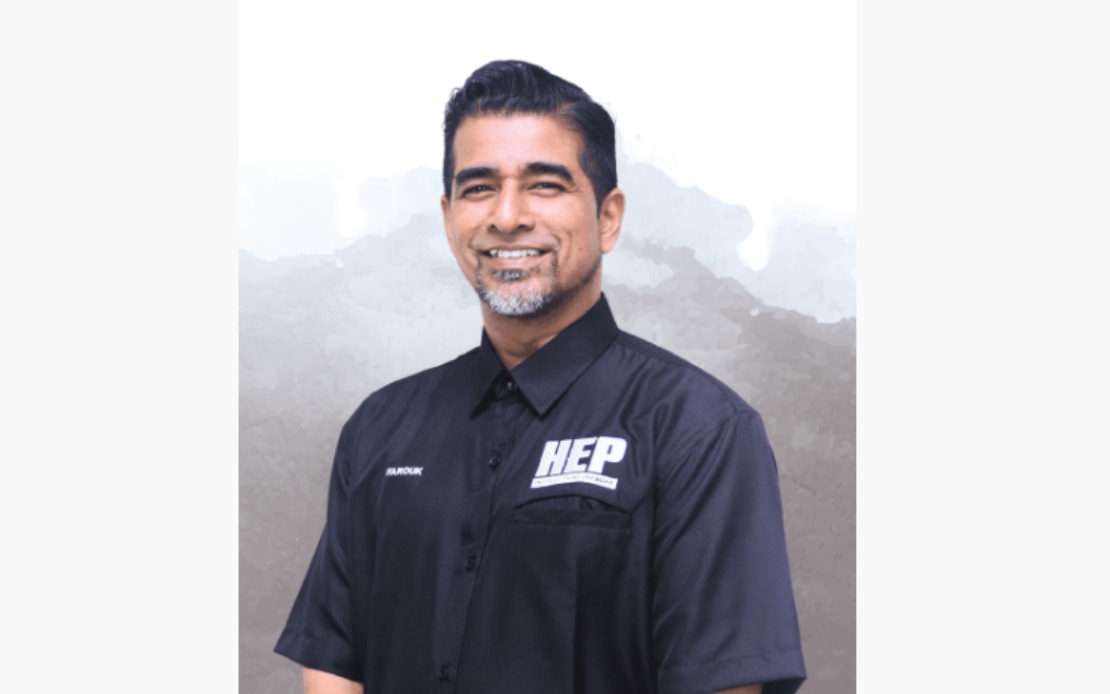
Meer Zhar Farouk Amir Razli, Deputy Rector for Student Affairs at Universiti Teknologi MARA (UiTM) Kelantan branch, has become increasingly vocal about dismantling the perception that borrowing through the National Higher Education Fund Corporation (PTPTN) represents the only viable pathway for cash-strapped enrollees. In remarks made during the university's Rector's Cakna Programme, Meer Zhar outlined a multi-layered approach to financial inclusion that extends considerably beyond the standard loan mechanism. The university now offers zakat-based assistance—funds drawn from Islamic charitable obligations—alongside dedicated welfare allocations and specific initiatives designed to address residential costs during the academic year.
Central to this expanded support architecture is the "Dapur MADANI" initiative, a residential college programme that directly helps students manage daily living expenses. Rather than leaving accommodation and food costs to accumulate as debt through conventional loans, the scheme provides targeted funding that acknowledges the reality of student poverty. This distinction matters significantly in the Malaysian context, where family financial crises often stem from healthcare emergencies or employment disruption rather than long-term destitution, making temporary, needs-based support more appropriate than debt financing for basic survival expenses.
Meer Zhar stressed the importance of prospective students and their parents conducting thorough research into available assistance categories before deciding to reject an admission offer. The message carries particular weight given intensifying competition for places within the public higher education system, where institutional places represent increasingly scarce resources. Students who turn down offers may face considerably longer waits before receiving subsequent invitations to tertiary study, potentially extending the time before they enter the workforce and begin contributing economically.
The broader initiative reflects institutional recognition that financial barriers often operate independently of academic merit or student potential. The Rector's Cakna Programme itself was developed in partnership with local non-governmental organisations, indicating an ecosystem-level commitment to identifying and supporting newly enrolled students requiring assistance. This collaborative approach suggests that universities are now viewing social welfare support as a core institutional responsibility rather than peripheral charity, integrating NGOs into campus life to ensure vulnerable students receive holistic rather than fragmented support.
The real-world impact of these schemes emerged through the case of Norzarra Dhania Amir Abdullah, a nineteen-year-old who previously declined a UiTM Sarawak offer due to family financial constraints. As the eldest of seven children, Norzarra Dhania carries significant household responsibility, particularly since her father's health crisis four years ago forced the family to depend entirely on her mother's modest income as a restaurant assistant. The cumulative weight of these circumstances had previously made tertiary education seem impossibly distant, a luxury her family structure simply could not accommodate.
Her eventual acceptance of an offer from UiTM Kelantan reflects not merely institutional persistence, but also the changed calculus that geographic proximity enables. The Kelantan campus location allows her to remain close to family while pursuing her Diploma in Management, a consideration that transforms tertiary education from an isolating proposition requiring family separation into something more integrated with household responsibilities. UiTM presented her with a laptop through the assistance programme, a practical intervention that addresses a specific barrier to educational success in an increasingly digital learning environment.
Norzarra Dhania's trajectory illustrates how institutional support mechanisms directly translate into expanded opportunity structures for Malaysian students from economically stressed backgrounds. Her earlier rejection, though understandable given family circumstances, represented a loss of both individual potential and broader economic productivity that the nation cannot sustainably afford to repeat across thousands of similar cases. Each student who cycles back into the labour market without tertiary credentials represents not only personal truncated mobility but also diminished returns on national investment in secondary education infrastructure.
The expansion of financial support through zakat and welfare channels also reflects Malaysia's specific institutional capacity. As an Islamic nation with established zakat collection and distribution mechanisms, Malaysian universities can leverage religious obligation as a funding lever for educational access in ways that complement but differ from conventional needs-based scholarships. This approach potentially reaches students who might experience cultural or religious hesitation about accepting welfare assistance categorised as charitable aid, reframing support as fulfilling a religious duty rather than accepting dependency.
The push to retain qualified applicants assumes heightened significance within Southeast Asia's competitive higher education landscape. Regional competition for skilled graduates intensifies as multinational corporations expand operations throughout ASEAN, and educational attainment increasingly determines access to well-remunerated positions. Students who reject tertiary offers due to perceived financial impossibility effectively remove themselves from candidacy for these positions, perpetuating cycles of economic constraint within families and limiting intergenerational mobility.
UiTM Kelantan's efforts also signal shifting institutional philosophy regarding the university's social mission. Rather than viewing the institution narrowly as an academic centre serving those already capable of bearing educational costs, the university increasingly positions itself as an agent of social mobility responsible for actively identifying and supporting latent talent within disadvantaged populations. This reconceptualisation requires sustained commitment to both financial mechanisms and advocacy, as prospective students and families must learn that support structures exist before they can be utilised.
Looking forward, the sustainability of these initiatives depends on consistent institutional funding and continuous adaptation as student demographics and economic circumstances evolve. The visibility of programmes like the Rector's Cakna and expanded zakat channels must reach beyond campus into secondary schools and community networks where decisions about whether to even apply for tertiary education are initially formed. Without this foundational awareness-building, even comprehensive support mechanisms remain inaccessible to those most needing them.