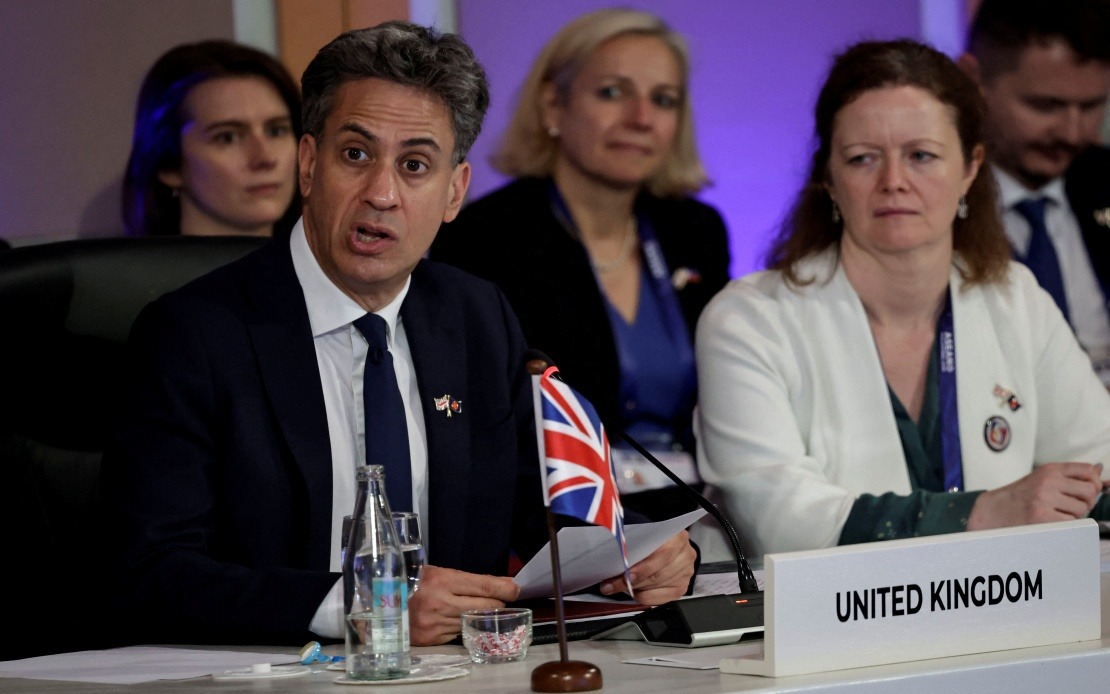
Ed Miliband is embarking on his inaugural visit to continental Europe as the United Kingdom's foreign secretary, signalling the Labour government's intention to reset relations with key allies across the Channel. The diplomatic mission to France and Spain this week represents a symbolic reset after years of post-Brexit tensions, with Miliband expected to use the platform to outline Britain's renewed commitment to collaborative European security and prosperity.
The timing of this tour carries particular resonance given the humanitarian dimension underlying these talks. Southern Europe is currently grappling with an unprecedented environmental catastrophe, with devastating wildfires forcing the evacuation of approximately 330,000 people across France and Spain. Rather than treating this as a mere footnote to traditional diplomatic discussions, Miliband intends to frame the crisis as emblematic of the broader climate emergency demanding unified international response. This approach signals a shift in how Britain positions itself within European affairs, connecting immediate humanitarian concerns to longer-term strategic partnerships.
In Paris, Miliband will engage with French Foreign Minister Jean-Noel Barrot to tackle several interconnected security challenges facing the continent. The discussions will prioritize the ongoing conflict in Ukraine, where France and Britain maintain aligned positions on supporting Kyiv's resistance and deterring further Russian aggression. This represents continuity in Western unity on Eastern European security, an area where London and Paris have maintained rare consensus regardless of Brexit complications. The conversation will also extend to broader European defence architecture, recognizing that the continent faces multifaceted security threats requiring coordinated diplomatic and military responses.
Beyond the traditional security framework, the French discussions are expected to address Middle Eastern stability, with both nations keen to coordinate approaches to the complex geopolitical situation in West Asia. This reflects the reality that European foreign policy increasingly requires burden-sharing and strategic alignment across multiple regions simultaneously. Additionally, migration pressures—a concern that transcends left-right political divides in both Britain and France—will feature prominently, as both governments grapple with managing cross-border movement while maintaining humanitarian standards.
The subsequent leg in Madrid will see Miliband meet with Spanish Foreign Minister José Manuel Albares, with the UK-EU Gibraltar treaty forming a central discussion point. This agreement, which normalized relations between Britain and Spain over the contested peninsula, represents one of post-Brexit diplomacy's more tangible successes. That both nations wish to deepen dialogue around this framework suggests potential for expanding pragmatic bilateral arrangements despite broader European fractures. Security cooperation will again dominate, with Spain's role in NATO and Mediterranean security considerations likely to feature extensively.
Climate change represents a through-line connecting both bilateral meetings, reflecting a deliberate messaging strategy from the new foreign secretary. By tying the immediate wildfire crisis to systemic climate policy, Miliband is positioning Britain as engaged with European environmental governance at multiple levels simultaneously. This integration of crisis response with strategic climate diplomacy acknowledges that environmental degradation poses threats to European stability that rival traditional security challenges in their consequence and scope.
For Southeast Asian observers, this diplomatic tour carries implications for how Britain calibrates its role in the post-Brexit international system. Malaysia and the region have long watched UK-EU relations as barometers of broader Western cohesion affecting global trade, security arrangements, and climate policy coordination. A British foreign secretary actively rebuilding European bridges suggests London is consciously rejecting any impulse toward isolation, instead seeking to position itself as a bridge between European and Indo-Pacific strategic interests.
The choice to lead with solidarity on the wildfire crisis, rather than entering negotiations from a purely transactional stance, reflects a subtle recalibration in British diplomacy. Under previous administrations, the tendency toward emphasizing Britain's independence from European structures occasionally created friction. Miliband's approach suggests the current government recognizes that European partnership serves British interests while acknowledging shared continental vulnerabilities. This philosophical shift may unlock opportunities for closer coordination on issues ranging from trade to technology standards to climate finance.
The meetings also underscore how migration, security, and climate interconnect within European policymaking frameworks. Spain and France, both frontline states for Mediterranean migration pressures and increasingly severe weather events, view these challenges through integrated lenses. Britain's willingness to engage substantively on all three fronts signals readiness to participate in holistic European problem-solving rather than cherry-picking convenient partnerships. This approach potentially opens pathways for coordinated regional responses to challenges affecting the entire continent.
Looking forward, the success of this initial tour will likely shape the trajectory of UK-European relations throughout this parliamentary term. Should these meetings yield concrete cooperation frameworks rather than rhetorical flourishes, they could establish templates for addressing the multiplex challenges facing Western democracies. For regional powers like Malaysia observing from Southeast Asia, evidence of British re-engagement with European institutions and bilateral partners matters considerably, as it affects London's capacity to deliver on commitments across the Indo-Pacific and shapes the stability of global governance architecture that affects all middle powers.

