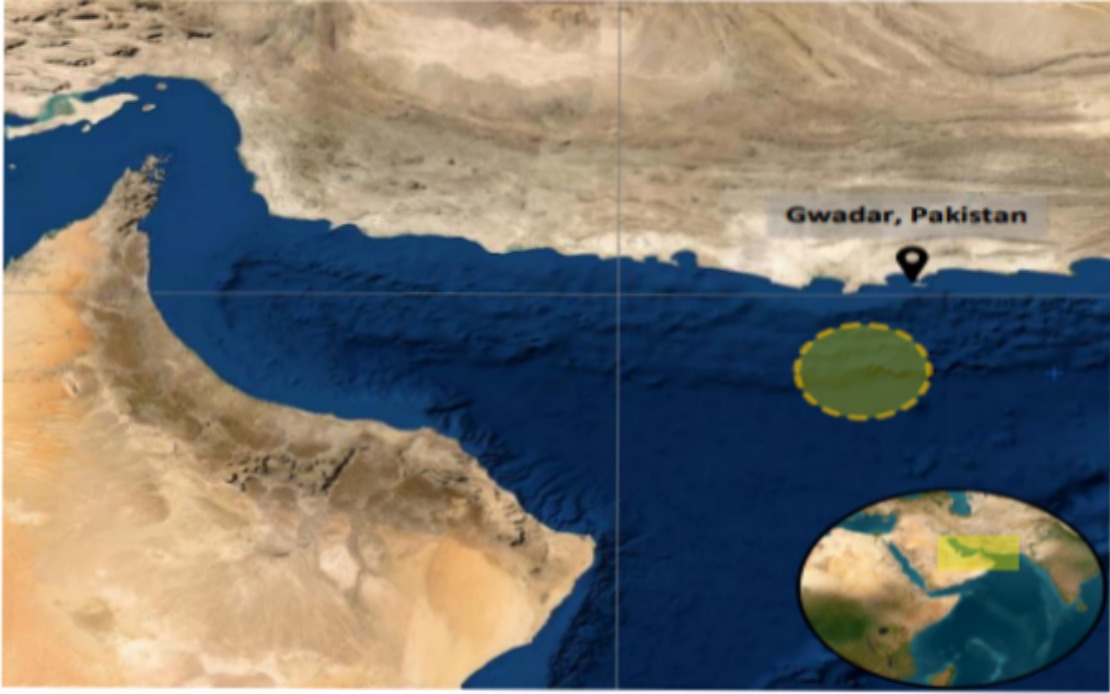
The UK Maritime Trade Operations (UKMTO) agency has flagged an incident in the Gulf of Oman involving a commercial tanker and military forces operating in waters near Gwadar on Pakistan's southwestern coastline. The development underscores mounting instability in one of the world's most critical maritime corridors, a waterway through which a substantial portion of global seaborne trade passes each year. The incident, reported on Tuesday, prompted the agency to issue formal guidance to the international shipping community navigating these waters.
In its advisory, UKMTO instructed maritime operators to carefully evaluate the latest available security assessments and maintain heightened alertness regarding the shifting operational landscape across the region. The guidance reflects a broader concern among international maritime authorities about the deteriorating security environment affecting commercial shipping lanes. Vessels transiting through the area face growing uncertainty about potential hazards beyond conventional maritime risks, with military activity becoming an increasingly unpredictable variable in voyage planning.
The specific details of the incident remain opaque at this stage. UKMTO's statement provided no clarity regarding the identity of the tanker, its cargo, registry, or destination. Similarly, the agency's communication offered no information about whether the encounter resulted in casualties, injuries to personnel aboard the vessel, or physical damage to the ship. This lack of transparency is typical of early-stage incident reporting, particularly when sensitive military operations are involved and investigations are ongoing.
UKMTO confirmed that relevant authorities are aware of the situation and that investigative processes have been initiated. However, the agency declined to specify which governments or military forces were conducting these investigations or the suspected involvement of particular nations. The absence of granular detail suggests a carefully worded statement designed to avoid escalating diplomatic tensions while still alerting commercial shipping to genuine hazards in the region.
The timing of this incident is particularly significant given the current geopolitical climate surrounding the Strait of Hormuz and adjacent waters. Recent weeks have witnessed several military confrontations between United States forces and Iranian naval and air assets, creating an atmosphere of heightened unpredictability across the broader Persian Gulf and Gulf of Oman region. These escalations have transformed maritime zones previously characterized by standard commercial shipping protocols into spaces where military operations frequently intersect with civilian sea traffic.
For Southeast Asian shipping companies and traders, this development carries considerable implications. Malaysia, Singapore, and other regional economies depend heavily on uninterrupted maritime trade flows through the Middle Eastern waters en route to European and Mediterranean markets. Incidents of this nature introduce insurance complications, potential voyage delays, and increased operational costs for regional vessels. Many Malaysian-registered ships and those operated by Malaysian shipping interests transit these waters regularly, making the security situation directly relevant to domestic economic interests.
The incident reflects a broader pattern of maritime insecurity in the region that extends beyond traditional piracy concerns. Over recent years, the intersection of international military activities and commercial shipping has created a complex operational environment where vessels must navigate not only natural hazards and conventional maritime risks but also potential involvement in geopolitical disputes. This multifaceted threat landscape requires shipping operators to maintain sophisticated awareness systems and maintain communication with maritime authorities.
The Gulf of Oman incident also occurs within the context of ongoing tensions related to nuclear negotiations and sanctions regimes affecting Iran. As diplomatic efforts continue at various international forums, the military-to-military interactions in the gulf remain a barometer of underlying tensions that could escalate further. Each incident, no matter how minor or ambiguous its details, carries symbolic weight in the broader strategic competition affecting the region.
For the international maritime community and particularly for Asian shipping interests, the UKMTO advisory serves as a reminder that deliberate passage through these waters now requires careful risk assessment and contingency planning. Some shipping companies have already begun rerouting vessels around Africa via the Cape of Good Hope, adding substantial transit time and cost but reducing exposure to Gulf of Oman hazards. This diversion trend has economic consequences that ripple across global supply chains, affecting prices and delivery timelines for goods destined for Asian markets.
The ongoing investigation into this particular incident will likely remain compartmentalized, with full details never entering the public domain if sensitive military operations or classified intelligence collection is involved. This opacity can itself create market uncertainty, as shipping operators must make routing decisions based on incomplete information. Regional governments, including Malaysia, continue to monitor such incidents and coordinate with international maritime bodies to ensure their respective shipping communities receive timely warnings.
Moving forward, the confluence of escalating geopolitical tensions, military activities, and commercial maritime traffic in the Gulf of Oman represents a structural problem without straightforward solutions. Until underlying political disputes are resolved or until military forces establish clearer protocols for managing encounters with civilian vessels, incidents of this type are likely to recur. The challenge for maritime authorities and shipping companies alike remains balancing operational necessity against risk management in one of the world's most strategically vital but increasingly volatile shipping lanes.

