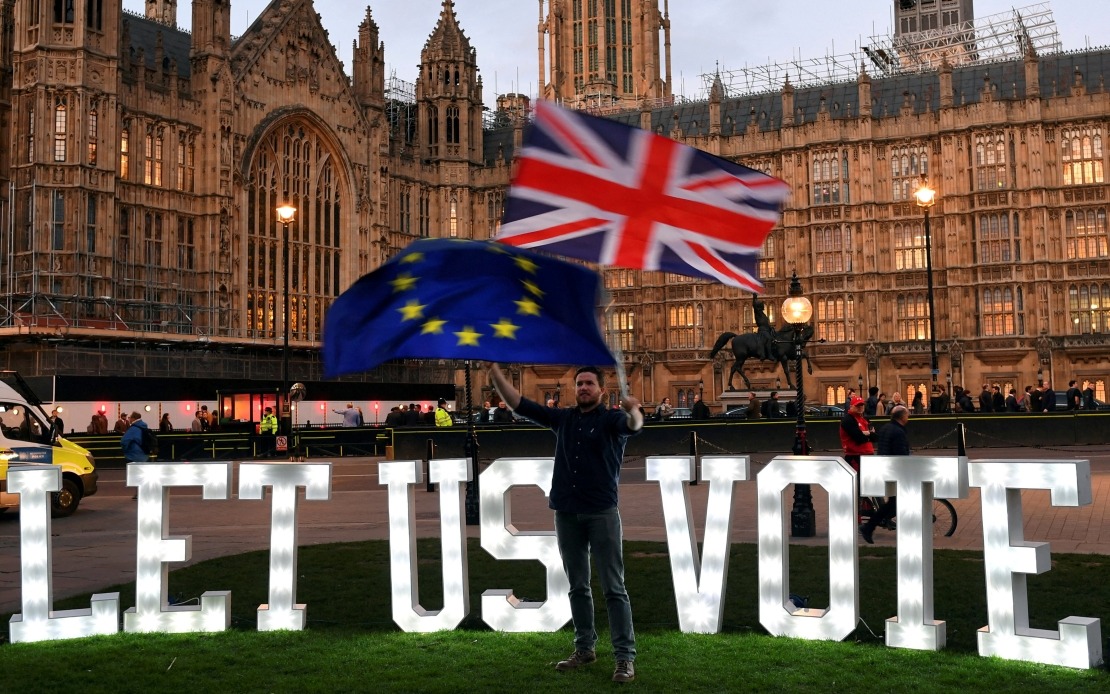
A prominent Conservative member of the British House of Lords has dismissed suggestions that the United Kingdom might reverse its 2016 decision to leave the European Union under the incoming Labour government. Richard Balfe told media outlets this week that while there may be some modest attempts at reconciliation with Brussels, such efforts would ultimately prove unsuccessful, cementing Britain's position outside the bloc for the foreseeable future.
Balfe's assessment comes at a pivotal moment in British politics. Prime Minister Keir Starmer announced his resignation as Labour Party leader on Monday, pledging to step down once the party selects his successor. The leadership contest will commence on July 9 and conclude before Parliament returns in September, creating a period of institutional uncertainty. This leadership transition follows years of intense political turbulence in Westminster, though Starmer will remain as prime minister during the interim.
The timing of Balfe's comments is significant given that they arrive exactly a decade after the original Brexit referendum on June 23, 2014. That watershed vote saw 52 per cent of British voters opt to leave the EU, a result that fundamentally reshaped the nation's relationship with its continental neighbours. The formal exit materialised on January 31, 2020, terminating nearly half a century of European Union membership dating back to 1973.
For Malaysian observers, the durability of Brexit decisions offers an instructive lesson about the difficulty of reversing major geopolitical choices. Even as economic data has suggested that Britain's departure from the EU has complicated investment flows and diminished its standing as a global trade hub—according to analysis from the Financial Times—political will for reversal remains minimal across the mainstream parties. This reflects how deeply the referendum has calcified into political identity, regardless of economic consequences.
The post-Brexit transition period initially provided some continuity, as EU regulations and simplified travel procedures remained in place through December 31, 2020. However, when that arrangement expired, a trade and cooperation agreement took effect on January 1, 2021, marking a cleaner break with Brussels. The intervening years have demonstrated the administrative complexity and economic friction arising from Britain's new relationship with the EU, yet reversing course politically appears as difficult now as it was immediately after the referendum.
Balfe suggested that the incoming Labour administration would likely "muddle along" with existing arrangements rather than pursue transformative change. His use of this quintessentially British phrase captures a political tendency toward incremental adjustment rather than bold reversal. More provocatively, he indicated that Britain would eventually align more closely with Washington's strategic interests, suggesting that future British governments will prioritise transatlantic relationships over European reconciliation.
This assessment carries implications for Southeast Asian policymakers and businesses. A Britain committed to following American strategic priorities while remaining outside European structures could reshape multilateral negotiations on trade, technology standards, and security arrangements. Malaysia and other ASEAN nations increasingly find themselves navigating between Western and Asian spheres of influence, and Britain's orientation matters for how emerging frameworks develop.
The Labour Party's ascension to power itself reflected public frustration with Conservative governance, yet on the fundamental question of EU membership, consensus appears firmer than partisan divisions. Neither major party has campaigned on rejoining the bloc, and public opinion polling suggests that the intensity of pro-Brexit sentiment has diminished but not reversed. This stability in the underlying political settlement—despite turbulence at Westminster's leadership level—indicates that Brexit has become embedded in Britain's constitutional landscape.
For investors and businesses across the region monitoring British policy, Balfe's comments signal that regulatory divergence from the EU will persist and likely deepen. British governments, whether Conservative or Labour, appear committed to charting independent courses rather than harmonising with European standards. This trajectory creates both opportunities and challenges for Malaysian firms navigating British and European markets simultaneously.
The decade since the referendum has witnessed Britain experiment with its post-EU identity, from trade negotiations with distant partners to regulatory experimentation freed from Brussels constraints. Yet the promised economic dynamism has not materialised at the scale proponents envisioned, whilst the transaction costs of separation have proven substantial. Nonetheless, the political architecture supporting this choice remains sufficiently robust that dismantling it would require circumstances far more extraordinary than a change of government.
Balfe's remarks ultimately reflect a sober assessment that Brexit has transcended partisan politics in Britain. Whether future administrations manage it competently or clumsily, whether they secure advantageous trade terms or face ongoing friction, the basic decision to remain outside the EU appears permanent. For Malaysia and Southeast Asia, this permanence matters because it signals that Britain will remain a distinct actor in global affairs, neither European nor fully aligned with Asian concerns, but navigating its own strategic pathway with periodic pivots toward Washington.