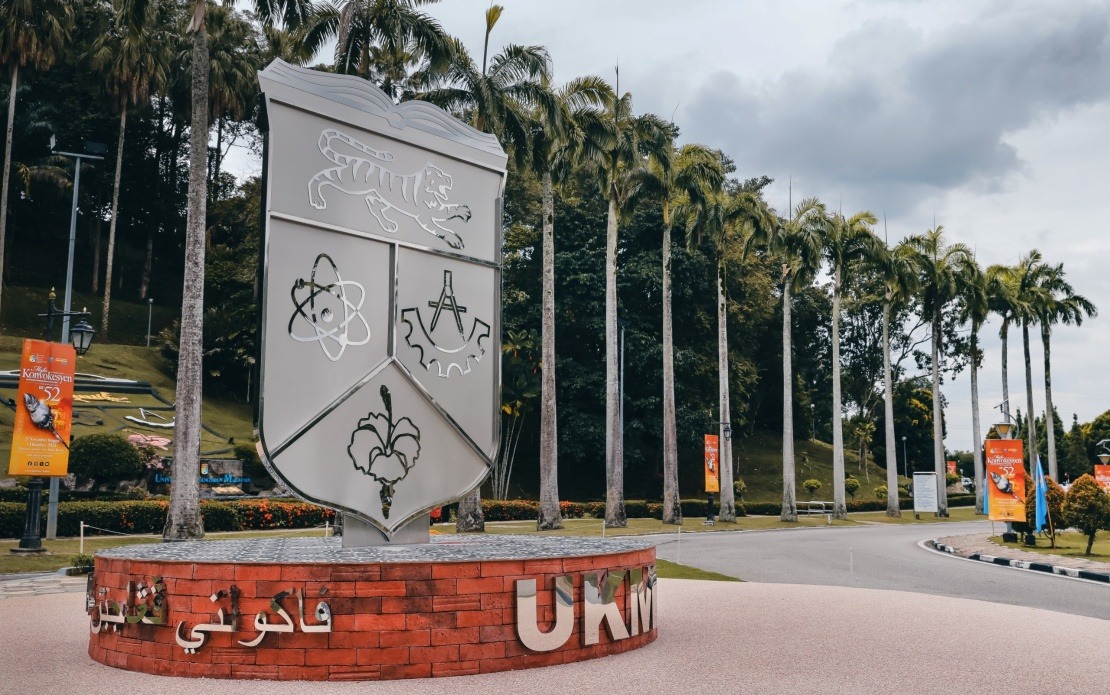
Universiti Kebangsaan Malaysia has moved swiftly to counter false allegations spreading across social media, categorically denying claims that the institution has dramatically skewed its enrollment toward international students at the expense of Malaysians. The public university issued a formal statement refuting a viral video that alleged a 5:1 ratio of international to local students, characterizing the accusation as entirely unfounded and potentially damaging to its institutional reputation.
According to UKM's official data sourced from its Academic Management Centre and Centre for Continuing Education and Professional Studies, the university currently enrolls 46,151 students in total, of which only 3,917 are international undergraduates. This composition yields a fundamentally different picture from the sensational claim circulating online. International undergraduates constitute merely eight percent of the overall student population, translating to approximately one international student for every twelve enrolled learners—a ratio substantially distant from the alleged five-to-one proportion.
The disparity between the viral claim and institutional reality underscores an increasingly common challenge faced by Malaysian universities in the age of rapid information spread through digital channels. Social media platforms, while democratizing access to information, have simultaneously become vectors for misinformation that can rapidly damage institutional credibility and public trust. For a research-intensive university like UKM, which draws significant prestige from its academic standing within Southeast Asia, such reputational threats warrant serious and immediate response.
UKM's leadership adopted a firm stance in addressing the matter, warning that the university would not tolerate continued dissemination of false or defamatory information without legal recourse. The statement explicitly mentioned the institution's preparedness to pursue legal action against individuals or entities responsible for perpetuating inaccurate claims about student demographics and admissions policies. This approach reflects a broader institutional determination to protect academic reputation in an era when misinformation can spread before corrections reach the same audience.
The university's response also served to reaffirm its foundational commitment to advancing higher education for Malaysian citizens. UKM emphasized that the admission of international students, far from compromising opportunities for local applicants, operates within carefully controlled parameters designed to complement rather than compete with domestic enrollment priorities. This distinction is particularly important in Malaysia's higher education context, where public universities serve a crucial social function in providing accessible tertiary education to citizens across diverse socioeconomic backgrounds.
UKM positioned its international recruitment strategy within the broader policy framework established by the Ministry of Higher Education, which actively encourages Malaysian universities to internationalize their campuses and enhance their global standing. The university characterized this measured approach to international student admission as aligned with national aspirations to elevate the country's higher education sector on the international stage. By linking its policies to government objectives, UKM sought to demonstrate that international enrollment forms part of deliberate institutional and national strategy rather than ad hoc expansion that could disadvantage Malaysian applicants.
The controversy also raises important questions about how Malaysian universities communicate with stakeholders and manage their public narrative. The ease with which unverified claims about student demographics can gain traction online suggests that universities may need to enhance their regular communication about enrollment data and admissions policies. Transparent, proactive disclosure of such metrics could potentially inoculate institutions against misleading claims that exploit public information gaps.
UKM's call for the public to rely exclusively on official institutional communication channels represents an attempt to redirect information-seeking behavior away from unverified social media sources. However, such appeals face inherent limitations, as they presume active audience engagement with university official channels—a presumption not universally valid in Malaysia's diverse media consumption landscape. Younger users particularly may encounter social media claims through peer networks before encountering official rebuttals through traditional institutional communication.
The incident reflects broader anxieties within Malaysian society regarding higher education access and the perceived balance between serving domestic students and pursuing international competitiveness. These concerns, while not novel, have become more vocally expressed through digital platforms, where claims about resource allocation and admissions preferences can rapidly mobilize public opinion. For universities and policymakers alike, addressing such anxieties requires not merely factual correction but also deeper engagement with underlying concerns about educational equity and social mobility.
Looking forward, this episode underscores the importance of data transparency and proactive communication by Malaysian universities in managing public perception. As digital misinformation becomes an increasingly prevalent challenge across institutions globally, UKM's response—combining factual clarification with institutional resolve—illustrates one approach. However, sustained efforts to build public understanding of higher education policies and international collaboration may prove more durable than reactive corrections to viral claims. The university's emphasis on controlled, strategic internationalization rather than unchecked enrollment expansion presents a defensible framework, though its effectiveness depends on consistent communication and genuine alignment between policy rhetoric and implementation.

