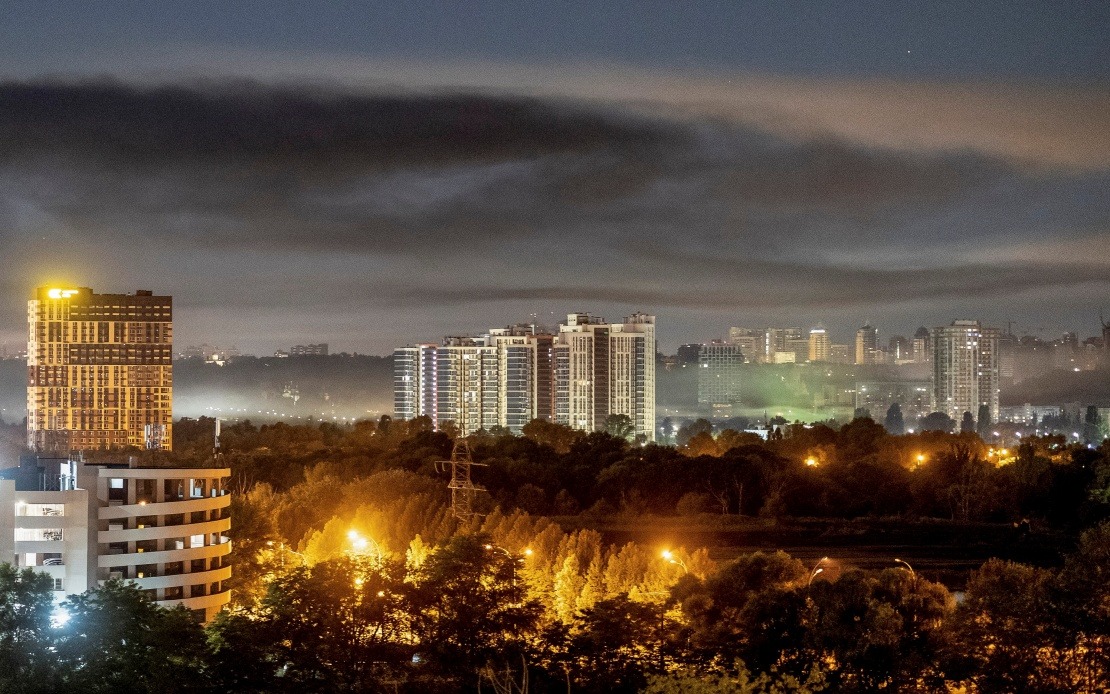
Moscow's continued bombardment of Kyiv intensified on August 1 as Russian forces unleashed a fresh volley of ballistic missiles against the Ukrainian capital, resulting in significant casualties and widespread damage across multiple residential areas. The State Emergency Service of Ukraine confirmed that the coordinated strikes left at least nine people dead and 23 others wounded, marking another chapter in the relentless aerial assault that has characterised the latter stages of Russia's invasion.
The destruction wrought by the missile strikes was not confined to a single neighbourhood but dispersed across five separate districts within Kyiv's sprawling metropolitan area. This pattern of targeting multiple zones reflects Russia's apparent strategy of degrading civilian infrastructure and morale through sustained pressure on the Ukrainian capital, rather than concentrating firepower on specific military objectives. The geographic spread of impact points underscores the difficulty Ukraine faces in defending such a large urban centre against modern missile systems.
For regional observers and policymakers in Southeast Asia, the Kyiv strikes illustrate the brutal reality of modern urban warfare and the vulnerability of civilian populations in contemporary conflicts. Malaysia and neighbouring nations have maintained careful diplomatic balance regarding the Russia-Ukraine conflict, but the persistent targeting of civilian areas raises humanitarian concerns that transcend geopolitical alignments. The scale of casualties and damage serves as a sobering reminder of the human cost when conventional warfare escalates to include indiscriminate strikes on populated centres.
The ballistic missile systems employed by Russian forces represent advanced military technology that has proven difficult for Ukrainian air defences to fully neutralise. While Kyiv has access to air defence systems supplied by Western allies, the sheer volume and sophistication of incoming projectiles regularly overwhelm defensive capabilities. This technological imbalance has forced Ukrainian authorities to adopt a defensive posture focused on damage mitigation rather than complete interdiction of incoming threats.
The pattern of Russian attacks on Kyiv has intensified over recent months as Moscow has sought to maintain pressure on Ukraine's political and administrative centre. The concentration of strikes on civilian infrastructure—residential buildings, shopping centres, and public facilities—suggests an effort to generate internal pressure on the Ukrainian government by inflicting suffering on the general population. This approach echoes historical military doctrines that target civilian morale as a strategic objective, though such tactics remain deeply controversial under contemporary international humanitarian law.
Ukraine's State Emergency Service, which provided the casualty figures, has become a crucial source of information for the international community regarding the humanitarian impact of the conflict. Their rapid assessment and public reporting of damage and casualties serve both to document the human toll and to maintain transparency about the actual effects of Russian military operations. These official accounts often diverge significantly from Russian claims and provide crucial independent verification of events occurring in Kyiv and surrounding territories.
The distribution of casualties and damage across five districts suggests that the Russian strikes may have targeted infrastructure spread throughout the city rather than concentrated on a single military or administrative facility. Such dispersed targeting patterns can indicate either a broad campaign aimed at degrading general urban functionality or the employment of multiple launch points and flight paths designed to saturate Ukrainian air defences. Either interpretation points to sustained Russian commitment to prosecuting the air war against Ukraine despite significant losses of aircraft and missiles.
For Southeast Asian nations monitoring the conflict, the ongoing attrition of civilian life in Kyiv underscores the importance of diplomatic efforts aimed at negotiated resolution. Malaysia, as a non-aligned country with established channels to both Western and non-Western powers, remains positioned to potentially contribute to peace initiatives, though the current trajectory of the conflict suggests such efforts remain distant. The humanitarian dimensions of the war continue to grow more acute as months of sustained bombardment accumulate their toll on civilian populations.
The August 1 missile strikes also highlight the broader challenge facing Ukraine in sustaining civilian morale and institutional functionality during prolonged conflict. The damage inflicted by these attacks requires immediate reconstruction and humanitarian response, straining already-depleted resources. International aid continues to flow to Ukraine, but the scale of destruction and the forward momentum of Russian military operations create uncertainty about the adequacy and sustainability of external support needed to sustain the country through protracted warfare.
Russia's persistence in targeting Kyiv, despite international condemnation and documented violations of the Geneva Conventions regarding civilian protection, reflects Moscow's assessment that continued military pressure offers a path toward achieving negotiated settlement favourable to its interests. This calculus may change if Ukraine can successfully demonstrate capacity for sustained resistance or if international pressure, including sanctions and diplomatic isolation, imposes sufficient costs on Russian decision-making. The humanitarian catastrophe unfolding in Kyiv and other Ukrainian cities will likely remain central to international discourse surrounding the conflict's resolution.

