Political realignment in Malaysia appears to be gathering momentum, with senior figures suggesting that Umno and PAS could overcome their troubled history to forge a fresh working alliance. The prospect of such a coalition resurfaced when Puad Zarkashi, a prominent party official, indicated that the two Malay-Muslim parties share sufficient common ground and overlapping ambitions to justify another attempt at partnership.
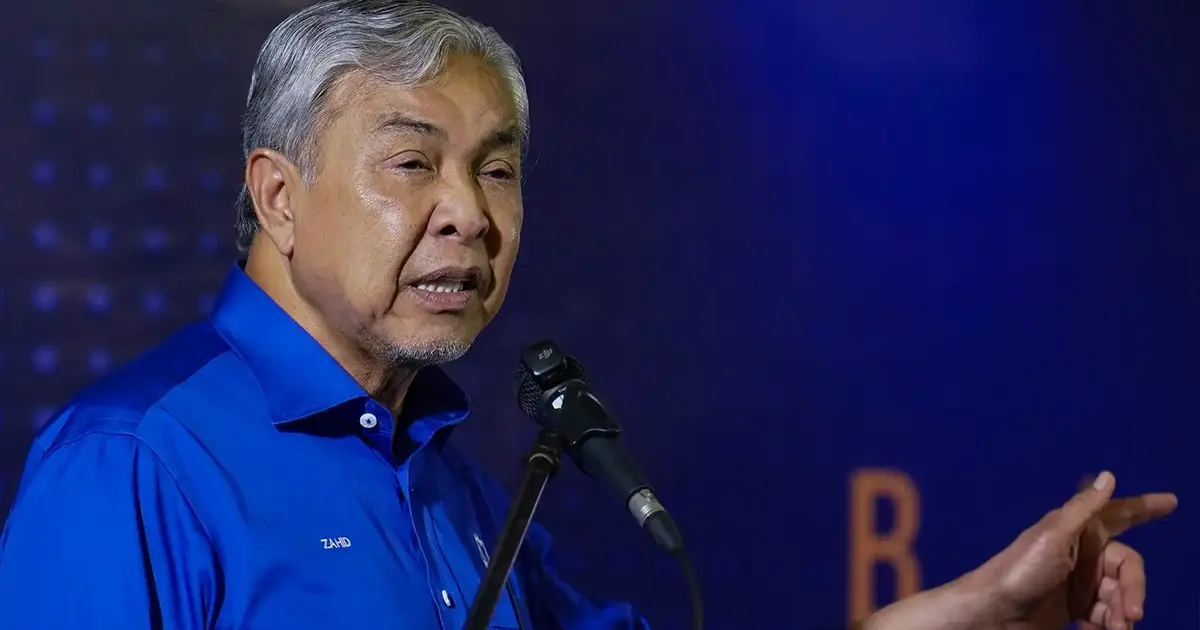
Zahid Hamidi, the Deputy Prime Minister, has positioned himself as a central figure in these coalition calculations. According to Puad's remarks, Zahid harbours aspirations to assume the prime ministerial role, a development that would reshape Malaysia's political landscape if realised. This ambition reflects broader power dynamics within Umno, where senior figures continue to jockey for position and influence within the party hierarchy and across the broader governing structure.
PAS, for its part, views a return to government as a primary strategic objective. After periods of political exclusion and opposition benches, the Islamic party sees renewed partnership as a pathway to regain ministerial portfolios and influence over policy direction. This goal carries particular weight given the party's historical significance in Malaysian politics and its substantial support base, particularly in the northern states and among specific voter demographics.
Puad's assertion that both parties can move beyond previous disagreements carries significance precisely because Umno and PAS have experienced substantial friction and competitive conflict in recent political cycles. Their past alliance, which once formed the foundation of Malaysian governance, fractured under various pressures including ideological differences, competition for the same electoral constituencies, and divergent approaches to governance and policy priorities.
What makes the current situation analytically interesting is the explicit acknowledgment that short-term political imperatives appear to supersede ideological considerations. Both parties have identified concrete, achievable goals that could be realised through collaboration rather than competition. For Umno, supporting a Zahid-led prime ministerial bid offers a mechanism to consolidate party leadership and secure cabinet positions. For PAS, government participation means tangible resources, policy influence, and strengthened organisational capacity ahead of future electoral contests.
The timing of these overtures matters considerably within Malaysia's current political environment. With existing coalitions facing internal strains and voter sentiment remaining volatile across multiple demographic segments, parties are continuously exploring alternative arrangements that might stabilise their political positions. The possibility of Umno-PAS realignment thus represents one among several potential reconfigurations being quietly negotiated across the political spectrum.
For Malaysian voters and political observers, such developments underscore the fluid nature of contemporary coalition politics. The dominance of personality-driven leadership and short-term strategic calculations has arguably superseded the stable ideological or institutional foundations that once anchored political partnerships. The readiness of parties to revisit failed alliances when circumstances shift suggests that pragmatism, rather than principle, increasingly drives political decision-making at the highest levels.
Regionally, Malaysia's coalition dynamics carry implications for Southeast Asia's broader political ecology. As the region's largest Muslim-majority democracy wrestling with questions of governance, representation, and institutional balance, Malaysian political developments signal broader trends in how Islamist parties navigate relationships with secular-oriented governing coalitions. The potential Umno-PAS partnership thus reflects not merely domestic Malaysian concerns but patterns observable across Southeast Asian politics.
The capacity of these parties to move past previous conflicts also depends substantially on resolving specific grievances and establishing clear power-sharing arrangements. Umno and PAS would need to negotiate sensitive questions regarding cabinet representation, policy autonomy in particular domains, and mechanisms for managing inevitable disagreements. Previous alliance experiences in Malaysian politics suggest that such arrangements prove fragile absent robust institutional mechanisms for dispute resolution and consensus-building.
Stakeholders observing these political manoeuvres should recognise that public statements by party figures often represent preliminary positioning rather than firm commitments. Coalition negotiations in Malaysia typically proceed through multiple informal channels before any formal announcement. Puad's remarks therefore signal opening positions in what could become extended negotiations, rather than confirmation of imminent partnership.
The broader implications for Malaysia's governance trajectory depend partly on how such potential partnerships might reshape policy priorities and institutional relationships. Different configurations would likely produce divergent approaches to economic policy, social regulation, federal-state relations, and Malaysia's international positioning. Thus these coalition calculations extend well beyond merely determining which individuals occupy which ministerial positions.

