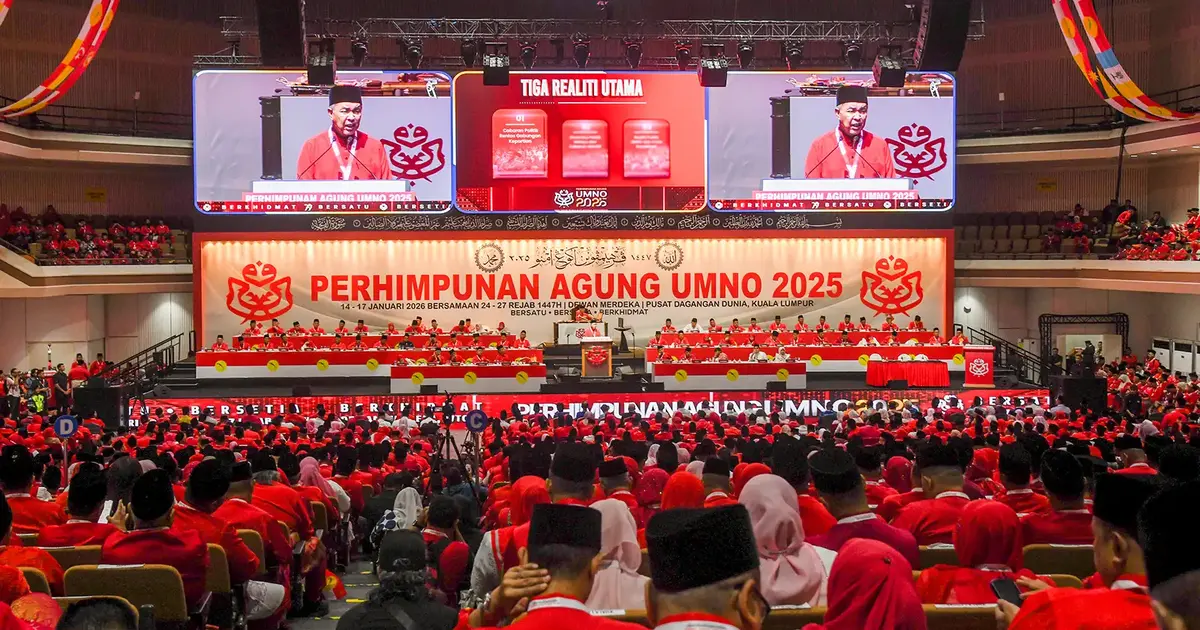
Tensions have surfaced within Umno's Negeri Sembilan divisions following the coalition's decision to award 11 state legislative seats to Perikatan Nasional partners, revealing deeper friction within the broader federal alliance structure that has long sought to present a unified opposition front.
The discontent, according to party insiders, centres not merely on the numerical distribution of constituencies but on what division leaders perceive as disproportionate rewards extended to partner parties that have yet to establish electoral track records. This friction highlights the persistent challenge facing Malaysia's political coalitions in balancing internal equity with strategic partnership maintenance, a perennial issue that resurfaces whenever seat allocations are negotiated ahead of major elections.
The allocation has drawn particular criticism regarding Wawasan, the newly established political entity contesting its inaugural election. Division leaders have questioned the rationale behind assigning the newcomer four seats—a substantial initial allocation that many view as excessive given the party's complete absence of electoral history. This decision appears especially galling to Umno grassroots figures who have invested significant organisational effort in these constituencies over multiple election cycles, only to see them transferred to an unproven political newcomer.
Negeri Sembilan represents a strategically important state for Umno, and the party has traditionally maintained considerable organisational depth across its 36 state constituencies. The decision to cede nearly one-third of the state's seats to PN partners suggests a shift in coalition dynamics that prioritises inter-coalition partnership agreements over rewarding the contributions of the larger partner's entrenched ground machinery. For Umno leaders accustomed to dominating seat allocation discussions within their own territories, this represents a meaningful redistribution of political influence.
The underlying grievance reflects broader questions about Umno's negotiating leverage within the larger Barisan Nasional and federal coalition arrangements. While national political agreements favour unity among centre-right political forces, the state-level implementation of these arrangements often produces friction between headquarters decisions and divisional realities. Umno divisions, being the closest to ground-level political dynamics, frequently find themselves defending national-level compromises to increasingly sceptical membership.
Wawasan's emergence as a separate political vehicle, rather than its members working within existing coalition structures, adds another layer of complexity. The party's founding and rapid incorporation into electoral politics suggests deliberate political engineering aimed at attracting specific voter demographics or consolidating particular regional interests. That it immediately receives four seats in a state where Umno possesses far greater organisational capacity has understandably sparked resentment among party rank-and-file who question the strategic wisdom of such arrangements.
For Malaysian political observers, the Negeri Sembilan situation encapsulates the recurrent tension between maintaining coalition cohesion at the national level and managing internal party morale at the ground level. Coalition partners must be accommodated and incentivised to prevent breakaway movements, yet doing so at the expense of larger component parties risks demoralising the very activists whose door-to-door work determines electoral outcomes. Umno division leaders occupy the unenviable position of absorbing these compromises without having meaningfully influenced them.
The friction also reflects Umno's broader challenge in maintaining internal discipline and unity. The party has struggled in recent years to contain dissent, with various factions and grassroots elements frequently expressing frustration over national-level decisions perceived as inequitable or strategically misguided. Leadership's capacity to manage such discontent while maintaining coalition cohesion will significantly influence both the party's internal stability and the broader opposition coalition's electoral effectiveness.
Negeri Sembilan's political importance extends beyond state-level considerations. As a relatively compact state with distinct regional voting patterns, seat allocation here carries implications for how the federal opposition coalition structures similar agreements in other states. Should Umno divisions successfully pressure party leadership for seat redistribution, it could set precedent for negotiations in other territories. Conversely, if national leadership maintains these allocations despite internal opposition, it signals clear prioritisation of coalition unity over divisional grievances—a message that will likely reverberate through Umno's nationwide organisation.
The timing of these discontent expressions is also noteworthy, surfacing through reports rather than formal party channels, suggesting that division leaders are attempting to apply pressure without openly challenging national leadership. This mode of dissent is characteristic of Umno's political culture, where internal disagreements are often managed through informal communication networks rather than public confrontation. How party leadership responds to such signals will indicate whether the coalition arrangement represents a temporary tactical adjustment or a more fundamental recalibration of Umno's role within the opposition alliance structure.
Moving forward, this situation demands careful management by both Umno's national leadership and PN coalition partners. The grievances articulated by Negeri Sembilan division leaders, while internal to Umno, carry implications for coalition stability as a whole. Addressing such tensions transparently, rather than dismissing them, becomes essential for maintaining the grassroots morale and organisational commitment that ultimately translate political agreements into electoral victories.

