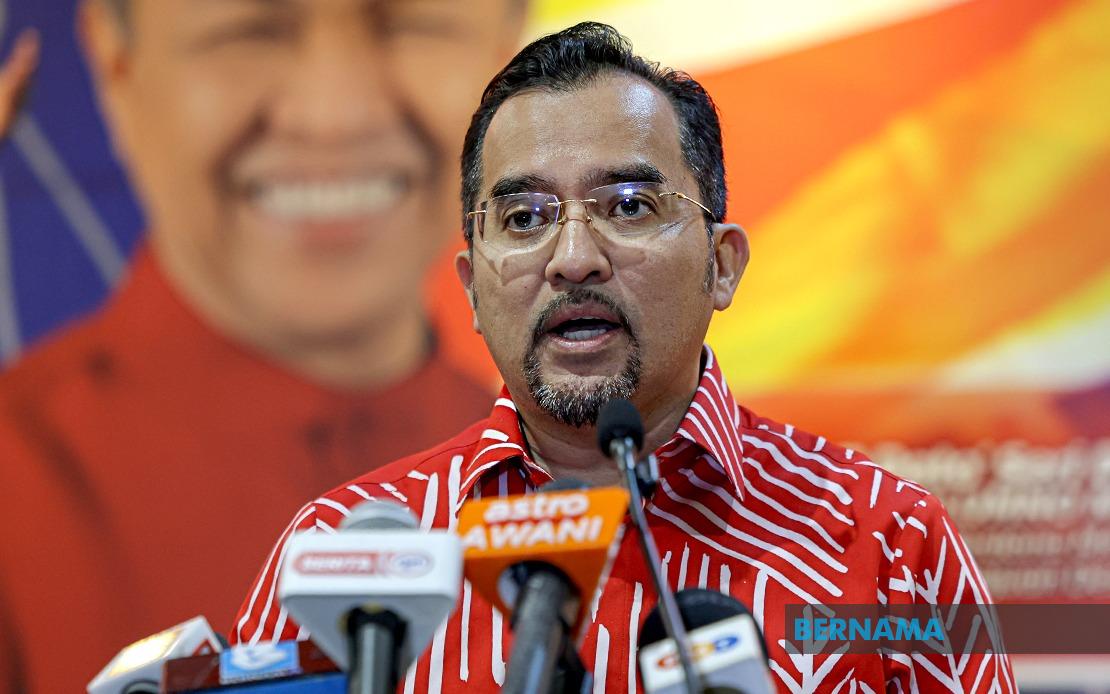
Malaysia's dominant Malay-Muslim party UMNO has taken a strategic step to position itself flexibly ahead of the next general election by granting its state-level leadership the authority to engage in talks with any political organisation keen on forming electoral partnerships. The decision, formalised during a late-night Supreme Council session chaired by party president Datuk Seri Dr Ahmad Zahid Hamidi, signals UMNO's readiness to explore multiple coalition pathways rather than committing to a single rigid political arrangement.
Speaking to journalists at Menara Dato' Onn following the gathering, UMNO secretary-general Datuk Dr Asyraf Wajdi Dusuki outlined the party's negotiating framework, emphasising that any prospective alliances must rest on genuine consensus and mutual confidence rather than intimidation or coercive pressure. This rhetorical stance appears designed to distance UMNO from accusations of hardball political tactics and suggests the party intends to project itself as a willing partner open to dialogue with ideologically diverse entities. The meeting, which commenced at 8.45 pm and included deputy president Datuk Seri Mohamad Hasan alongside core Supreme Council members, devoted significant attention to crafting messaging around institutional integrity and democratic principles.
The timing of this move carries considerable regional significance for Malaysian political observers. By devolving negotiating authority to state chapters, UMNO effectively decentralises decision-making authority, allowing regional branches to capitalise on localised political dynamics and existing relationships. This approach recognises that electoral mathematics and coalition calculus differ substantially across Peninsular Malaysia's thirteen states, with certain regions presenting vastly different strategic opportunities than others. State-level autonomy in negotiation potentially enables more nuanced responses to ground-level political realities than centralised directives could achieve.
Particularly noteworthy is UMNO's simultaneous extension of a formal invitation to PAS leadership to participate in its 2026 General Assembly, scheduled for September 9 to 12. This gesture towards the Islamist opposition party underscores the broader softening of UMNO's public positioning and hints at possible rapprochement between Malaysia's two largest Malay-Muslim organisations. PAS's attendance at UMNO's marquee annual gathering would constitute a symbolic thawing of relations and could signal willingness to explore closer cooperation, though meaningful formalisation of any such understanding would likely require careful choreography to satisfy the divergent expectations of each party's base supporters.
The Supreme Council simultaneously approved an ambitious three-day programme commencing September 8 encompassing the 2026 Malay Education Convention, the Malaysian Islamic Scholars Convention, and Laman Wanita Kreatif. These parallel events, scheduled immediately before the General Assembly, represent UMNO's efforts to consolidate intellectual, religious, and grassroots legitimacy within the Malay-Muslim community. The conferences signal UMNO's intention to anchor itself as the custodian of Malay-Muslim interests and educational advancement, potentially countering narratives that the party has strayed from its foundational ideological moorings.
Crucially, UMNO's leadership reaffirmed its commitment to the principle of rule of law and the presumption of innocence in formal remarks following the meeting. Secretary-General Asyraf Wajdi stressed that the party will neither defend wrongdoing nor protect members or leaders accused of misconduct, asserting instead that all individuals must submit to judicial processes and accept court determinations. This declaration holds particular resonance given UMNO's complex recent history involving multiple high-profile corruption cases, leadership transitions prompted by legal difficulties, and internal disputes over institutional reform and accountability measures.
The emphasis on legal principles appears designed to project UMNO as a party engaged in institutional renewal and commitment to transparent governance standards. By articulating clear separation between party loyalty and legal accountability, UMNO's leadership attempts to inoculate the organisation against criticism that it provides sanctuary for ethically compromised members. However, critics may view such statements as rhetorical positioning lacking substantive enforcement mechanisms, particularly given persistent questions about how internal party discipline intersects with legal proceedings involving senior figures.
For Malaysian political analysts, UMNO's empowerment of state chapters to negotiate autonomously represents a calculated recalibration of the party's electoral strategy. Rather than pursuing a predetermined coalition blueprint at the national level, this approach provides flexibility to adjust to shifting political landscapes as the election cycle approaches. The permission for decentralised negotiation acknowledges that UMNO's state branches frequently maintain established relationships with local political actors, some of whom may not fit national coalition preferences but carry significant regional influence.
This flexibility contrasts with the more rigid coalition frameworks that have characterised recent Malaysian electoral cycles. The previous Barisan Nasional model, which dominated national politics for decades, has fractured into multiple competing alliances, making pre-election coordination increasingly complex. UMNO's current approach implicitly accepts this fragmented reality and seeks to position itself as a pragmatic negotiator willing to construct diverse partnerships rather than adhering to fixed political groupings.
The broader implications for Malaysian politics extend beyond UMNO's internal calculations. The party's openness to negotiating with multiple potential partners, combined with explicit outreach to PAS, suggests the Malay-Muslim political landscape remains fluid and contested. How existing coalitions—particularly Pakatan Harapan and Perikatan Nasional—respond to UMNO's repositioning will likely shape electoral dynamics considerably. State-level negotiations could potentially fragment existing alliances or create unexpected cross-cutting partnerships that complicate national political narratives and introduce unpredictability into electoral forecasting.

