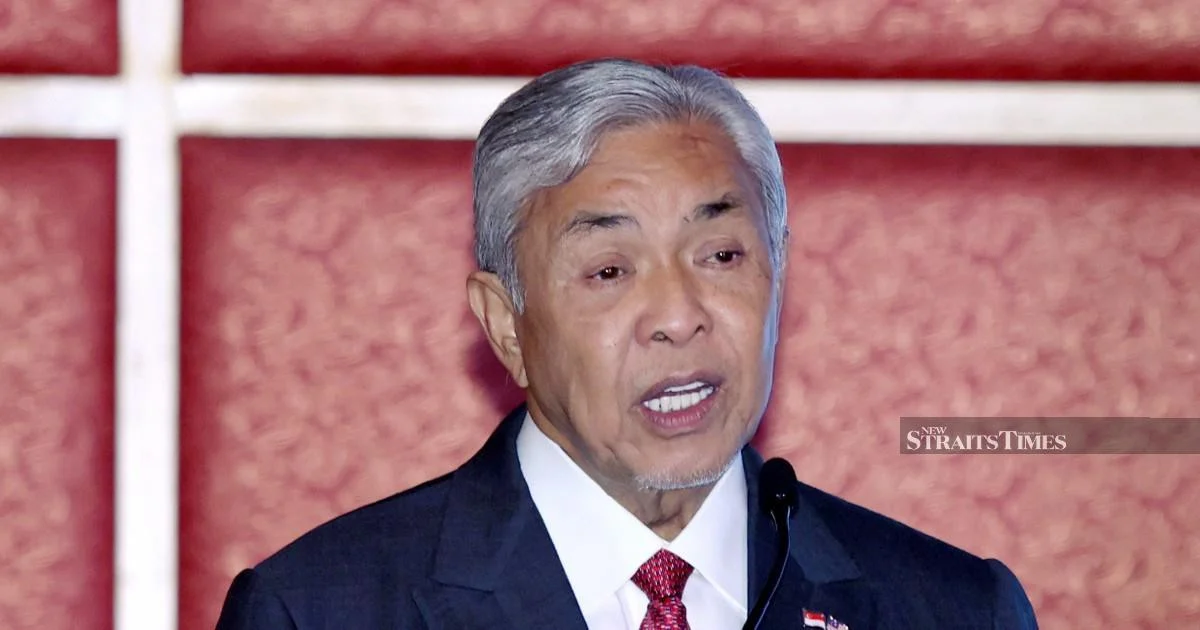
Umno president Datuk Seri Dr Ahmad Zahid Hamidi has categorically rejected claims that his party has negotiated any formal seat-sharing arrangement with Pas ahead of the Negri Sembilan state election. The denial comes amid persistent speculation about electoral pacts between Malaysia's major political parties as they prepare for contests in key states, underscoring the fractious nature of coalition politics in the country.
Zahid's statement represents a significant moment in Umno's relationship with Pas, the Islamic party that has become increasingly influential in shaping the political landscape following the 2023 general election. Umno has long maintained a complex relationship with Pas, oscillating between cooperation and competition depending on electoral calculations and state-level dynamics. The Negri Sembilan contest is particularly significant given its status as a competitive battleground where multiple coalitions have plausible paths to victory.
The denials carry particular weight given Umno's current position as the largest component of the Barisan Nasional coalition, which has governed Malaysia for most of its independence but faces mounting pressure from rival alliances. Negri Sembilan, with its mixed urban and rural composition, represents precisely the kind of swing state where electoral mathematics become critical to broader national political dynamics. The state has a history of producing unexpected outcomes that ripple through national politics.
Zahid's explicit rejection of seat-negotiation claims with Pas suggests Umno may be pursuing alternative electoral strategies in Negri Sembilan. This could indicate an intention to contest the state independently under the Barisan banner, or potentially coordinate with other component parties within the coalition without Pas involvement. Such tactical decisions reflect the intricate calculations that Malaysian parties must undertake when balancing state-level ambitions against national coalition frameworks.
The Pas factor in Malaysian electoral politics has evolved substantially over recent years. Once confined to a regional power base in the northern states and particularly in Terengganu and Kelantan, Pas has broadened its appeal and developed sophisticated campaign machinery. Its decision whether to contest in Negri Sembilan, and on what terms, carries implications for the entire electoral ecosystem. Many observers view Pas as a potential kingmaker in competitive states where vote-splitting could determine outcomes.
For Malaysian voters and political analysts, understanding the genuine status of coalition arrangements versus rhetorical posturing has become increasingly difficult. Parties frequently deny negotiations publicly while simultaneously pursuing behind-the-scenes discussions, making announcements about alleged agreements a common feature of the political cycle. Zahid's definitive language may be intended to preempt further speculation, but it simultaneously raises questions about what alternative arrangements might be under consideration.
The timing of such denials often matters as much as their substance. As the Negri Sembilan election timeline becomes clearer, pressure on all parties to crystallize their strategies will intensify. Umno must determine whether contesting the state alone, alongside traditional Barisan partners, or through some novel arrangement best serves its electoral prospects and national positioning. These calculations do not occur in isolation but reflect broader questions about Malaysian political realignment.
For Southeast Asian observers monitoring Malaysian politics, such statements illuminate the region's complex party systems. Unlike many neighbouring democracies with more stable coalitional structures, Malaysia's political alignments remain fluid, with parties constantly recalibrating partnerships based on immediate advantage. This flexibility, while enabling coalition-building across ideological lines, creates chronic instability that affects governance effectiveness and investor confidence.
Negri Sembilan itself provides crucial context for understanding the weight of these negotiations. The state sits strategically between Selangor's developed urban centres and the southern regions, with a population that has grown increasingly diverse. Previous elections have demonstrated that no single coalition can take Negri Sembilan for granted, making each party's seat calculations fundamental to its broader electoral prospects. The state's composition means success there would provide either Barisan or opposition coalitions with significant symbolic and practical victories.
Umno's denial also reflects the party's continuing effort to establish itself as the independent leader of Barisan Nasional rather than merely another coalition component. By emphasizing decisions taken on its own terms rather than through negotiations with Pas, Zahid reinforces the narrative that Umno remains the dominant force in Malaysian politics and can shape its own destiny at the state level. This messaging matters for Umno's internal cohesion, particularly given the party's ongoing internal competition between different factions.
The broader context of Malaysia's political fragmentation cannot be ignored when assessing such claims. The 2023 general election produced a hung parliament that required unprecedented coalition-building, establishing a precedent that Malaysian politics would likely remain volatile and unpredictable. Subsequent state elections have largely confirmed this assessment, with results often surprising observers and forcing rapid strategic recalibration among the major players.
As Negri Sembilan approaches its electoral moment, voters will have the opportunity to assess whether the various political parties' public statements aligned with their actual campaign strategies. The ultimate test of Zahid's assertion will lie in the actual contest itself. Whether Umno contests independently or through modified arrangements, the results will provide clarity about genuine party preferences versus strategic positioning. For now, Zahid's denial marks another chapter in the continuing uncertainty that characterizes Malaysian electoral politics.

