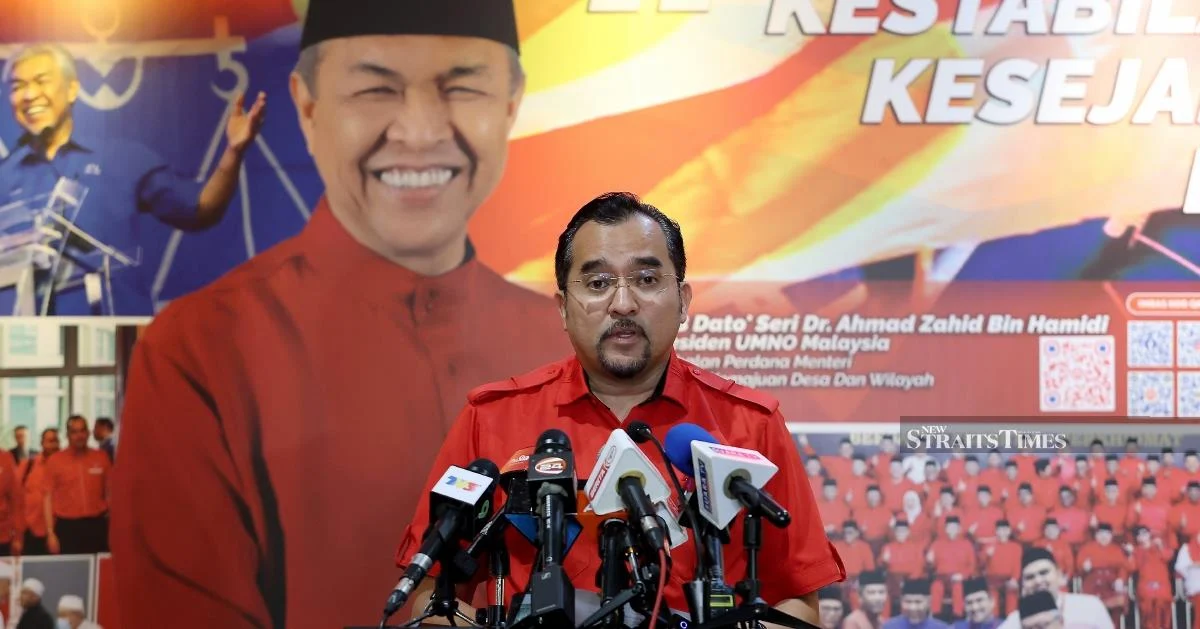
Umno's forthcoming campaigns in Johor and Negri Sembilan will prioritize substantive policy discussions over personal attacks, according to party secretary-general Datuk Dr Asyraf Wajdi Dusuki. The commitment signals an attempt by the party to elevate the tone of electoral competition in two crucial states that hold significant weight in Malaysian politics, particularly given Johor's status as the country's second-largest economy and Negri Sembilan's role as a pivotal swing state.
The pledge represents a strategic recalibration for Umno as it seeks to rebuild public confidence following years of internal turmoil and the damaging fallout from corruption scandals that touched the party's leadership. By anchoring campaigns in programmatic substance rather than character assassination, Umno appears intent on regaining ground lost to rival political forces while simultaneously attempting to set a higher standard for political discourse during what promises to be closely contested electoral battles.
Focusing on policy offerings allows Umno to highlight specific initiatives designed to address pressing concerns among voters in both states, from economic development and unemployment to education and public services. This approach acknowledges that Malaysian voters, particularly in states like Johor with a diverse, relatively sophisticated electorate, increasingly demand concrete answers about how parties will tackle tangible problems rather than engaging with negative campaigning that has become increasingly common in recent electoral cycles.
For Johor specifically, the policy-driven strategy carries particular weight given the state's economic importance. As a major contributor to federal revenue and a hub for manufacturing, logistics, and tourism, Johor voters are likely receptive to campaigns emphasizing infrastructure investment, job creation, and business-friendly governance. Umno's emphasis on how its policies will translate into material benefits for residents positions the party to compete effectively against opponents who may rely on anti-establishment messaging.
Negri Sembilan, meanwhile, represents a different electoral battleground where tight competition between coalitions has historically influenced national political dynamics. The state's pivotal nature means that election results there can shift momentum heading into broader political calculations. By committing to issues-based campaigning, Umno signals confidence in its ability to win on the merits of its proposals rather than through personal attacks on rival candidates or parties.
The secretary-general's statement also appears calculated to appeal to urban and semi-urban voters who have demonstrated declining tolerance for the type of contentious, personality-driven politics that dominated earlier decades of Malaysian electoral competition. These constituencies, which represent growing segments of Johor and Negri Sembilan electorates, increasingly value parties that articulate coherent visions for addressing contemporary challenges such as cost-of-living pressures, skills development, and regional competitiveness.
Umno's approach further reflects broader regional trends across Southeast Asia where voters in more developed states and urban centers have begun demanding higher standards of political conduct. Malaysia's sophisticated media landscape and active civil society have created conditions where campaigns centered purely on mudslinging risk triggering public backlash, potentially advantaging parties that maintain discipline and focus on substantive messaging.
The internal discipline required to maintain a policy-focused campaign across a large party machinery represents a significant operational challenge for Umno. Ensuring that grassroots members and candidate surrogates adhere to messaging guidelines while avoiding personal attacks demands robust coordination and messaging discipline throughout the party structure. Success in maintaining this boundary will test the effectiveness of party leadership in enforcing campaign standards.
Historically, Malaysian state elections have occasionally descended into bitter personal exchanges, with candidates and party supporters engaging in character attacks and unsubstantiated allegations. Umno's public commitment to avoiding such tactics carries symbolic importance for the broader political culture, potentially influencing how other parties calibrate their own campaign strategies. If the party successfully implements this approach, it could establish a template for more substantive electoral competition.
The timing of this commitment also matters within Umno's internal political context. The party has been working to consolidate its position within the Barisan Nasional coalition and demonstrate effective governance, particularly after disappointing electoral performances in recent years. Campaigns emphasizing clear policy differences with opposing coalitions rather than personal attacks against individual candidates allow Umno to frame elections as choices between competing visions for state development.
For Malaysian voters in both states, the emphasis on policy offers potential clarity regarding what different parties intend to deliver if elected, enabling more informed electoral choices. The commitment to substantive campaigning also aligns with expectations from civil society organizations and independent observers who have repeatedly called for elevation of electoral discourse standards.
Looking forward, whether Umno and other participating parties successfully maintain this policy focus throughout their campaigns will have implications extending beyond Johor and Negri Sembilan. Electoral success achieved through substantive campaigning could encourage broader adoption of issues-based approaches in future contests, potentially contributing to long-term improvements in Malaysian political culture and democratic practice.