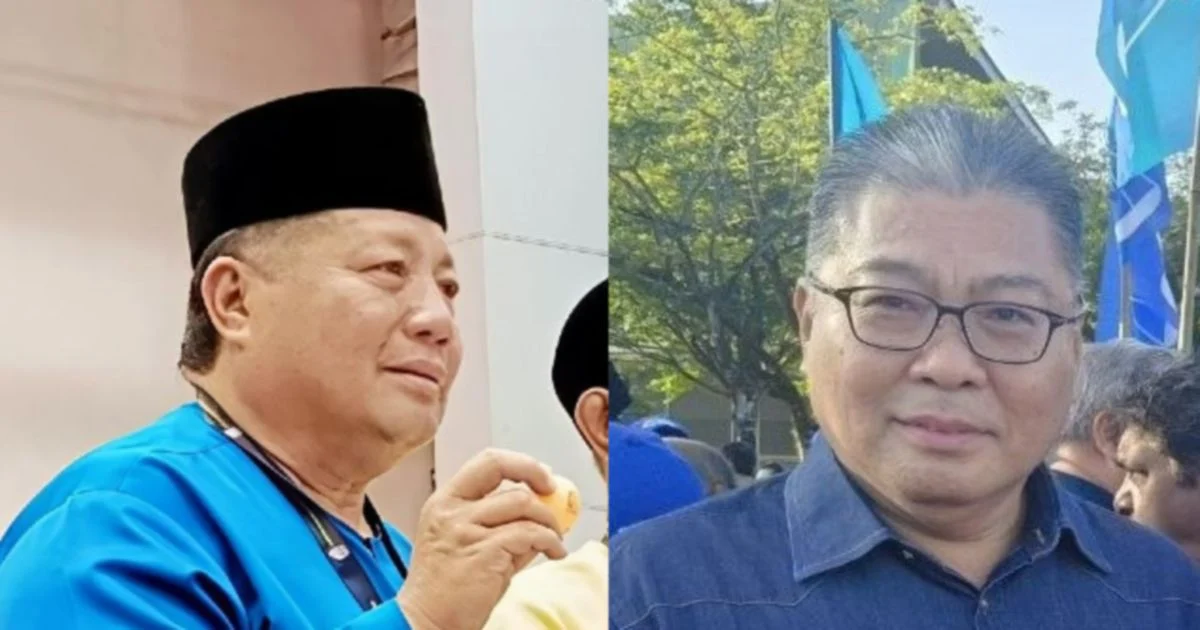
In a striking display of family solidarity transcending political boundaries, Datuk Maulizan Bujang, the former chief of Tebrau Umno division, has publicly expressed his goodwill towards his younger brother Mazlan's candidacy in the Johor state election. Despite their divergent political allegiances—with Maulizan rooted in Umno's establishment structures and Mazlan standing under the Perikatan Nasional banner—the elder brother has chosen to prioritise familial bonds over partisan loyalty in the forthcoming Kahang contest.
The gesture represents an intriguing moment in Malaysian electoral politics, where personal relationships often intersect with the hard-edged calculations of state-level campaigns. Johor's political landscape has become increasingly fragmented in recent years, with multiple coalitions competing for voter support across the state's 56 constituencies. The emergence of such cross-party family dynamics underscores the complexity of electoral mobilisation at the grassroots level, where kinship networks frequently operate independently of formal party structures.
Maulizan's willingness to publicly acknowledge his brother's PN candidacy reflects broader shifts in how Malaysian politicians navigate competing loyalties. Rather than the historical pattern of families presenting a united front behind a single political banner, contemporary electoral contests increasingly feature siblings and relatives representing opposing coalitions. This fragmentation mirrors the broader volatility that has characterised Malaysian politics since the 2018 general election, which fundamentally disrupted the long-standing dominance of singular political blocs.
The Kahang constituency carries particular significance within Johor's electoral arithmetic. As one of the state's key battleground seats, candidate selection and campaign strategies in this division have implications extending beyond local representation. The involvement of politically connected individuals like Mazlan, presumably carrying both personal networks and family credibility, suggests that both Umno and Perikatan Nasional view this contest as strategically important. Maulizan's seniority within Umno structures—evidenced by his former divisional leadership position—indicates that his public endorsement carries potential weight within established party hierarchies and among traditional grassroots supporters.
The political context surrounding this familial split warrants examination. Perikatan Nasional has constructed itself as an alternative to both Umno-led and Pakatan Harapan-led coalitions, positioning itself as a force for renewal and different governance approaches. For individuals like Mazlan to contest under PN colours while maintaining relationships within Umno-affiliated families suggests that the ideological or strategic distinctions between these coalitions may be less pronounced at local levels than national party leadership suggests. This blurring of political boundaries at the grassroots has become increasingly common across Malaysian states.
Umno's experience in Johor requires particular consideration. As historically the dominant party in the state, Umno's management of internal and external rivalries has shaped electoral outcomes for decades. The emergence of credible rival candidates within the same family units presents Umno with strategic challenges. Maulizan's supportive stance towards his brother—rather than actively campaigning against him—might indicate pragmatic acceptance that intra-family political division reflects broader voter sentiment rather than betrayal of party interests.
The Kahang contest exemplifies how Malaysia's electoral system operates at multiple simultaneous levels. National coalition politics, state-level party competition, divisional party structures, and individual candidate networks all intersect within a single constituency. Voters in Kahang will cast ballots informed by considerations ranging from national governance preferences through to personal relationships with candidates and their families. Maulizan's public support for Mazlan provides voters with visible evidence that even those closely associated with Umno machinery perceive Perikatan Nasional as a legitimate political alternative worthy of support.
For Perikatan Nasional, such endorsements from individuals embedded within rival party establishments represent valuable validation. When established Umno figures publicly wish PN candidates well, it signals that PN has successfully positioned itself as a credible contender rather than a fringe political force. This perception-shaping proves particularly important in constituencies where voter sentiment remains fluid and where traditional party loyalties have begun showing signs of erosion.
The psychological and symbolic dimensions of this public gesture deserve attention. In Malaysian political culture, where respect for seniority and public displays of support carry meaningful weight, Maulizan's words likely resonate with voters familiar with both brothers and their respective political positions. Such endorsements often influence voting calculations more profoundly than formal party campaigns, given the trust implicit in family recommendations and the authenticity they convey.
Moreover, this scenario illuminates the practical governance implications of Malaysia's increasingly fractionalised electoral landscape. Whether at state or federal level, the multiplication of viable political options—and the willingness of politically connected families to distribute their members across multiple parties—increases the likelihood of coalition governments rather than single-party dominance. Johor's electoral outcome will partly determine the state's governance structure and coalition mathematics, with potential reverberations for national political alignments.
The Kahang constituency thus becomes a microcosm of contemporary Malaysian electoral reality: complex, multifactoral, and increasingly characterised by personal and family networks operating across formal party boundaries. Datuk Maulizan Bujang's measured support for his brother's campaign reflects pragmatism, familial loyalty, and perhaps recognition that rigid partisan divisions no longer fully capture the spectrum of Malaysian political contestation.

