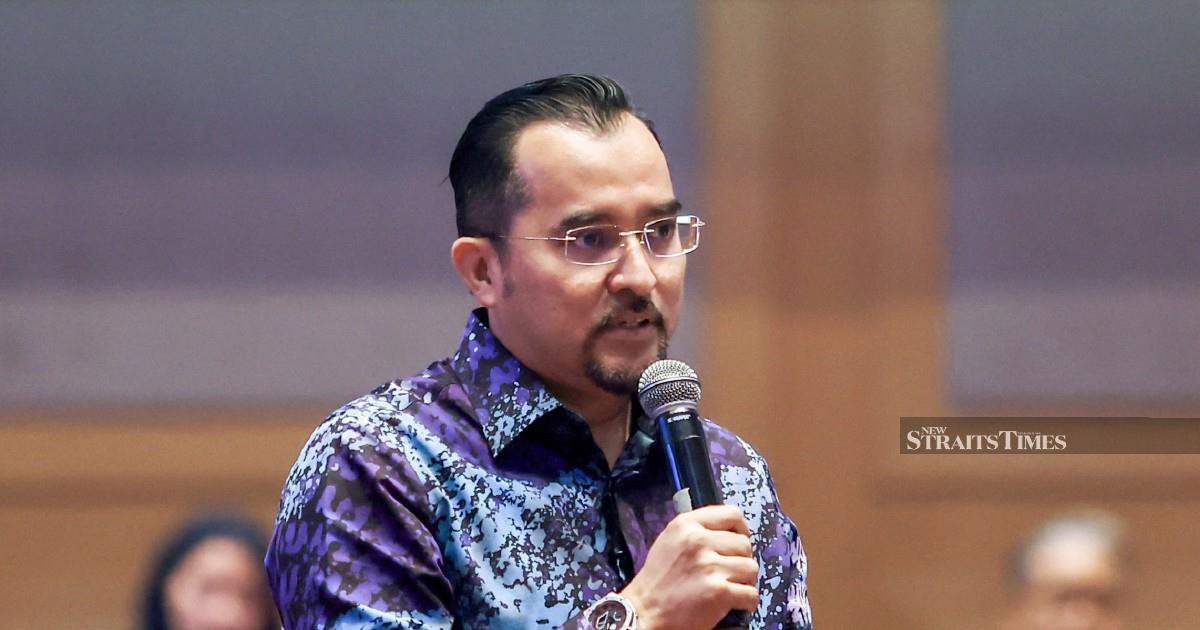
Umno secretary-general Datuk Dr Asyraf Wajdi Dusuki has moved to deflect mounting criticism that his party has engaged in a deliberate cover-up to shield individuals responsible for financial misconduct at Lembaga Tabung Haji (TH), one of Southeast Asia's largest pilgrim fund managers. The denial comes amid intensifying public scrutiny and political pressure surrounding the hajj savings institution's governance failures and the handling of billions in pilgrim contributions.
The Tabung Haji scandal has emerged as a significant governance crisis affecting millions of Malaysian pilgrims who have entrusted their savings to the institution. The controversy centres on substantial financial losses, investment decisions of questionable prudence, and allegations of mismanagement within the fund's leadership hierarchy. For Malaysian Muslims preparing for their hajj pilgrimage, the integrity of TH remains crucial, as the organisation manages savings that represent years of sacrifice and religious preparation for one of Islam's five pillars.
Dr Asyraf's statement represents a direct rebuttal to opposition figures and civil society observers who contend that Umno, as the dominant force within Malaysia's broader political establishment, has insufficient incentive to pursue rigorous accountability given the party's historical institutional ties to TH and its leadership appointments. The accusation of orchestrating a deliberate charade strikes at the credibility of any investigation or disciplinary measures Umno might support, effectively poisoning the well of public trust around governance remedies.
The TH scandal carries profound implications beyond mere financial loss. The institution serves approximately 10 million contributors across Malaysia, representing approximately one-third of the nation's Muslim population. The hajj savings system operates on principles of collective trust and Islamic financial stewardship, making breaches in governance particularly damaging to broader confidence in Islamic financial institutions across Malaysia and the region. When Malaysians deposit their modest, accumulated savings into TH accounts, they operate on an implicit social contract that their funds will be managed with utmost care and transparency.
Umno's defensive posture reflects the political minefield surrounding TH accountability. The party has historically controlled ministerial portfolios overseeing Islamic affairs and pilgrim welfare, creating perception that any investigation might appear politically motivated or insufficiently rigorous. Dr Asyraf's rebuttal attempts to separate party leadership from responsibility for institutional failures, yet critics argue this very institutional overlap makes independent accountability mechanisms essential rather than optional.
The denial also emerges against a backdrop of broader governance concerns in Malaysian public institutions. Multiple state-linked enterprises and government-linked companies have faced financial irregularities in recent years, raising questions about oversight mechanisms and auditing effectiveness across the public sector. The TH situation becomes emblematic of these systemic vulnerabilities, particularly when institutions manage resources belonging to vulnerable populations such as pilgrims.
For Malaysian pilgrims and their families, the scandal creates genuine hardship. Some contributors nearing retirement age face delayed access to accumulated savings for their pilgrimage aspirations. Others confront the grim reality that years of contributions have been substantially diminished through questionable investment strategies and governance failures. This personal impact lends the controversy particular urgency beyond abstract debates about institutional accountability.
The international dimension also deserves attention. Malaysia's reputation as a credible Islamic finance hub depends significantly on institutional integrity. When major Islamic financial entities such as TH experience significant governance failures, international confidence in the Malaysian Islamic financial ecosystem can suffer collateral damage. Regional investors and fund managers monitor such developments carefully when evaluating Malaysia's comparative advantages in Islamic banking and finance.
Dr Asyraf's statement indicates Umno's position that appropriate mechanisms exist to investigate and address TH misconduct without requiring additional extraordinary measures. However, critics contend that existing mechanisms have proven insufficient, particularly given the apparent magnitude of financial losses and the institutional relationships potentially complicating oversight. The question of whether standard institutional accountability measures suffice given the circumstances remains genuinely contested.
Moving forward, meaningful resolution likely requires demonstrating that investigations proceed with genuine independence and rigour, that findings result in meaningful consequences for responsible individuals regardless of political affiliation, and that systemic weaknesses within TH receive comprehensive remediation. Public scepticism about political manipulation of the accountability process will persist unless these conditions manifest clearly and transparently.
The TH controversy illustrates the tension between Malaysia's desire to protect major national institutions from destabilizing external scrutiny and the public's legitimate expectation of rigorous accountability for institutions managing citizens' life savings. Resolving this tension demands both maintaining institutional stability and ensuring that governance failures receive serious, credible investigation—not an easy balance to strike, but essential for restoring pilgrim confidence and Malaysian institutional credibility.

