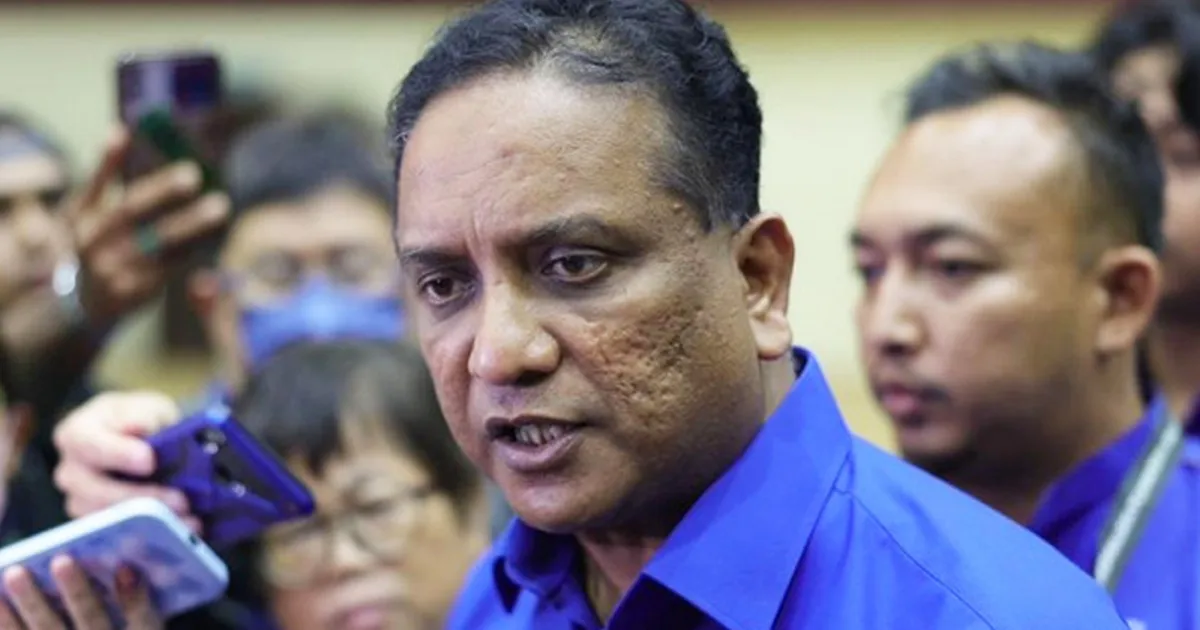
Umno has moved swiftly to distance itself and its political coalition from culpability in the ongoing Tabung Haji scandal, with a senior party figure asserting that recent investigative findings should not be construed as indictments of either the party or Barisan Nasional's governance. The statement reflects growing defensive posturing within Umno as scrutiny intensifies around the hallal pilgrim fund's mismanagement and financial deterioration.
Reezal, an influential member of Umno's Supreme Council, contended that the Royal Commission of Inquiry's investigation should not serve as a vehicle for levelling accusations of institutional corruption or allegations that the ruling coalition deliberately shielded wrongdoers from accountability. His intervention suggests anxiety within party leadership that the RCI's conclusions could prove politically damaging during an already fractious period within Malaysia's political establishment. The statement also hints at emerging disagreements over how party and coalition figures will respond to potential recommendations emerging from the inquiry.
Tabung Haji, a state-owned institution established to facilitate Malaysian Muslims' pilgrimage to Mecca, has endured considerable reputational and financial damage over recent years. The fund manages billions of ringgit in deposits from millions of Malaysian pilgrims, making it one of the nation's most significant faith-based financial entities. Its troubles have reverberated across Malaysian society, affecting not merely investors and policymakers but ordinary citizens who entrust their savings to the institution for one of Islam's five pillars.
The Royal Commission of Inquiry was constituted to examine the root causes of Tabung Haji's institutional dysfunction, financial losses, and governance failures. Its investigative remit encompassed potential mismanagement, irregularities in investment decisions, and broader questions about oversight mechanisms. For many Malaysians, the RCI represents an opportunity to establish factual accountability and prevent future institutional collapse. However, Reezal's comments suggest that Umno fears the inquiry's findings may be weaponised for political advantage by opposition parties or used to undermine public confidence in Barisan Nasional's administrative competence.
The timing of Reezal's statement carries particular weight given Malaysia's volatile political dynamics. Umno has faced mounting internal divisions, leadership challenges, and declining electoral support in recent state and general elections. The party's ability to maintain its dominant position within Barisan Nasional has been questioned by analysts and political observers. Any serious institutional failures occurring during BN's tenure in government—particularly those affecting Muslim constituents and major national institutions—potentially threaten the coalition's electoral viability and governing legitimacy.
Tabung Haji's crisis extends beyond mere financial mismanagement. The fund's deteriorating performance has implications for Malaysia's Islamic institutional framework and government credibility more broadly. Pilgrims who invested savings accumulated over years now face uncertainty about fund valuations and redemption timelines. Some have experienced significant losses. For the broader Muslim community, particularly those of modest means for whom Tabung Haji represents a crucial savings vehicle, institutional failure strikes at fundamental trust in government-managed entities.
Reezal's defensive posture reflects deeper calculations within Umno about political liability and coalition dynamics. By arguing that RCI findings should not automatically translate into accusations against the party or coalition, he appears to be establishing rhetorical space for deflecting responsibility to individual actors or bureaucratic dysfunction rather than systemic or political failure. This strategy mirrors defence tactics employed by ruling coalitions elsewhere when confronted with institutional scandals—attributing problems to lower-level malfeasance rather than leadership or policy failures.
For Malaysian voters and observers, Reezal's statement raises substantive questions about accountability mechanisms and institutional governance. If the RCI identifies systemic failures or regulatory lapses that occurred under government supervision, determining responsibility becomes crucial. Whether such failures stem from deliberate political decisions, bureaucratic negligence, or external factors materially affects perceptions of BN's fitness to govern. Citizens and civil society organisations monitoring the inquiry process will likely scrutinise both the RCI's conclusions and official responses carefully.
The Tabung Haji situation also carries implications for Southeast Asian perspectives on Islamic finance and government stewardship of faith-based institutions. Malaysia positions itself as a model for Islamic finance within the region, and institutional failures damage that image. Other Southeast Asian nations with significant Muslim populations increasingly evaluate governance quality and institutional reliability when assessing regional partners and institutional models. A major failure by Malaysia's faith-based fund affects perceptions of Malaysian institutional competence more broadly.
Looking forward, the interaction between RCI findings and political responses will likely shape Malaysian discourse around institutional accountability and coalition governance. If the inquiry produces substantive recommendations but faces muted political implementation, public confidence in both the investigative process and ruling coalition governance will suffer. Conversely, if serious institutional reforms follow the RCI's work, it could partially restore confidence in accountability mechanisms and government responsiveness. The extent to which Umno and Barisan Nasional demonstrate willingness to implement findings—rather than merely defend against accusations—will significantly influence public and investor perceptions of institutional reliability.
Reezal's intervention thus represents an early indicator of how Umno intends to navigate the post-inquiry landscape. Whether this defensive posture evolves into constructive engagement with accountability measures remains to be seen, but the party's opening position suggests a preference for limiting political damage over wholesale institutional reform.

