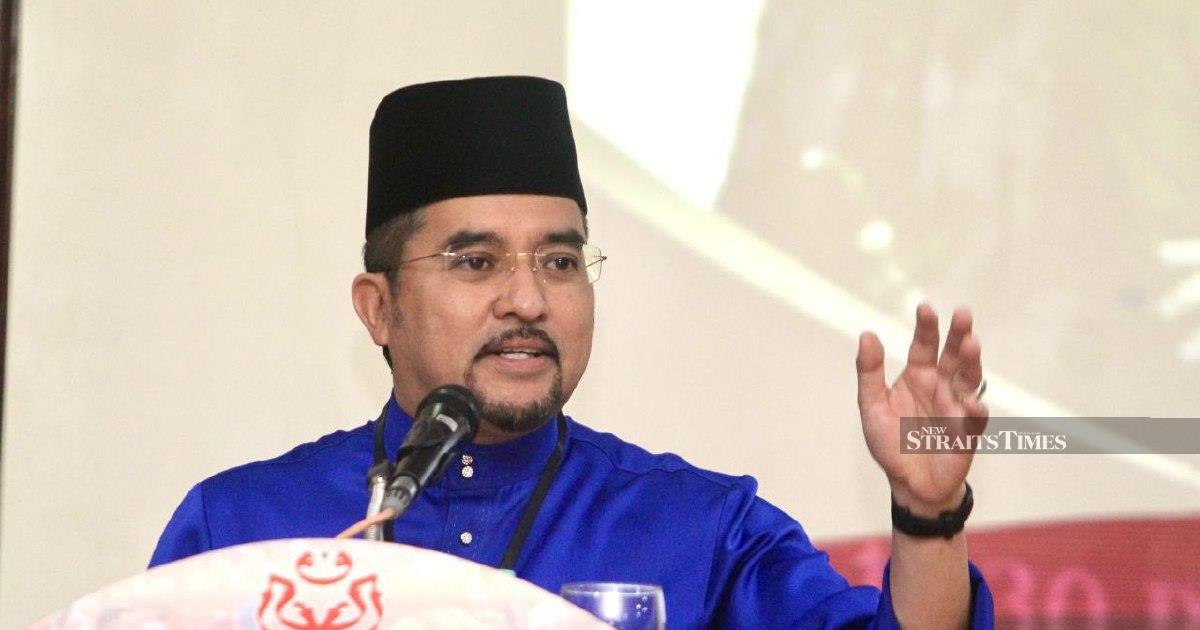
Umno has pushed back against what it characterizes as overreach by PKR Youth in the ongoing dispute over seat allocation for the Melaka state election, making clear that while all party wings may voice their preferences, ultimate responsibility for dividing constituencies rests with senior party decision-makers. The Umno position, articulated in Kota Baru, establishes boundaries around the role of youth wings in coalition seat negotiations, signalling that the party will not be swayed by public campaigns emanating from junior party structures.
The Melaka seat distribution issue has emerged as a flashpoint within the ruling coalition, with PKR Youth apparently seeking greater allocation of state assembly constituencies for their party. Rather than engage in a back-and-forth with the youth wing, Umno has adopted a stance that reaffirms traditional party hierarchy and the primacy of formal inter-party dialogue among established leadership. This reflects a broader concern in Malaysian coalition politics about maintaining discipline and preventing individual party factions from unilaterally setting negotiating positions.
Umno's intervention signals that the party views the youth wing's public articulation of seat demands as procedurally improper, even if the underlying aspirations are understandable. The distinction Umno draws—between having the right to express views and having the right to determine final outcomes—establishes a crucial boundary in coalition management. This approach preserves the prerogatives of party leadership to make strategic calculations without being bound by statements or demands made by secondary structures within member parties.
The Melaka context carries particular significance for Malaysian coalition politics. As one of the peninsula's smaller states, Melaka nonetheless holds symbolic importance as a historically Malay-Muslim heartland and a bellwether for coalition dynamics. Seat distribution negotiations in the state serve as a microcosm for how Pakatan Harapan manages internal tensions while competing with Barisan Nasional and other opposition groupings. The specific number of seats at stake, while modest in absolute terms, can substantially alter each party's influence within the state assembly.
PKR's appetite for additional seats likely reflects the party's broader positioning within the coalition hierarchy. As a non-Bumiputera-led party and the dominant force in Selangor, PKR has long navigated complex dynamics with Umno and other Malay-Muslim majority parties. The youth wing's public campaign may reflect frustration with what PKR sees as insufficient recognition of its coalition contributions, particularly given its electoral performance in recent years. However, Umno's response suggests the older establishment party is unwilling to allow coalition logic to disadvantage its own member parties.
The diplomatic language Umno employed—acknowledging that all parties possess legitimate aspirations while insisting on hierarchical decision-making—represents a carefully calibrated rebuff. By emphasizing that negotiations must proceed through proper channels rather than public posturing, Umno shores up its own coalition position without completely dismissing PKR's concerns. This preserves the possibility of eventual compromise while establishing that pressure campaigns will not alter the outcome.
For Malaysian coalition politics more broadly, the Melaka dispute illuminates persistent tensions in managing multi-party alliances. When component parties bring disparate expectations about seat distribution to the table, and when youth wings capable of mobilizing members and supporters inject themselves into negotiations, the potential for breakdown increases. Umno's insistence on leadership-level decision-making reflects an institutional interest in maintaining predictability and preventing coalition instability cascading from uncontrolled factional dynamics.
The timing of Umno's statement, delivered from Kota Baru in Kelantan, also merits attention. Kelantan represents Umno's traditional stronghold and the state where the party maintains its deepest organizational presence. Choosing this venue for the rebuff carries an implicit message about Umno's confidence in its base and unwillingness to cede ground in coalition negotiations, particularly to a party headquartered elsewhere.
Looking ahead, the resolution of the Melaka seat question will likely follow months of private discussions between senior Umno and PKR figures, ultimately producing a compromise that allows both parties to claim credit for defending their interests. Such outcomes typically involve subtle tradeoffs—perhaps PKR secures additional urban seats while Umno retains influence over rural constituencies, or conversely, PKR accepts fewer state seats in exchange for enhanced influence in federal-level appointments or future negotiations over other state elections.
The broader implication for Southeast Asian coalition politics is that despite Malaysia's relatively mature democratic institutions, managing multi-party alliances remains fraught with difficulty. The Melaka dispute demonstrates that structural arrangements for seat distribution—whether through formal mechanisms or informal understandings—require constant negotiation and renegotiation. Youth wings and other party structures seeking greater autonomy and voice will likely continue generating friction, requiring experienced leadership to channel such demands into productive rather than destabilizing directions.
Umno's forceful statement also reflects awareness that allowing one party's youth wing to unilaterally shape coalition outcomes could embolden similar campaigns from other quarters. By drawing a firm line with PKR Youth, Umno sends a signal to all coalition partners that institutional procedures and leadership authority will take precedence over grassroots mobilization or factional preferences. This protective stance, while sometimes appearing inflexible, serves the practical function of preventing coalition collapse through accumulated grievances and unchecked factional competition.

