UMNO's highest decision-making authority will gather on August 28 to settle questions that have swirled through political circles for weeks: whether Barisan Nasional will defend its Melaka stronghold alone or forge alliances with rival coalitions as the state government's mandate approaches expiration on December 31. The Supreme Council meeting, to be presided over by party president Datuk Seri Dr Ahmad Zahid Hamidi, marks a crucial juncture for Malaysia's dominant Malay-Muslim political organisation as it confronts competing strategic options in a state where it has governed comfortably for years.
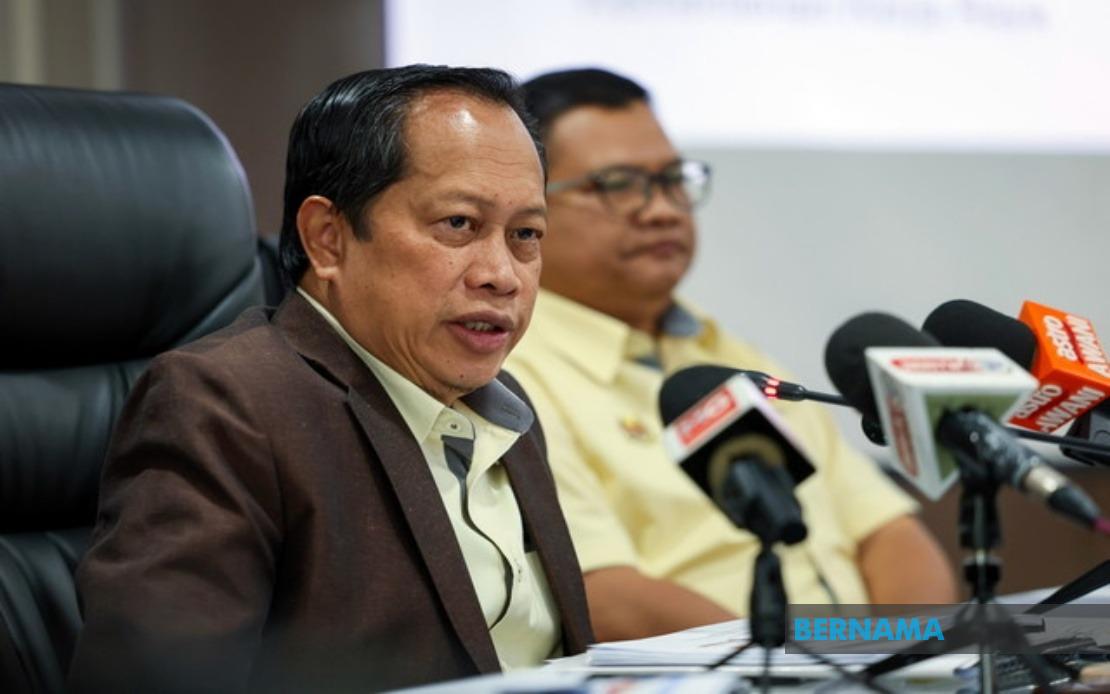
According to Datuk Seri Dr Ahmad Maslan, a Supreme Council member and Deputy Works Minister, no final determination has been crystallised within party ranks, despite mounting public speculation and competing statements from various quarters. The deliberations will centre on crafting an electoral approach that maximises BN's prospects of victory while weighing the merits and drawbacks of different coalition configurations. Ahmad Maslan's clarification underscores a reality often obscured by breathless media commentary: major political decisions of this magnitude require careful internal vetting rather than ad hoc announcements through the press.
The strategic calculus facing UMNO leaders reflects broader tensions within Malaysia's political architecture. On one front lies the possibility of deepening cooperation with Pakatan Harapan, which operates as BN's partner in the federal Unity Government. On the opposing side stands Perikatan Nasional, the increasingly assertive coalition led by Muhyiddin Yassin that has positioned itself as a counter-establishment force. Each option carries distinct advantages and liabilities that extend well beyond Melaka's borders, potentially reverberating through state-level politics across the peninsula.
The composition of Melaka's current state administration already reflects federal-level power-sharing arrangements. Although BN captured 21 of 28 seats in the 15th state election, with Pakatan Harapan securing five and Perikatan Nasional two, the state executive council includes members from both BN and PH. This arrangement mirrors the stability formula established federally following the 2022 general election, demonstrating how Kuala Lumpur's political mathematics extends downward to state governance structures. Whether this template will persist, evolve, or be abandoned in Melaka represents a key uncertainty.
Ahmad Maslan's statement that political approaches must accommodate each state's unique circumstances carries significant weight in Malaysian federalism. Unlike systems with rigid national party discipline, Malaysia's political culture has traditionally allowed substantial flexibility in state-level coalition-building, with federal-level alliances sometimes diverging dramatically from state arrangements. Perak and Terengganu have witnessed such fluctuations in recent years, demonstrating that national coalition stability does not necessarily constrain state-level manoeuvrability. Melaka's upcoming contest will test whether this flexibility persists or whether federal considerations increasingly constrain state-level autonomy.
The timing of this decision carries practical urgency. With the state mandate expiring on December 31, the window for campaign preparation and candidate nomination narrows considerably. Political observers anticipate that formal dissolution of the state assembly could occur within weeks of the August 28 meeting, potentially triggering elections in November or early December. This compressed timeline means that UMNO's August 28 determination will essentially lock in the party's electoral strategy, making last-minute pivots difficult if unforeseen circumstances arise.
For Malaysian voters in Melaka, the coalition question holds tangible implications. A BN-PH alliance would likely sustain current power-sharing arrangements and the relative political stability that has characterised the state since the 2018 election. Conversely, a BN-PN combination would represent a more dramatic realignment, potentially signalling shifts in factional balance within UMNO itself and possibly presaging wider coalition recalibrations across the country. A solo BN campaign would project confidence in the party's organisational capacity but would surrender the numerical benefits that coalition partners provide in marginal constituencies.
The decision before UMNO's Supreme Council also reflects generational questions about the party's political future. Younger party activists increasingly question whether UMNO should perpetually seek partnerships with rivals, while traditional power brokers maintain that coalition flexibility enhances rather than diminishes party strength. Ahmad Zahid's leadership will be tested in navigating these competing perspectives and forging consensus that party members will genuinely embrace rather than merely tolerate.
From a regional perspective, Melaka's electoral outcome carries significance beyond its 28 state assembly seats. Analysts monitoring Southeast Asian politics view Malaysia's inter-coalition dynamics as an important barometer of democratic stability in the region. A relatively smooth Melaka election, regardless of the coalition architecture ultimately adopted, would reinforce perceptions of institutional maturity. Conversely, a contested or acrimonious campaign featuring defections or last-minute alliance reversals could amplify concerns about political volatility that have periodically troubled Malaysian markets and investor sentiment.
The August 28 meeting will occur amid broader discussions within UMNO about the party's electoral prospects. Recent state-level contests, particularly in Selangor and Penang, have demonstrated limitations in BN's capacity to mount competitive campaigns in urban and semi-urban constituencies where opposition parties retain structural advantages. Some analysts suggest that Melaka's outcome will signal whether UMNO remains confident in its traditional strongholds or whether organisational concerns have triggered a more defensive electoral posture nationwide.
Ultimately, the Supreme Council's determination will reflect judgements about which coalition arrangement offers the most robust pathway to victory while minimising internal party discord. UMNO's leadership recognises that electoral losses carry existential implications for a party that has governed Malaysia continuously since independence. Against this backdrop, the August 28 deliberations represent far more than tactical manoeuvring for a single state contest. Rather, they constitute a significant moment in assessing how Malaysia's largest political party intends to position itself within an increasingly fragmented and volatile electoral landscape.

