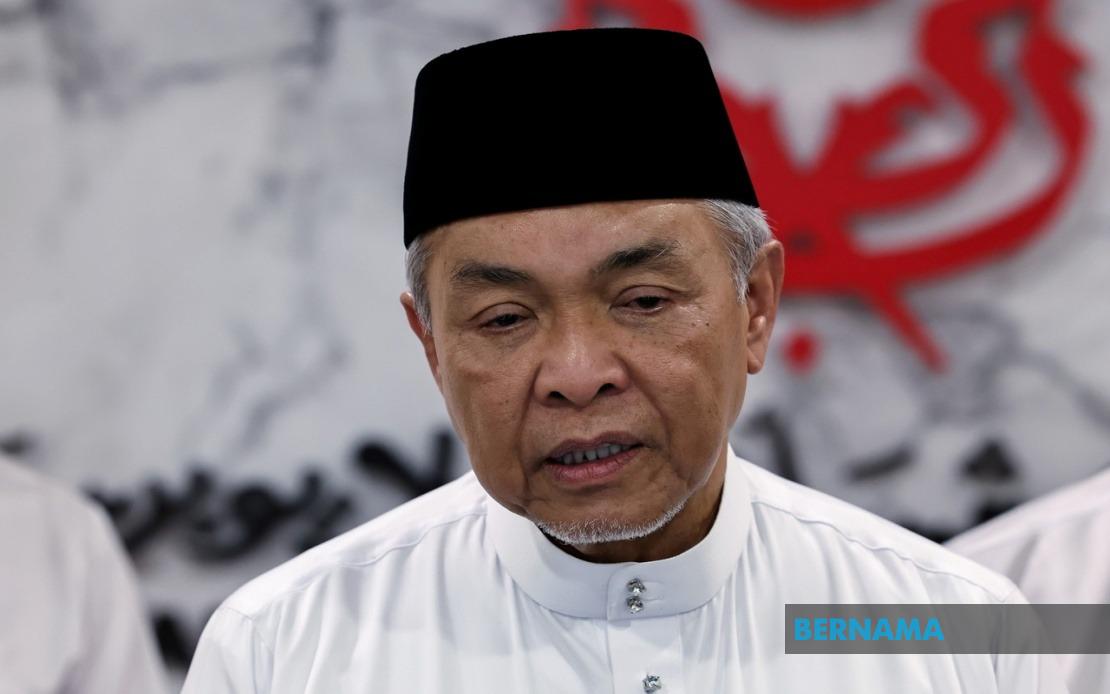
UMNO has signalled its intention to enter formal discussions regarding potential electoral partnerships for the upcoming Melaka state election, with negotiations to commence only after the state legislative assembly is formally dissolved. President Datuk Seri Dr Ahmad Zahid Hamidi announced the timeline during a press conference in Kuala Lumpur, clarifying that while preliminary informal discussions may already be underway among various political actors, the party will not pursue substantive coalition negotiations until the constitutional requirement for assembly dissolution is fulfilled.
The responsibility for spearheading these negotiations will fall to Melaka Chief Minister Datuk Seri Ab Rauf Yusoh, who has been delegated authority to represent UMNO's interests during discussions with potential coalition partners. Ahmad Zahid's emphasis on this hierarchical approach underscores UMNO's institutional discipline and the significance the party places on having its chief minister serve as the primary interlocutor for power-sharing arrangements, ensuring alignment between state-level politics and the broader party machinery.
While Ahmad Zahid did not explicitly name all potential partners, his response to a reporter's question about cooperation with Perikatan Nasional (PN) indicated that UMNO remains open to exploring arrangements beyond its current alliance configurations. This stance reflects the fluid nature of Malaysian coalition politics, where electoral cooperation frequently transcends established partnerships and is negotiated on a state-by-state basis according to local political dynamics and the strategic calculations of respective parties.
The UMNO leadership has invested considerable effort in preparing for the Melaka election through comprehensive internal planning mechanisms. Ahmad Zahid revealed that the party's Melaka Political Bureau presented a detailed account of electoral preparations, which was subsequently escalated to the UMNO Supreme Council for thorough examination and discussion. This multi-layered review process demonstrates the party's systematic approach to electoral strategy, involving both state-level operatives and national decision-making bodies.
Central to UMNO's preparation has been the establishment of a dedicated war room in Melaka, tasked with gathering and analysing electoral data. The intelligence and insights generated by this operation have informed the party's strategic planning at the national level, enabling the Supreme Council to make informed decisions about resource allocation and coalition positioning. Such data-driven approaches have become increasingly common among Malaysia's major political organisations as they seek to optimise electoral performance in an increasingly competitive landscape.
The timing of Ahmad Zahid's statement carries particular significance for Malaysian politics. The Deputy Prime Minister's clarification that formal talks will commence only post-dissolution suggests UMNO is exercising strategic patience and adhering to constitutional protocols. This measured approach may also serve to manage expectations among potential coalition partners while demonstrating UMNO's institutional credibility and respect for democratic processes.
For Melaka specifically, the election will represent a critical test of UMNO's electoral viability in a state where it has historically held considerable influence. The outcome could provide insights into voter sentiment regarding UMNO's governance record, its role within the Barisan Nasional coalition, and its capacity to compete effectively against Perikatan Nasional and other emerging political forces. The state election is also watched closely as an indicator of national political currents ahead of future general elections.
The prospect of UMNO negotiating with Perikatan Nasional represents a significant potential realignment in Malaysian politics. While both organisations maintain distinct organisational structures and ideological frameworks, their willingness to explore cooperation at the state level reflects the pragmatic nature of Malaysian electoral politics. Such arrangements have occurred previously in various states, prioritising practical governance objectives over rigid adherence to national-level party alignments.
For other political players in Melaka, the emergence of this possibility necessitates rapid strategic adjustments. Opposition coalitions and smaller parties will need to evaluate their own positioning and determine whether existing arrangements remain optimal or whether renegotiation is required. The fluid pre-election environment creates both opportunities and risks for all political actors competing for voter support in the state.
The emphasis placed by Ahmad Zahid on conducting thorough internal consultations and data analysis reflects mature political organisation. By ensuring that the Supreme Council is fully briefed on ground-level conditions and strategic possibilities, UMNO can approach coalition negotiations from a position of strength and detailed knowledge. This institutional approach contrasts with more ad-hoc or personality-driven decision-making models and suggests that leadership transitions within UMNO have not disrupted its operational systems.
Looking forward, the Melaka state election campaign will likely centre on the quality of governance, delivery of development projects, and the effectiveness of state administration. The election will also serve as a barometer for coalition viability, testing whether proposed partnerships can translate into functional governing arrangements capable of delivering public services and economic development. For Malaysian voters, the election offers an opportunity to assess competing visions for state governance and the competence of respective political organisations.

